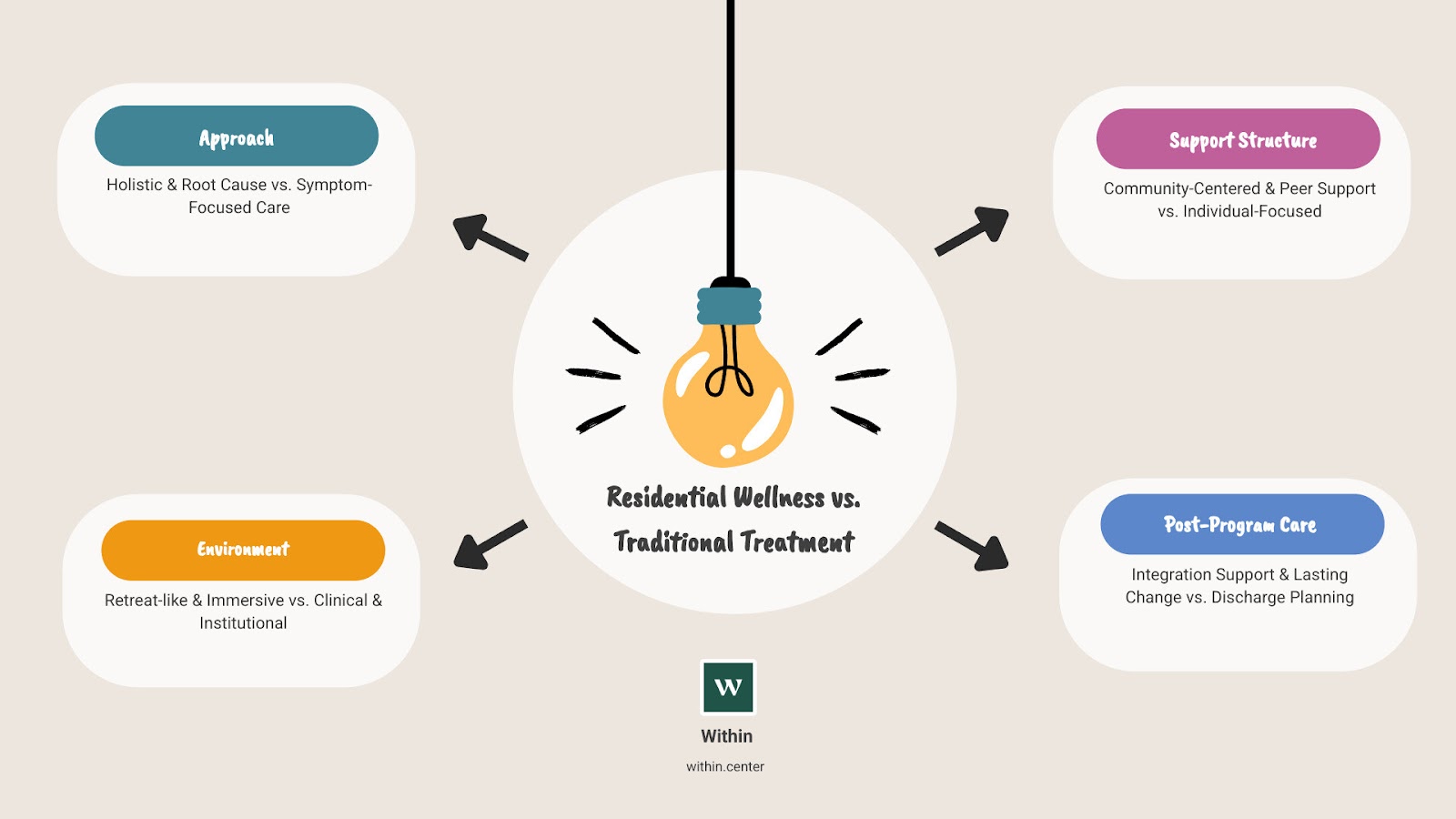
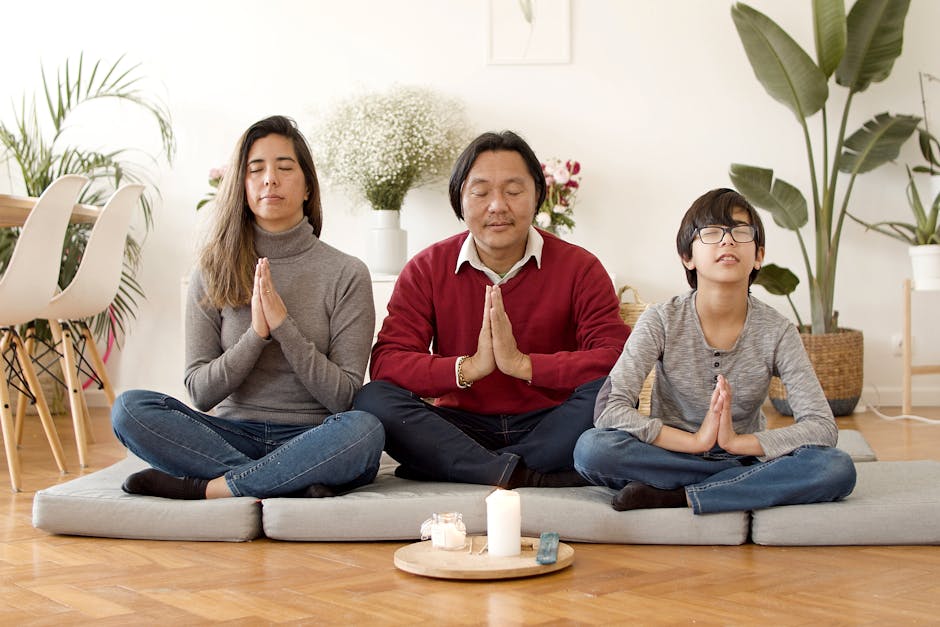
A depression anxiety retreat offers an immersive approach to healing that goes beyond traditional therapy. By combining evidence-based treatments with holistic therapies in a supportive community, these programs help individuals address root causes, not just symptoms.
Key benefits include an intensive focus on healing away from daily stressors, comprehensive treatment plans, and a strong sense of community. You’ll gain professional guidance and long-term tools for sustained recovery.
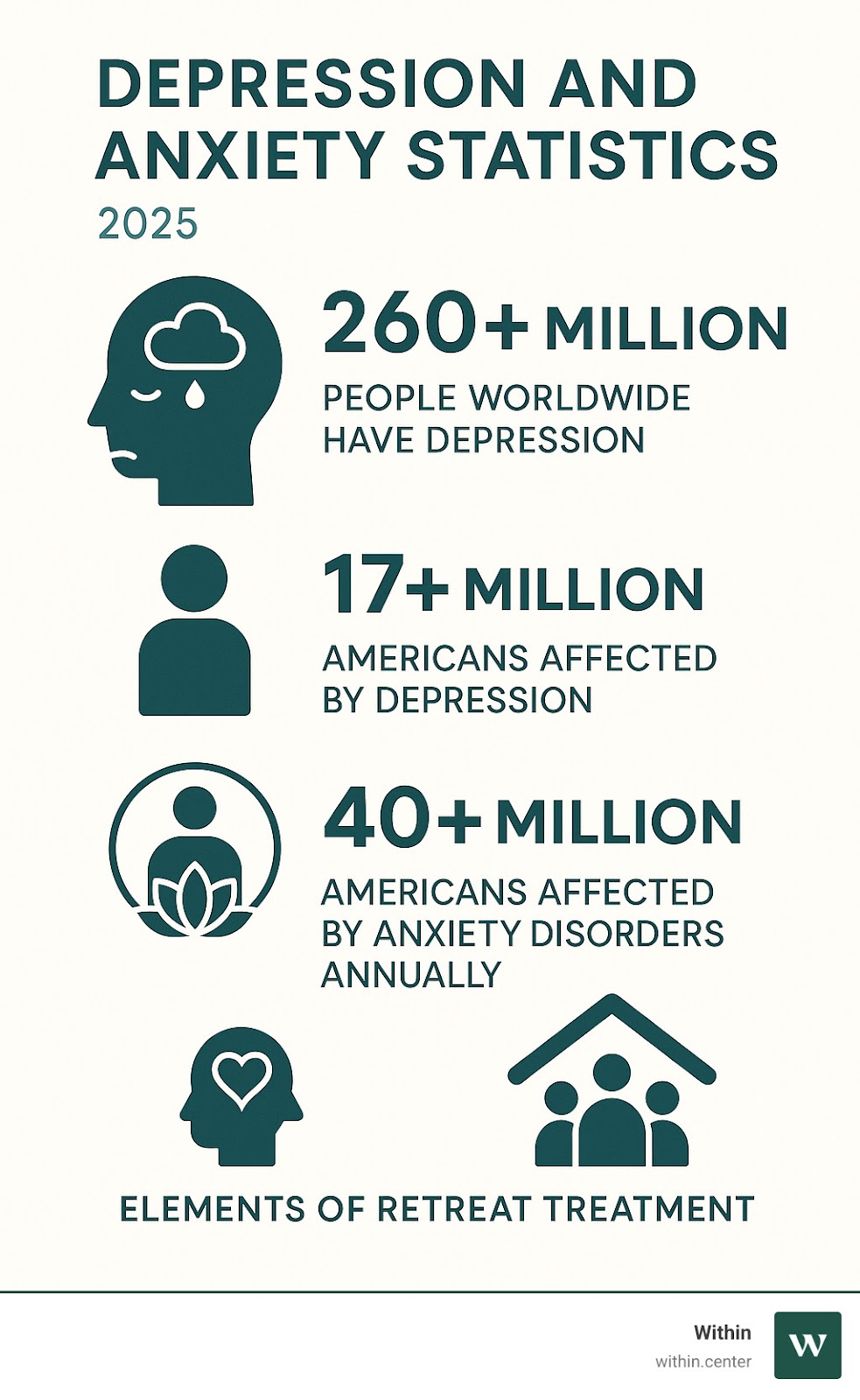
The need for such programs is clear. More than 260 million people worldwide suffer from depression, and in the U.S., anxiety disorders impact over 40 million Americans annually. When outpatient therapy isn’t enough, a retreat provides the dedicated space for deeper healing.
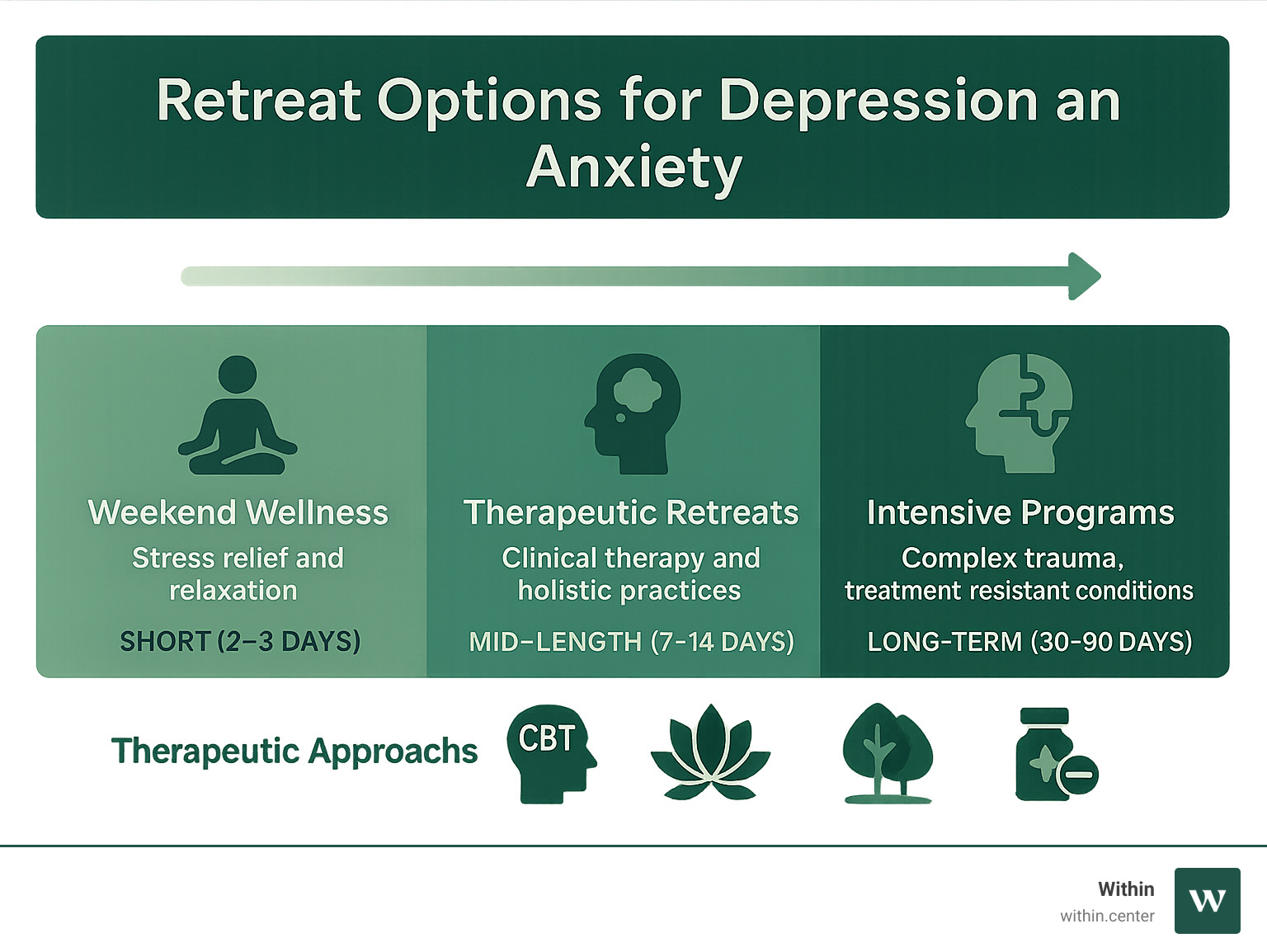
These programs can last from days to months, offering individual and group therapy, mindfulness, and innovative treatments like ketamine-assisted therapy.
Understanding Depression and Anxiety: The First Step to Healing
Before exploring how a depression anxiety retreat can help, it’s important to understand these complex conditions. They are more than just a bad day or stress; they are real mental health challenges that can disrupt your life.
Depression is a persistent feeling of hopelessness that can lead to loss of interest, changes in sleep and appetite, and exhaustion. Anxiety is excessive worry that keeps your mind and body on high alert, often with physical symptoms like a racing heart. These two conditions frequently occur together, creating a difficult cycle.
Understanding your condition is the first step to healing. Millions worldwide are affected, as shown by data from the NIMH and WHO.
Common Types of Depression and Anxiety Disorders
Depression and anxiety appear in many forms. Knowing the specific type helps in finding the right treatment.
Depression Disorders: These include Major Depressive Disorder (MDD), with intense sadness; Persistent Depressive Disorder, a long-term, low-grade depression; Seasonal Affective Disorder (SAD), tied to seasons; and Bipolar Disorder, which involves mood swings from depression to mania.
Anxiety Disorders: Common types are Generalized Anxiety Disorder (GAD), with constant worry; Panic Disorder, causing sudden attacks of fear; Social Anxiety, an intense fear of social situations; PTSD, following trauma; and OCD, characterized by intrusive thoughts and compulsive behaviors.
How Depression and Anxiety Can Manifest Differently
Depression and anxiety don’t look the same for everyone. Men may show irritability, anger, or risky behaviors instead of sadness. This can make their depression harder to spot. Women may face unique triggers related to hormonal changes and societal pressures, with about 1 in 10 reporting major depression symptoms according to the CDC.
A quality depression anxiety retreat understands these nuances and provides personalized treatment for everyone.
Recognizing the Need: Is a Mental Health Retreat Right for You?
Deciding to attend a depression anxiety retreat is a significant step. If you’ve tried other treatments and still feel stuck, an immersive approach could be what you need. A retreat offers the unique opportunity to step away from daily stressors and focus completely on healing, pressing pause on life to address what’s happening beneath the surface.
If you feel burned out or overwhelmed, it might be time to consider a new path. You can learn more info about our approach to see if it resonates with you.
Signs It’s Time to Consider a Retreat
A retreat could be life-changing if you experience the following:
Feeling stuck despite ongoing therapy or medication.
Losing interest in activities and relationships you once enjoyed.
Persistent struggles with sleep, appetite, or concentration.
Constant worry or mental chatter that leaves you exhausted.
Relying on unhealthy coping mechanisms for temporary relief.
A desire to understand the root causes of your struggles, not just manage symptoms.
If these points resonate, a retreat can provide the dedicated space and professional support to gain new tools and clarity.
Comparing Retreats to Other Forms of Care
Understanding the differences in care can help you choose the right option.
Outpatient Therapy: Offers ongoing support with weekly sessions but requires you to manage daily stressors between appointments.
Hospitalization: Designed for acute crises, focusing on short-term stabilization in a clinical setting.
Depression Anxiety Retreat: Provides a middle ground with intensive, 24/7 support in a peaceful, healing environment. The experience is immersive and holistic, focusing on mind, body, and spirit. Community is central, and the goal is to address root causes and build long-term skills. At Within, our AWKN Ranch near Austin offers this kind of serene setting to support recovery.
The Transformative Power of a Depression Anxiety Retreat
When you step into a depression anxiety retreat, you’re starting a journey to heal the root causes of your struggles, not just manage symptoms. In a supportive environment, your brain can form new, healthier neural pathways—a process known as neuroplasticity. This helps you break free from old patterns and build resilience.
One of the most powerful aspects of a retreat is realizing you’re not alone. Connecting with others who understand your journey lifts the isolation that often comes with depression and anxiety.
Unique Benefits and Lasting Change
A depression anxiety retreat provides dedicated time for healing, free from daily responsibilities. Key benefits include:
Disconnecting from Stressors: Stepping away from your usual environment allows your nervous system to calm down, providing the clarity needed to face challenges differently.
A Safe, Non-Judgmental Space: This atmosphere encourages vulnerability and deep therapeutic work that’s hard to achieve elsewhere.
Developing Self-Compassion: Learning to treat yourself with kindness is a fundamental shift that supports all other aspects of healing.
Building Community: Sharing experiences in group therapy creates powerful bonds and a support network that can last a lifetime. This shared journey reduces isolation and accelerates recovery.
Learning Practical Skills: You’ll leave with real-world tools and coping strategies. The best retreats offer comprehensive integration support to help you apply these skills back home, turning temporary relief into lasting change.
What to Expect: Therapies and Treatments at a Retreat
At a depression anxiety retreat, you’ll find a structured, supportive environment designed for healing. Expect a personalized treatment plan from a multidisciplinary team of licensed professionals. Your days will balance intensive therapy with restorative activities, all guided by a holistic philosophy that addresses mind, body, and spirit.
Evidence-Based and Holistic Therapies
A quality retreat blends proven scientific treatments with complementary healing practices. Your plan will likely include:
Individual and Group Psychotherapy: Core components for deep personal work and peer support.
CBT and DBT: Therapies to challenge negative thought patterns (CBT) and manage intense emotions (DBT).
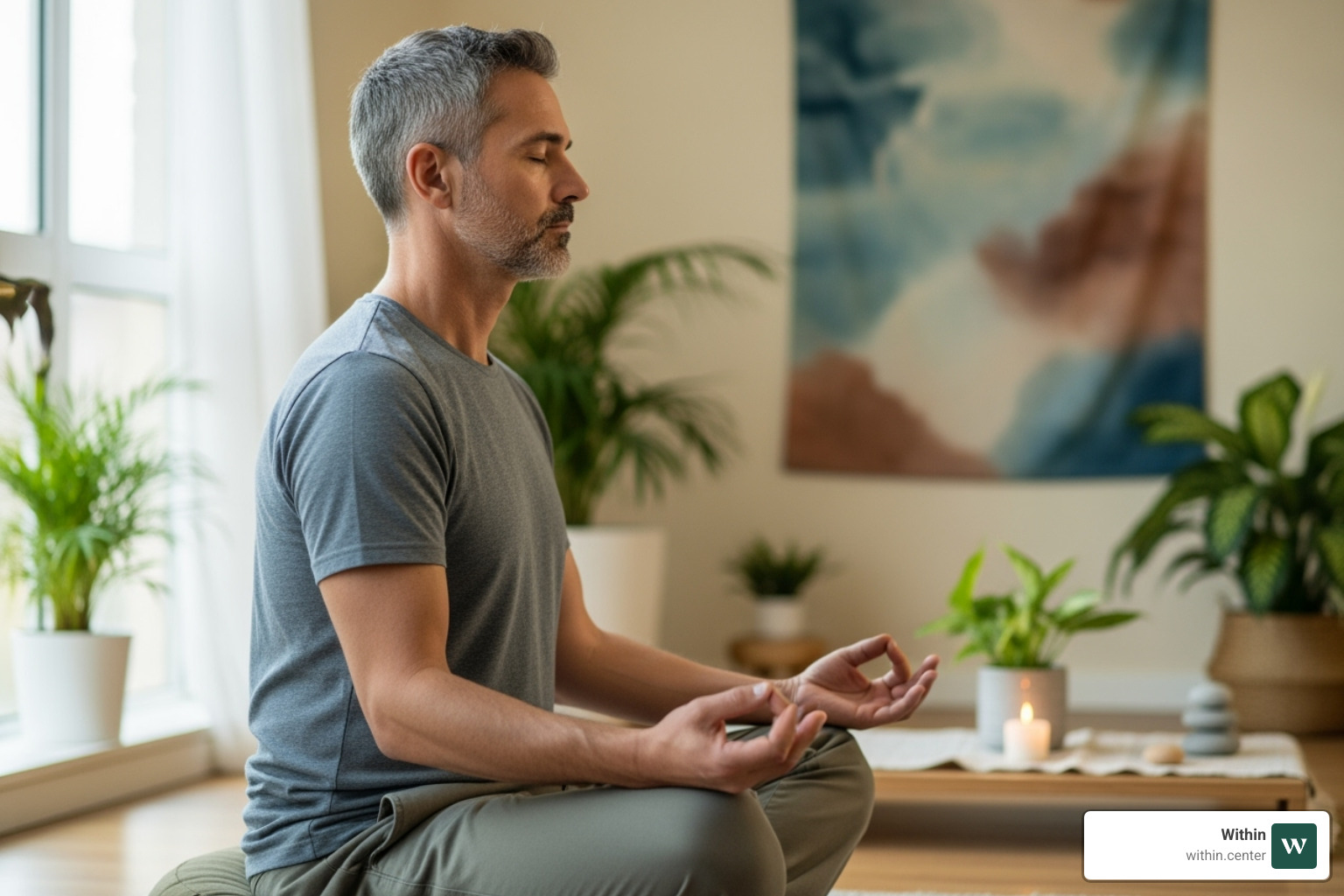
Holistic Practices: Mindfulness, yoga, and meditation to calm the mind and reconnect with the body.
Nature and Creative Therapies: Using the outdoors, art, or sound to facilitate healing in non-verbal ways.
The Role of Diet, Exercise, and Innovative Treatments
Healing extends beyond therapy sessions. Nutritious meals support the gut-brain connection, while physical activity like yoga or hiking acts as a natural antidepressant. The mind-body connection is central to the experience.
Some retreats, like Within, also offer innovative treatments for those who haven’t found relief with traditional methods.Ketamine Therapy is one such option. It promotes neuroplasticity, helping the brain form new, healthier connections. When combined with psychotherapy, it can offer rapid relief for treatment-resistant conditions. These innovative approaches expand your healing options, aiming to help you heal and thrive.
Choosing the Right Retreat for You
Finding the right depression anxiety retreat is a crucial decision. To find a program that fits your needs, ask the right questions.
Key factors to consider include:
Staff Credentials & Licensing: Ensure therapists and medical staff are licensed and experienced.
Treatment Philosophy: Does it align with your needs? At Within, we blend evidence-based therapies with innovative treatments like ketamine-assisted therapy in our serene ranch setting near Austin.
Location and Environment: Decide if you prefer a natural or clinical setting.
Duration and Aftercare: Check program lengths and what kind of integration support is offered to help you transition back to daily life.
Finding a Specialized Depression Anxiety Retreat
Look for a retreat that addresses your specific needs. Some programs specialize in trauma-informed care, co-occurring disorders (like OCD or eating disorders), or specific demographics like men, women, or young adults. A personalized approach is key to effective treatment.
Financial and Insurance Considerations
A retreat is a significant financial investment in your future well-being. Costs can vary, and many facilities operate on a self-pay model. However, options are available:
Insurance: While direct coverage for “retreats” is rare, individual services like therapy may be reimbursable as out-of-network benefits. Always verify your benefits with your provider.
Financing: Many facilities, including ours at Within, offer financing options like CareCredit to make payments more manageable.
Think of this as an investment in your long-term health. The benefits often reduce future healthcare costs and dramatically improve your quality of life.
Frequently Asked Questions about Mental Health Retreats
Considering a depression anxiety retreat brings up important questions. Here are answers to some common concerns.
How long should I stay at a mental health retreat?
The ideal length for a depression anxiety retreat depends on your personal needs. Short stays (7-14 days) can offer a reset, while 30-day programs are often ideal for deep work and building new habits. For chronic conditions or profound change, 90-day programs provide the most comprehensive experience, allowing time for new patterns to become second nature. Longer stays generally lead to deeper healing.
What is the difference between a wellness retreat and a clinical mental health retreat?
This is a crucial distinction. A wellness retreat focuses on general relaxation and stress relief, like a structured vacation. A clinical mental health retreat, like our depression anxiety retreat, is specifically designed to treat diagnosable conditions like depression and anxiety. It is staffed by licensed therapists and medical professionals who provide evidence-based treatments in a therapeutic environment. The goal of a clinical retreat is lasting recovery by addressing root causes, not just temporary escape.
How can I prepare for attending a retreat?
Preparation involves both practical and emotional steps.
Set Intentions: Clarify what you hope to gain from the experience.
Pack for Comfort: Bring items that make you feel at home, like a favorite journal or blanket.
Keep an Open Mind: Be ready to accept new therapies and perspectives.
Arrange Home Life: Handle work and family responsibilities so you can fully immerse yourself in healing.
Communicate: Talk to the admissions team to address any concerns before you arrive. We’re here to support you.
Conclusion
Attending a depression anxiety retreat is a powerful commitment to your mental health and lasting change. It’s an investment in yourself that goes beyond temporary relief.
These immersive experiences blend proven therapies with holistic practices in a supportive environment designed for healing. By addressing the root causes of your depression and anxiety, you can build the tools you need for long-term wellness. The intensive focus promotes neuroplasticity, helping your brain rewire itself, while community connections combat isolation and foster understanding.
The coping skills, self-worth, and resilience you develop will serve you long after you leave. Many of our participants describe returning home with a renewed sense of purpose and confidence.
If you’re feeling ready to take this transformative step, we’d love to support you on this journey. At Within, our AWKN Ranch near Austin, Texas offers an immersive retreat experience that combines cutting-edge treatments with the healing power of community and nature. Our comprehensive integration support ensures that the positive changes you make during your stay continue to flourish long after you return home.
Your path to healing doesn’t have to be walked alone. Explore our Psychedelic Therapy Retreat and find how an immersive approach to mental health can help you reclaim your sense of calm and well-being.
When you’re struggling with persistent sadness, overwhelming worry, or feeling stuck despite traditional therapy, a retreat for depression and anxiety might be the breakthrough you need. These specialized programs offer intensive, immersive healing experiences that go far beyond weekly therapy sessions.
Quick Guide to Mental Health Retreats:
What they are: Intensive therapeutic programs in supportive environments
Duration: Typically 7-90 days, depending on your needs
Approach: Combines evidence-based therapy with holistic healing
Best for: Treatment-resistant depression, chronic anxiety, or when you need deeper healing
Cost: $1,000-$5,000+ per week, with some insurance coverage possible
The statistics are sobering. Depression affects over 17 million Americans, making it the second most common mental health disorder. Meanwhile, anxiety impacts over 40 million Americans annually, affecting one-third of all adults at some point in their lives.
But here’s what’s encouraging: mental health retreats are showing remarkable results where traditional approaches have fallen short.
As one client shared about their retreat experience: “I felt like a new man after the Bali retreat, finding stress management significantly improved… I gained tools and new habits for daily life.”
Unlike weekly therapy sessions that compete with daily stressors, retreats create a contained healing environment where you can focus entirely on your recovery. They combine the best of clinical treatment with holistic approaches – from evidence-based therapies like CBT and DBT to mindfulness practices, nature therapy, and innovative treatments like ketamine-assisted psychotherapy.
The key difference? Retreats address root causes, not just symptoms. They offer the time and space needed for deep psychological work while providing 24/7 professional support.
Recognizing the Need: When to Consider a Mental Health Retreat
Sometimes the hardest part of healing is recognizing when we need more help than we’re currently getting. If you’re reading this, chances are you’ve already noticed that something isn’t quite right. Maybe you’ve been going through the motions of daily life while feeling empty inside, or perhaps anxiety has become your constant, unwelcome companion.
The signs often creep up slowly. You might find yourself losing interest in activities that once brought you joy – that book club you loved, weekend hikes with friends, or even simple pleasures like cooking a favorite meal. Persistent sadness settles in like a heavy blanket you can’t shake off, coloring everything in muted tones.
Overwhelming worry becomes your mind’s default setting. Your thoughts race from one concern to another, making it nearly impossible to focus on work or be present with loved ones. Sleep becomes elusive, and when you do rest, you wake up feeling just as tired as when you went to bed.
Many people experience what’s called functional depression – you’re still showing up to work, paying bills, and maintaining a facade of normalcy, but inside you’re running on empty. Friends and family might not even realize you’re struggling because you’ve become so good at hiding it.
Social withdrawal often follows. Invitations get declined, phone calls go unanswered, and isolation becomes both a symptom and a coping mechanism. The world feels overwhelming, so you make it smaller.
Signs It’s Time for a Deeper Dive
If you’ve been in weekly therapy for months or even years but still feel stuck, it might be time to consider a retreat for depression and anxiety. Traditional outpatient therapy is valuable, but sometimes we need to step away from daily stressors entirely to do the deeper work.
Chronic fatigue that doesn’t improve with rest often signals that your nervous system is overwhelmed. When your body and mind are constantly on high alert, healing becomes nearly impossible. Irritability might surface more frequently – small annoyances feel like major crises, and you find yourself snapping at people you care about.
Perhaps you’ve noticed yourself turning to unhealthy coping mechanisms – that extra glass of wine has become three, binge-watching shows has replaced meaningful activities, or you’re spending hours scrolling social media to avoid your thoughts. These behaviors offer temporary relief but often leave you feeling worse.
Burnout symptoms extend beyond just work stress. You might feel emotionally depleted, cynical about the future, or like you’re constantly treading water without making progress. When you feel this stuck, and weekly therapy isn’t enough to break through the patterns, an immersive healing environment can provide the breakthrough you need.
The National Institute of Mental Health provides comprehensive information about depression symptoms, but seeking intensive support isn’t a sign of failure – it’s a courageous step toward reclaiming your life.
If these experiences resonate with you, know that you’re not alone, and more importantly, you don’t have to stay stuck. A retreat setting offers the time, space, and professional support needed to address not just your symptoms, but the root causes of your struggles.
The Retreat Advantage: An Immersive Path to Healing
Imagine stepping away from the constant buzz of notifications, the draining commute, and that never-ending to-do list. Picture yourself in a peaceful environment where your only job is to focus on getting better. That’s the heart of what makes a retreat for depression and anxiety so powerful.
Unlike traditional therapy where you meet once a week for an hour, then return to the same stressful environment that might be contributing to your struggles, retreats create something entirely different. They offer a contained healing space where you can dive deep into your recovery without daily life pulling you in different directions.
Feature
Mental Health Retreats
Traditional Therapy
Environment
Immersive, peaceful setting away from daily stressors
Your regular life continues with all its challenges
Intensity
Multiple therapy sessions daily with 24/7 support
One hour per week, then you’re on your own
Duration
Concentrated healing over days or weeks
Progress measured over months or years
Approach
Combines multiple therapies and holistic practices
Usually focuses on one therapeutic method
Community Support
Built-in peer support and shared experiences
Limited to group therapy sessions if available
The retreat advantage isn’t just about changing your location – it’s about removing the barriers that often get in the way of healing. When you’re dealing with depression, even getting to a therapy appointment can feel overwhelming. At a retreat, professional support is available around the clock, and you’re surrounded by others who truly understand what you’re going through.
This immersive approach allows you to address root causes rather than just managing symptoms. Instead of spending months slowly unpacking trauma or negative thought patterns, you have dedicated time and space to do the deep work that lasting recovery requires.
The Power of Community and Peer Support
One of the most profound aspects of a retreat for depression and anxiety is finding you’re not alone in your struggles. Depression and anxiety have a cruel way of making us feel isolated, like we’re the only ones who can’t seem to “get it together.” Being surrounded by others who’ve walked similar paths can be incredibly healing.
There’s something magical that happens when you share your story with someone who truly gets it. The shame starts to lift when you realize that your struggles don’t make you broken or weak – they make you human. In group settings, you’ll often find yourself offering encouragement to others, which can be surprisingly healing for your own sense of self-worth.
These connections often extend far beyond the retreat itself. Many participants form lasting friendships that become part of their ongoing support network. Having people in your life who understand your journey and can check in during challenging times is invaluable for maintaining your progress.
The vulnerability required to share in these spaces might feel scary at first, but it’s in a completely safe environment designed for healing. Normalizing your struggles through shared experiences helps break down the isolation that often keeps depression and anxiety cycles going strong.
Digging Deeper Than Symptoms
Traditional treatment often focuses on symptom management – helping you cope with anxiety attacks or lifting your mood temporarily. While this is important, retreats have the luxury of time to explore the deeper issues that might be driving your mental health challenges.
Maybe your anxiety stems from unresolved trauma that you’ve never had the space to properly process. Perhaps your depression is rooted in core beliefs about yourself that formed in childhood. Or maybe negative thought patterns have become so automatic that you need intensive work to recognize and change them.
The mind-body connection becomes especially important in retreat settings. Depression and anxiety don’t just live in your thoughts – they show up in your body too. Through approaches like somatic experiencing, therapeutic yoga, and breathwork, you can address the physical aspects of mental health that often get overlooked in traditional therapy.
This holistic perspective recognizes that healing happens on multiple levels. Your mental health is connected to your physical well-being, your relationships, your sense of purpose, and your connection to something greater than yourself. A comprehensive retreat experience addresses all these dimensions.
If you’re reading this, you’ve already taken an important step. You’re exploring options, seeking answers, and considering new paths forward. That takes courage, especially when depression and anxiety have made even simple decisions feel overwhelming.
Choosing to attend a retreat for depression and anxiety isn’t just about getting help – it’s about making a profound investment in who you want to become. It’s saying yes to the possibility that life can feel lighter, that joy isn’t just a memory, and that the weight you’ve been carrying doesn’t have to define your future.
Finding a safe space is crucial. Not just any space, but one where you can let your guard down completely. Where you don’t have to explain why getting out of bed felt impossible yesterday, or why that wave of anxiety hit you in the grocery store. A place where healing professionals understand the journey because they’ve walked alongside so many others on similar paths.
The truth is, healing is possible – even when it feels impossibly far away. Even when you’ve tried therapy before and wondered if anything would ever truly help. Even when well-meaning friends say “just think positive” and you want to scream because if it were that simple, you would have done it already.
At Within, we’ve created something different at AWKN Ranch near Austin, Texas. Our immersive, holistic path to recovery goes beyond traditional therapy sessions. We understand that real healing happens when you can step away from the daily stressors that keep you stuck, when you have time and space to dig deeper into what’s really driving your struggles.
Our live-in retreat experience combines the clinical expertise you need with the comprehensive integration support that helps you carry your healing forward. The community focus means you’re not alone in this journey – you’re surrounded by others who understand, and by professionals who are genuinely invested in your change.
We don’t just want to help you manage symptoms. We want to help you address root causes so you can build a life that feels genuinely worth living again. A life where you wake up with energy, where relationships bring connection instead of exhaustion, where you remember what it feels like to look forward to tomorrow.
Take the first step towards your healing journey. Your haven for healing is waiting, and so are we.
Your guide to Depression treatment Austin. Discover effective therapies, from traditional to advanced options like ketamine. Start healing now.
Depression treatment Austin offers a comprehensive range of options, from traditional therapy and medication to innovative approaches like ketamine therapy and immersive retreats. The city’s mental health landscape combines evidence-based care with holistic healing, providing multiple pathways to recovery.
Quick Guide to Austin Depression Treatment Options:
Outpatient Therapy: Individual, group, and family therapy with licensed therapists
Medication Management: Psychiatrists specializing in antidepressants and mood stabilizers
Intensive Programs: Partial hospitalization (PHP) and intensive outpatient programs (IOP)
Advanced Treatments: Ketamine therapy, TMS, and brain stimulation for treatment-resistant depression
Immersive Retreats: Holistic healing experiences combining therapy with nature-based recovery
Specialized Care: Programs for teens, women, veterans, and dual diagnosis treatment
Depression affects millions, but there is hope: depression is treatable, regardless of symptom severity.
Austin’s unique mental health ecosystem reflects the city’s innovative spirit. You’ll find cutting-edge treatments like transcranial magnetic stimulation (TMS) alongside holistic wellness centers offering ketamine therapy in serene, nature-connected settings.
Whether you’re dealing with major depressive disorder, treatment-resistant depression, or co-occurring conditions like anxiety and PTSD, Austin’s diverse treatment landscape offers personalized pathways to healing. This guide will help you steer your options and find the right fit for your recovery journey.
Understanding Depression: Symptoms and Types
Depression is more than just feeling sad; it’s a medical condition that affects your brain, changing how you think, feel, and handle daily activities. When we talk about depression treatment Austin, we’re addressing a condition that impacts relationships, work, sleep, and physical health. The good news is that understanding your experience is the first step toward recovery.
Common Symptoms of Depression
Depression manifests differently for everyone, but certain patterns that last for at least two weeks can signal a need for support.
Emotional Symptoms: You might feel persistent sadness that doesn’t lift, a loss of interest in activities you once enjoyed, or a sense of being empty or numb. Irritability over small things is also common.
Physical Symptoms: Many people experience profound fatigue, as if moving through mud. Appetite changes (eating much more or less) and sleep disturbances (insomnia or oversleeping) are also typical.
Behavioral Symptoms: You might find it hard to concentrate or make simple decisions. Feelings of guilt or worthlessness that don’t match reality can also appear.
When depression is severe, thoughts of death or suicide can occur. If you are having these thoughts, help is available now. Call or text the Suicide & Crisis Lifeline at 988 to connect with trained counselors 24/7.
Types of Depression
Understanding the different types of depression helps clarify why treatment approaches vary.
Major Depressive Disorder (MDD): This is the most common form, characterized by at least two weeks of persistent sadness and loss of interest in activities, significantly impacting daily life.
Persistent Depressive Disorder (Dysthymia): This involves milder symptoms than MDD that last for at least two years. It’s often described as a chronic, low-grade sadness.
Postpartum Depression: Affecting new mothers, this goes beyond the “baby blues,” making it difficult to bond with the baby and manage daily tasks due to deep, persistent fatigue and sadness.
Seasonal Affective Disorder (SAD): This type of depression is linked to the changing seasons, typically starting in the fall and continuing into the winter months due to less natural sunlight.
When to Seek Professional Help
If these descriptions resonate with you, that recognition is a significant first step. Professional help is crucial when symptoms last more than two weeks, interfere with your life, or involve thoughts of self-harm. The earlier you seek help, the more effective treatment can be.
You can learn more from trusted sources like the American Psychiatric Association’s guide, What is Depression?, and the NIMH on Depression. Seeking help is a sign of strength.
Navigating Traditional and Holistic Treatment Options
Finding the right depression treatment Austin path means exploring a variety of options. Austin’s mental health community accepts both traditional and holistic methods, often combining them for the best results.
Most successful treatment plans are built on psychotherapy and medication management. These evidence-based practices are often improved by integrative care that treats the whole person—mind, body, and spirit. A combined approach allows different treatments to support each other; for example, medication can provide the stability needed to engage more deeply in therapy.
The Role of Psychotherapy for Depression Treatment in Austin
Psychotherapy provides a safe space to explore your experiences and learn new coping skills for lasting recovery.
Cognitive Behavioral Therapy (CBT) helps you identify and change negative thought patterns and behaviors. It teaches you to challenge unhelpful thoughts and reframe them in a more realistic way.
Mindfulness-based therapies teach you to observe your thoughts and feelings without judgment, helping to break the cycle of rumination that often fuels depression.
Interpersonal Therapy (IPT) focuses on how your relationships affect your mood, helping you resolve conflicts, process grief, or address social isolation.
Therapists in Austin offer individual, group, and family therapy. The therapeutic relationship is so vital that even advanced treatments like ketamine therapy rely on it for lasting change. You can learn more here: How Important is the Therapy Component of Ketamine Therapy?
Medication for Depression: What to Know
When therapy alone isn’t enough, medication can help rebalance brain chemistry, providing the stability needed to engage in daily life.
Antidepressants like SSRIs (e.g., escitalopram, sertraline) and SNRIs (e.g., venlafaxine) are commonly prescribed. Working with a psychiatrist is key to finding the right medication and dosage, as well as managing any side effects. Open communication with your doctor is essential.
Medication adherence is crucial. It’s important to continue taking your medication as prescribed, even after you start feeling better, to prevent a relapse.
Levels of Care: Outpatient, IOP, PHP, and Immersive Retreats
Depression treatment Austin is offered at different levels of intensity to match your needs.
Level of Care
Intensity & Structure
Time Commitment
Ideal Candidate
Outpatient Therapy
Individual, group, or family sessions
1-3 hours per week
Mild to moderate depression; stable symptoms needing ongoing support
IOP (Intensive Outpatient)
Structured group and individual therapy
3-5 days per week, 3-4 hours per day
Moderate to severe depression; need more support but can live at home
PHP (Partial Hospitalization)
Daily intensive therapy with medical monitoring
5 days per week, 6+ hours per day
Severe depression; need structure but not 24/7 supervision
Outpatient therapy offers the most flexibility, allowing you to maintain daily responsibilities. Intensive programs (IOP/PHP) provide more support and structure when symptoms are more severe. Immersive retreats offer a unique opportunity to step away from daily stressors and focus entirely on healing, often fostering powerful community integration.
Many people move between these levels of care as their needs change during their recovery journey.
Advanced and Innovative Depression Treatment in Austin
When traditional treatments don’t provide enough relief, it’s easy to feel hopeless. Fortunately, Austin is a hub for innovative depression treatment Austin approaches that offer new hope for even the most complex cases.
These advanced treatments are designed for those who haven’t found success with standard therapies, opening new pathways to recovery.
Addressing Treatment-Resistant Depression (TRD)
Treatment-Resistant Depression (TRD) affects about a third of people with major depression. It’s diagnosed when at least two different antidepressants have failed to provide relief. This can happen for many reasons, including incorrect dosage, intolerable side effects, or co-occurring conditions like anxiety, substance use, or unresolved trauma.
A comprehensive approach to TRD involves a thorough evaluation to understand the whole picture. This may lead to medication optimization or exploring brain stimulation therapies.
Transcranial Magnetic Stimulation (TMS) is a non-invasive treatment that uses magnetic pulses to stimulate underactive brain areas linked to depression. It involves daily sessions over several weeks.
Electroconvulsive Therapy (ECT) is a highly effective treatment for severe TRD, involving brief electrical stimulation under anesthesia.
Leading medical centers in Austin provide comprehensive TRD evaluation and treatment, bringing new hope to the Central Texas region. You can learn more about this condition at More on Treatment Resistant Depression.
The Rise of Psychedelic-Assisted Therapy
One of the most exciting developments in depression treatment Austin is psychedelic-assisted therapy, particularly ketamine therapy. This innovative approach is changing how we treat depression, especially for those with TRD.
Originally an anesthetic, ketamine has been used safely in medicine for decades. Now, extensive research from leading institutions highlights its remarkable potential for mental health. Unlike traditional antidepressants that can take weeks to work, ketamine often provides rapid relief. It works by promoting neuroplasticity—the brain’s ability to form new, healthier connections and pathways.
This improved neuroplasticity can help you gain new perspectives, process difficult emotions, and break free from negative thought patterns. It’s often described as a mental “reset.”
Ketamine therapy is an immersive, integrative approach. The experience itself is a core part of the healing process, which is why the “set and setting” (your mindset and environment) are so important.
At Within, our immersive, live-in retreat experience combines ketamine therapy with comprehensive integration support in a beautiful, nature-connected setting. This approach is designed to heal the whole person within a supportive community, creating the space for profound and lasting change.
To learn more about this groundbreaking treatment, explore these resources:
Finding the right depression treatment Austin provider is a personal process. The best fit depends on your unique history, goals, and values. The assessment process should focus on understanding you as an individual.
What to Look for in a Depression Treatment Austin Center
When evaluating centers, consider these key factors to ensure you find a trusted guide for your recovery.
Credentials and Licensing: Ensure the center and its staff are fully accredited and licensed to meet professional and ethical standards.
Evidence-Based and Integrative Methods: Look for a blend of scientifically-backed therapies (like CBT) with holistic approaches (like mindfulness or yoga).
Multidisciplinary Team: A team of psychiatrists, therapists, and other specialists collaborating on your care can lead to better outcomes.
Treatment Philosophy: The center should treat you as a whole person, not just a diagnosis, in a trauma-informed and culturally responsive manner.
Aftercare Support: Lasting recovery requires ongoing support. The best providers help you build skills and connections for life after treatment.
Key questions to ask a potential provider:
What are your staff’s qualifications and the center’s accreditations?
How do you personalize treatment plans for depression?
What is your approach to medication management and holistic healing?
How do you measure success, and what aftercare support do you provide?
What are the costs, and what insurance do you accept?
Navigating Costs and Insurance
The financial aspect of treatment can be daunting, but options are available. In-network providers are often the most affordable. Many Austin centers work with major carriers like Blue Cross Blue Shield Texas, United Healthcare, and Cigna. Out-of-network providers may still be an option, as many provide “SuperBills” for insurance reimbursement.
Many practices also offer sliding scale fees based on income, and financing options like CareCredit can help manage costs. Always call your insurance company directly to verify your mental health benefits, including deductibles and copays.
Finding Specialized Programs for Your Needs
Austin offers programs custom to specific populations, recognizing that different people require different approaches.
Programs for teens often include family therapy and academic support to address the unique challenges of adolescent depression.
Programs for women may offer women-only spaces to discuss issues like hormonal influences and societal pressures.
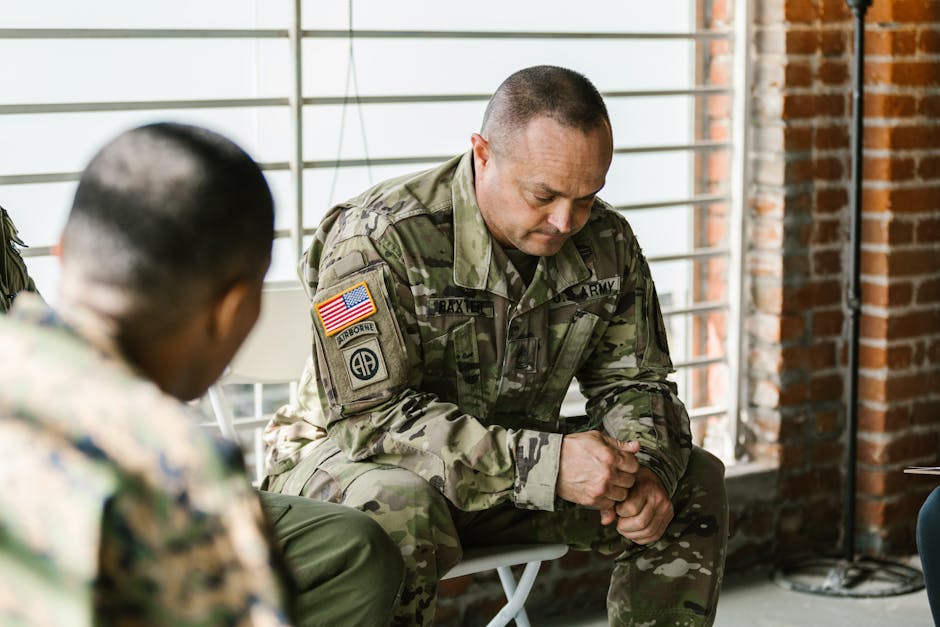
Programs for veterans address the specific traumas of military service and are often staffed by those with military experience.
Dual diagnosis programs provide integrated treatment for depression alongside co-occurring conditions like anxiety, PTSD, or substance use disorders.
Trust your instincts when choosing a provider. The right one will make you feel heard, respected, and hopeful.
Building a Support System: Local Resources and Holistic Care
Recovery from depression extends beyond the clinic. It involves building a life that supports your well-being through relationships, healthy habits, and community connections. In Austin, healing happens in connection, and depression treatment Austin accepts this philosophy.
How Family and Friends Can Help
Your support can be a powerful force in a loved one’s recovery. Here’s how to help:
Educate yourself: Understand that depression is a medical condition, not a choice. This allows you to respond with compassion.
Offer non-judgmental support: Create a safe space for them to share. Instead of offering advice, simply listen and validate their feelings.
Encourage professional treatment: Offer to help research options or accompany them to an appointment. Taking the first step is often the hardest part.
Provide practical help: Offer to assist with small tasks like grocery shopping or chores, which can feel overwhelming during a depressive episode.
Set healthy boundaries: Take care of your own well-being so you can provide sustainable support.
Holistic and Lifestyle Approaches to Support Recovery
Daily lifestyle choices are crucial for supporting your treatment and long-term healing.
Nutrition: Focus on nourishing your brain and body. Start with simple, healthy snacks and meals, as consistent nutrition helps stabilize mood.
Movement: Gentle, enjoyable movement like a walk around Lady Bird Lake or stretching releases natural mood-boosters.
Sleep: Create a consistent, relaxing bedtime routine to improve sleep quality, which is vital for mental health.
Mindfulness and Meditation: Even five minutes of daily practice can help you stay grounded in the present and break cycles of negative thinking.
Community Connection: Depression thrives on isolation. Connecting with others through support groups, hobbies, or volunteering is a powerful antidote.
Austin has a rich network of organizations ready to offer support.
NAMI Central Texas: This organization offers support groups, educational programs, and resources for individuals and families affected by mental illness. Visit NAMI Central Texas to learn more.
Suicide & Crisis Lifeline (988): For immediate crisis support, call or text 988 anytime to connect with trained, confidential counselors. Learn more at Suicide & Crisis Lifeline.
Local Support Groups: Peer-led groups throughout Austin provide a space to share experiences without judgment and remind you that you are not alone.
Conclusion: Take the First Step Towards Healing in Austin
Taking the first step toward depression treatment Austin shows incredible courage. While the path may seem uncertain, genuine hope awaits in Austin’s vibrant mental health community.
Recovery from depression is absolutely possible. Austin offers a comprehensive range of options to meet you where you are, from traditional therapy and medication to innovative approaches like ketamine therapy and immersive retreats. Whether you’re dealing with persistent sadness, treatment-resistant depression, or co-occurring conditions, there is a pathway forward.
What matters most is that you don’t have to figure this out alone. Skilled therapists, psychiatrists, peer support groups, and loved ones can form a safety net to support your journey toward wellness.
Austin’s holistic approach recognizes that true healing involves refinding joy, purpose, and connection. The city’s emphasis on community, nature, and innovation creates an environment where profound change is possible.
At Within, we witness the power of this approach in our immersive retreats. We combine the breakthrough potential of ketamine-assisted therapy with the deep healing that happens when you focus entirely on your recovery within a supportive community.
Depression often tells you that nothing will help, but that is the illness talking. Every person who has found their way back to wellness started with one brave decision to reach out.
Your life has value, your pain matters, and your recovery is possible. Don’t wait to begin this journey.
A comprehensive wellness program is a strategic approach to employee well-being that addresses the whole person. Unlike traditional initiatives focused on physical health, these programs integrate mental, emotional, social, financial, and even spiritual wellness into a cohesive strategy.
Key Components of a Comprehensive Wellness Program:
Physical Health: Fitness programs, health screenings, nutrition education
Mental & Emotional: Counseling services, stress management, mindfulness training
Social Connection: Team-building activities, employee resource groups, mentorship
The data is compelling. Johnson & Johnson’s program saved the company $250 million over a decade, returning $2.71 for every dollar spent. Smoking rates among their employees dropped by over two-thirds, while high blood pressure and physical inactivity declined by more than half.
However, true wellness isn’t just about reducing healthcare costs. It’s about creating an environment that addresses the root causes of burnout, anxiety, and disconnection, allowing people to thrive.
The wellness industry now covers over 50 million U.S. workers and generates $8 billion in revenue. Yet, many programs fail because they focus on symptoms rather than the systemic changes needed for meaningful results.
Deconstructing the “Comprehensive” in a Wellness Program
What does “comprehensive” really mean in a wellness program? It’s more than a checklist; it’s a holistic model that sees employees as whole people. It recognizes the intricate connections between every part of an individual’s life—physical, mental, financial, and social—and their ability to thrive.
An employee’s physical wellness is linked to their mental and emotional health, which are impacted by financial security and social connection. Stress about money can manifest physically, rendering a gym membership benefit less effective. A comprehensive approach understands these pillars don’t stand alone; they support each other.
The Core Pillars of Employee Well-being
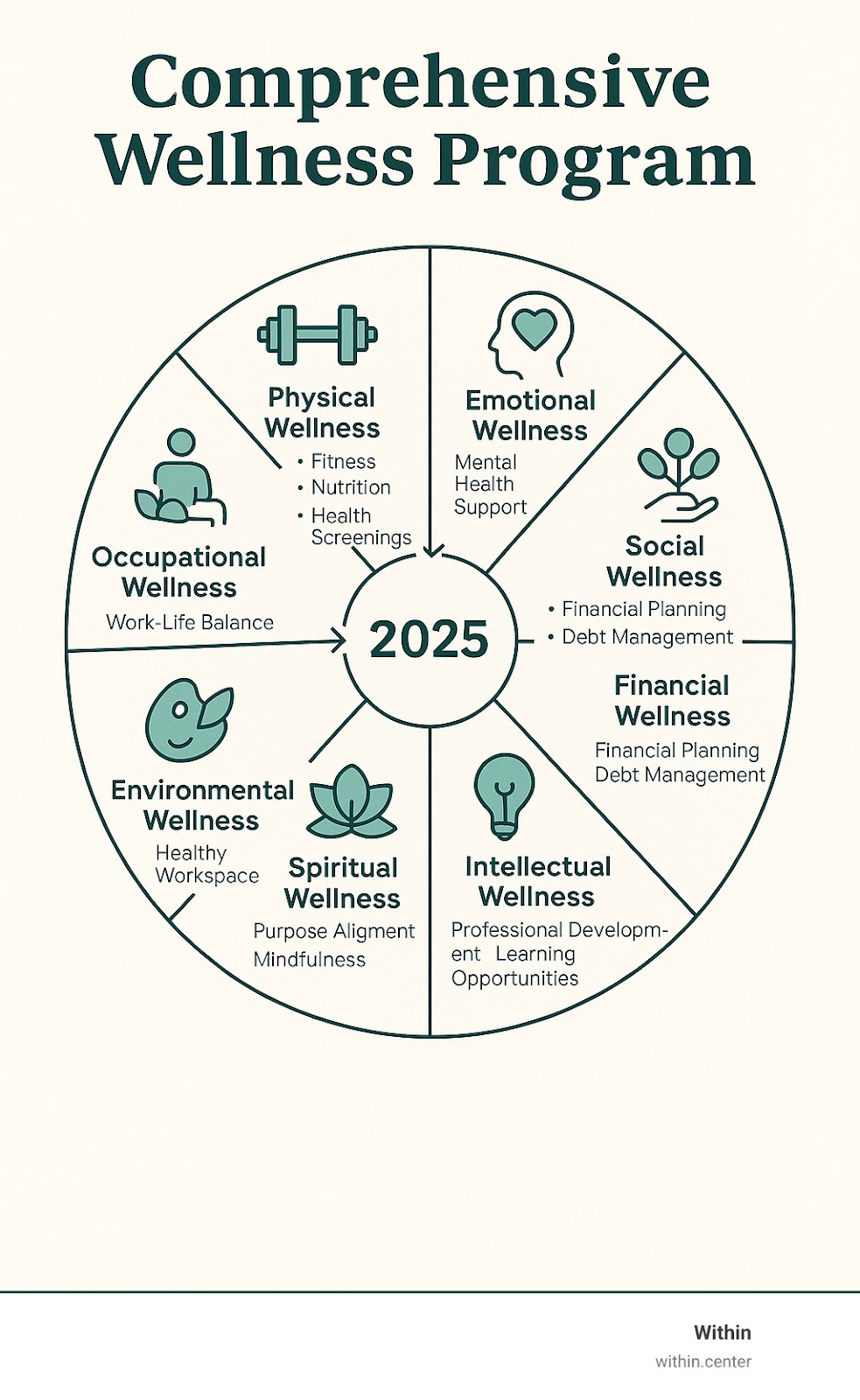
To build a robust comprehensive wellness program, organizations should support employees across several key areas:
Physical Health: Includes health screenings, fitness programs (like on-site yoga or gym discounts), and nutrition education.
Mental & Emotional Wellness: Essential for building resilience, this covers stress management techniques, easy access to counseling, and Employee Assistance Programs (EAPs). It’s about creating a culture where it’s okay to discuss mental health. For those seeking deeper healing beyond conventional methods, it’s worth exploring options like Why Ketamine Alone Isn’t Enough.
Financial Wellness: Addresses a major source of stress by offering resources for financial planning, debt management, and retirement savings.
Social & Community Building: Fosters a sense of belonging through team-building activities, mentorship programs, and employee resource groups (ERGs).
Intellectual Wellness: Sparks curiosity and growth through continuous learning and professional development opportunities.
Spiritual Wellness: Nurtures inner peace and purpose (not necessarily religion) through mindfulness, meditation, and volunteer opportunities.
Environmental Wellness: Focuses on the physical workspace, ensuring it’s healthy and safe with good ergonomics, clean air, and flexible work arrangements.
Beyond Health: Integrating a Psychosocial Work Environment
A truly comprehensive wellness program is woven into the organization’s fabric, shaping the psychosocial work environment. This means addressing factors like unmanageable workloads or lack of support that increase stress and burnout. This integration involves:
A Supportive Organizational Culture: This is built on civility and respect, fairness and transparency, appreciation and recognition, and honesty and trust. It requires genuine support for work-life balance, as noted by Forbes, and psychological safety, where employees feel safe to speak up.
Thoughtful Organization of Work: This involves managing demands and workload, ensuring clear communication and clarity of roles, and giving employees a sense of control and decision latitude. Providing adequate resource support and managing change effectively are also critical.
The Blueprint for Success: Strategic Planning and Implementation
Strategic planning and implementation are essential for a successful comprehensive wellness program. This upfront work prevents costly mistakes and ensures the program meets employee needs, securing the support needed for it to last.
Our approach is a step-by-step process:
Situational Assessment: We gather employee input through surveys to understand their needs, preferences, and current well-being. This ensures the program is custom-made.
Goal Setting: We establish clear, measurable, achievable, relevant, and time-bound (SMART) goals, like “reduce absenteeism by 10% within 18 months.”
Budgeting and Resources: We determine the financial commitment and allocate resources wisely across all program components.
Program Design: Based on the assessment and goals, we create specific activities and communication plans.
Evaluation Plan: We build in an evaluation plan from the start to track progress, measure effectiveness, and make improvements.
Integrating Wellness into Your Organizational DNA
A comprehensive wellness program must be woven into your organization’s mission, vision, and values, creating a “culture of health.” This means:
Mission Alignment: Connecting wellness to broader company goals like productivity and retention.
Values Integration: Ensuring the program reflects core values like employee care and support.
Long-Term Strategy: Viewing wellness as an ongoing journey that evolves with feedback.
Employee Feedback Loops: Regularly asking for input to keep the program relevant and inclusive. You can learn More info about our approach to healing and how we refine it based on insights.
The Cornerstone of Success: Leadership Buy-In
Leadership support is vital. It’s not just about approving a budget; visible commitment and active participation are paramount. This includes:
Executive Participation: Senior leaders taking part in wellness activities sends a powerful message.
Manager Training: Equipping middle managers to encourage and support their teams’ well-being.
Resource Allocation: Dedicating sufficient financial and human resources signals the program’s importance.
Leading by Example: Leaders who prioritize their own well-being inspire others to do the same.
Overcoming Common Problems in Your Comprehensive Wellness Program
Common challenges can be addressed with smart strategies:
Low Engagement: Combat this by tailoring programs to employee needs, ensuring accessibility, and highlighting personal benefits.
Budget Constraints: Focus on the long-term Return on Investment (ROI) and start with low-cost, high-impact activities like walking challenges to build momentum.
Lack of Time: Advocate for policies that protect employee time for wellness, such as designated breaks or flexible scheduling.
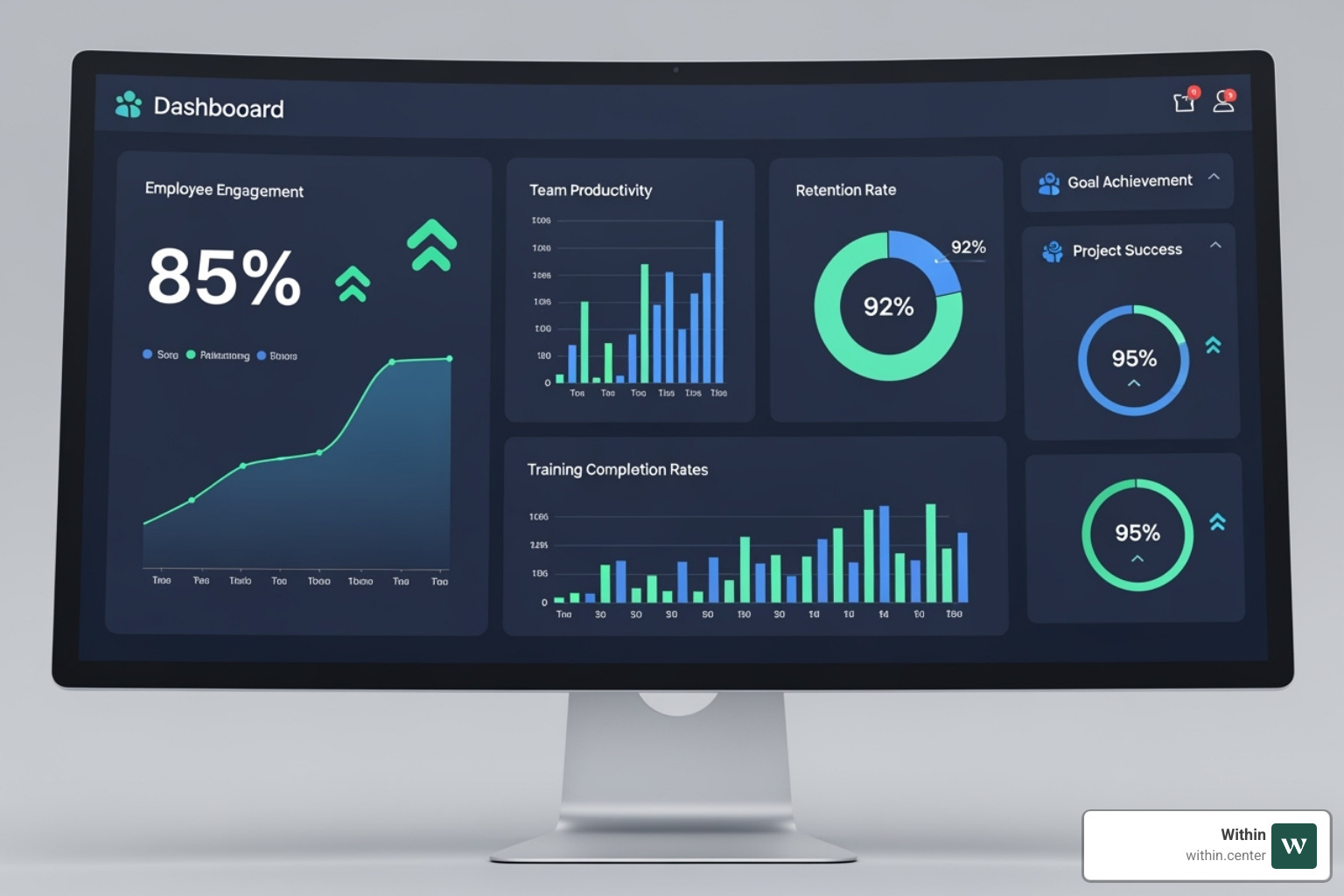
Measuring Impact: Use a mix of metrics, including participation rates, satisfaction surveys, and business data like absenteeism, to show value.
Sustaining Momentum: Keep the program dynamic by refreshing initiatives, celebrating successes, and maintaining consistent communication.
Driving Engagement: Making Your Program Accessible and Appealing
A comprehensive wellness program is like a dinner party—it doesn’t matter how great it is if guests can’t get there or don’t feel welcome. Engagement requires creating an environment where every employee, from the remote worker to the night shift supervisor, feels able and welcome to participate.
True accessibility means designing programs that meet people where they are, not where we think they should be.
Ensuring Your Comprehensive Wellness Program is Inclusive for All
An inclusive comprehensive wellness program embeds diversity, equity, and inclusion (DEI) principles into its foundation. This means:
Flexible Scheduling: Offering activities at various times to accommodate different work schedules and family commitments.
Diverse Programming: Providing a range of options, from high-energy fitness to gentle chair yoga, and financial workshops covering various life stages.
Built-in Accommodations: Designing programs to be accessible for employees with disabilities from the start.
Supporting Distributed Teams: Using technology to create virtual experiences that foster connection for remote and hybrid workers.
Inclusive Language: Using communication that makes everyone feel they belong, avoiding assumptions about family, ability, or culture.
Communication Strategies that Boost Awareness and Participation
An amazing comprehensive wellness program is useless if no one knows about it. Effective communication is key.
Multi-channel Promotion: Use various touchpoints like email, intranet, posters, and team meetings to reach everyone.
Highlighting Personal Benefits: Frame communications around what’s in it for the employee (e.g., “Reduce money stress” instead of “Financial workshop available”).
Employee Testimonials: Share stories from trusted colleagues, as they carry more weight than corporate announcements.
Wellness Champions: Empower enthusiastic employees to rally their peers and build grassroots support.
Regular Updates & Themed Campaigns: Keep the program fresh with themes like “Mental Health May” to maintain engagement.
Here are five creative promotional ideas:
Wellness Bingo Challenges to make participation fun and social.
Lunch & Learn sessions that respect busy schedules.
Employee wellness story spotlights in newsletters.
Pop-up wellness stations in common areas.
Friendly team challenges to foster camaraderie.
Measuring What Matters: The True Impact of Employee Well-being
Measuring the effectiveness of a comprehensive wellness program is both crucial and complex. We need to demonstrate value and guide improvements, but the most meaningful benefits—like a supportive culture—don’t always fit on a spreadsheet.
Understanding both success stories and academic research helps us set realistic expectations and measure what truly matters.
Key Benefits for Employees and a Positive Work Culture
When a comprehensive wellness program succeeds, the effects are widespread. Employees experience reduced stress and improved mental health, leading to higher job satisfaction and loyalty. As individuals feel supported, team dynamics improve, fostering trust and collaboration.
For the organization, these human improvements translate into tangible benefits. Healthcare costs often decrease, as shown by Johnson & Johnson’s $250 million in savings. Absenteeism drops, productivity increases, and talent retention improves because people want to stay in an organization that genuinely cares. For those exploring innovative wellness approaches, consider The Doorway In: How Psychedelic Therapy and Community Care are Changing Mental Health at Within Center.
A Realistic Look at Measuring Program Effectiveness
Measuring the precise impact of a comprehensive wellness program requires a multi-faceted approach.
Engagement Metrics: Track participation in workshops, resource utilization, and assessment completion.
Employee Satisfaction Surveys: Capture self-reported data on stress, job satisfaction, and overall wellbeing.
Business Metrics: Monitor concrete data like absenteeism and retention rates.
Healthcare Cost Trends: Track costs over the long term, understanding that many factors influence this metric.
However, we must be realistic. Rigorous academic research, like the Illinois Workplace Wellness Study, found no significant effects on medical spending or health behaviors, as detailed in this scientific research on wellness program effects. The study highlights selection bias—healthier employees are more likely to participate, which can skew results.
This doesn’t mean programs are worthless; it means we must be honest about what we can prove. The true value often lies in the unquantifiable: an employee feeling supported, a team building resilience, or a culture becoming more positive.
Conclusion
A comprehensive wellness program is more than a benefit; it’s a recognition that employees are whole human beings. True wellness integrates every aspect of the human experience: physical, mental, financial, social, and spiritual.
This approach becomes transformative when woven into the organization’s DNA, championed by leaders who not only approve budgets but actively participate. The culture shifts from one of endurance to one where people can thrive. While challenges like low engagement and budget constraints are real, the organizations that persevere find that when people feel cared for, they bring their best selves to work.
The research provides both inspiration, like Johnson & Johnson’s savings, and a dose of reality, reminding us that the truest value often lies in harder-to-measure improvements in morale and culture.
For leaders ready to address the root causes of their own stress and burnout, a deeper approach may be necessary. The daily pressures of leadership can create cycles that limit both effectiveness and fulfillment.
For founders and leaders seeking a profound reset, Within’s immersive retreats offer a uniquely deep and integrated approach to well-being. Our programs combine ketamine-assisted therapy with comprehensive integration support and a community focus at our peaceful Austin, Texas location. This is about addressing the underlying patterns of burnout, not just the symptoms.
We invite you to Explore our Psychedelic Therapy Retreats and find how this deeper work can transform your well-being and your capacity to create a thriving workplace culture.
A Texas wellness center offers hope for those seeking deeper healing beyond traditional healthcare. The Lone Star State has become a hub for innovative wellness approaches, with centers combining ancient wisdom and cutting-edge therapies.
Across the state, you can find a diverse array of services custom to every need. These include centers specializing in holistic and functional medicine, which aim to find the root cause of health issues. For mental health, innovative treatments like ketamine therapy are becoming more accessible for conditions such as depression, PTSD, and anxiety. Many centers offer immersive retreat experiences on serene properties, while others focus on unique modalities like float therapy in sensory deprivation tanks. You can also find integrative care clinics that blend conventional and alternative medicine, and even university-based wellness programs designed to support students.
Texas faces significant health challenges. The state has high rates of chronic diseases like obesity, diabetes, and heart disease. This has driven demand for preventative and holistic wellness services that address root causes rather than just symptoms.
What makes Texas unique is its diverse geography and cultural blend. From the Hill Country’s rolling landscapes to coastal plains, wellness centers here offer everything from sensory deprivation tanks to psychedelic-assisted therapy. Many centers emphasize community connection alongside individual healing.
The wellness industry in Texas contributes significantly to the state’s economy. Telehealth has grown substantially, with many centers now offering virtual consultations. As Ruth Hereford shared about her ketamine therapy experience: “It’s like someone turned on the light for me.”
What to Expect: A Spectrum of Services for Mind, Body, and Spirit
When you walk into a Texas wellness center, you’re stepping into a world that’s quite different from your typical doctor’s office. These centers focus on treating you as a whole person – not just your symptoms. The atmosphere is usually calmer, more welcoming, and the conversations tend to be deeper.
What makes these centers special is their integrative approach. They blend the best of conventional medicine with time-tested complementary therapies. Instead of just handing you a prescription and sending you on your way, they want to understand what’s really going on in your life. They’re big on patient empowerment – teaching you how to take charge of your own health.
The focus here is preventative care. Rather than waiting for problems to get worse, these centers help you build resilience and catch issues early. It’s like having a health coach, therapist, and medical team all rolled into one supportive experience.
Exploring Services at a Texas Wellness Center
The range of services at a Texas wellness center can be pretty amazing. Each center has its own personality, but most offer a thoughtful mix of treatments for your mind, body, and spirit.
Holistic health consultations are usually where your journey begins. These aren’t your typical 15-minute appointments. Practitioners take time to understand your health history, lifestyle, stress levels, and goals. They’re looking for the root causes of your concerns, not just quick fixes.
Many centers offer mind-body therapies like meditation classes, yoga sessions, and biofeedback training. These help you understand how your thoughts and emotions affect your physical health. It’s fascinating to find how much control you actually have over your wellbeing.
Nutritional guidance goes way beyond basic diet advice. Expert nutritionists create personalized plans that use food as medicine. Some centers even offer immersive programs where you can learn to prepare healing meals and understand how different foods affect your energy and mood.
Therapeutic bodywork includes massage therapy, acupuncture, and chiropractic care. These treatments help release tension, improve circulation, and get your body moving properly again. Many people are surprised by how much better they feel after addressing physical imbalances they didn’t even know they had.
Movement and fitness programs are custom to your current abilities and health goals. Whether you’re recovering from an injury or want to improve your athletic performance, these programs meet you where you are.
Stress management is huge at most centers because chronic stress underlies so many health problems. You’ll learn practical techniques for handling life’s challenges without letting them overwhelm your system.
IV nutrient therapy has become incredibly popular. These treatments deliver vitamins and minerals directly into your bloodstream, bypassing your digestive system for maximum absorption. People often use them for energy boosts, immune support, or recovery from illness.
Hormone optimization addresses imbalances that can affect everything from your energy levels to your mood to your sleep quality. This is especially helpful for people going through major life transitions or dealing with age-related changes.
Aesthetic wellness recognizes that feeling good about how you look affects your overall wellbeing. Many centers offer skin treatments and other services that help you feel confident and vibrant.
Weight management support takes a comprehensive approach that looks at hormones, metabolism, emotional eating patterns, and lifestyle factors. It’s much more effective than just counting calories.
Specialized Wellness for Every Member of the Family
One of the beautiful things about the wellness movement in Texas is how inclusive it’s become. A Texas wellness center often serves everyone from college students to busy professionals to families with pets.
Student and young adult wellness programs recognize that this generation faces unique pressures. University wellness centers provide not just health services, but also education about stress management, healthy relationships, and life skills. They often offer practical resources like sleep kits and wellness supplies to help students thrive.
Mental health support has expanded far beyond traditional therapy. Many centers offer group support sessions, mindfulness training, and innovative treatments for anxiety and depression. The focus is on teaching people skills they can use throughout their lives.
Corporate wellness programs bring these services into the workplace. Companies are realizing that supporting employee wellbeing isn’t just nice – it’s good business. These programs help reduce stress, improve productivity, and create healthier work cultures.
Even pet wellness education has found its place in the wellness world. Some centers recognize that our furry family members are part of our overall wellbeing picture, offering guidance on preventative care and holistic approaches to pet health.
The common wellness goals that bring people to these centers include: improved energy and vitality, stress reduction and emotional balance, weight management, better sleep quality, hormonal balance, chronic pain relief, immune system support, mental clarity, and overall preventative health maintenance. Whatever brought you to consider a wellness center, chances are good that others have walked that path before you and found real help.
The Holistic and Integrative Approach of a Texas Wellness Center
When you step into a Texas wellness center, you’re entering a space where healing happens differently. Instead of focusing on just one symptom or problem, these centers look at you as a complete person. Your mind, body, and spirit all work together, and true wellness happens when all three are in harmony.
This whole-person approach is what makes integrative medicine so powerful. Rather than simply putting a band-aid on symptoms, practitioners dig deeper to find the real reasons behind your health challenges. Think of it like being a detective – they want to solve the mystery of what’s really going on in your body.
Functional medicine takes this detective work even further. The goal is to correct the problem instead of just masking symptoms. Practitioners use your body’s natural healing abilities to create lasting change, not temporary fixes.
What’s beautiful about this approach is how it empowers you. You’re not just a passive patient receiving treatment – you become an active partner in your healing journey. You’ll learn how your body works, what it needs to thrive, and how to support your own wellness every day.
Embracing Anti-Aging and Regenerative Medicine
One of the most exciting areas in the Texas wellness center world is regenerative medicine. This isn’t about chasing eternal youth – it’s about helping your body repair itself and maintain vitality as you age naturally.
Peptide therapy is like giving your body a gentle nudge in the right direction. These short chains of amino acids work with your natural processes to support tissue repair, boost immune function, and improve metabolic health. Peptides are used to help with everything from muscle recovery to overall wellness.
Bioidentical hormone support addresses one of the most common challenges people face as they age. When your hormones are out of balance, everything feels harder – your energy drops, your mood shifts, and your body doesn’t feel like your own. Bioidentical hormones are chemically identical to what your body naturally produces, making the transition smoother and more effective.
The field also accepts regenerative modalities like PRP (Platelet-Rich Plasma) injections. These treatments use your own body’s healing factors to repair damaged tissue, offering hope for chronic injuries without surgery.
Sexual wellness is another important piece of the puzzle. Many centers offer specialized programs that address intimacy and sexual health through hormone optimization and other natural approaches. After all, sexual wellness is part of overall wellness.
Bone health deserves special attention, especially for women. According to the National Osteoporosis Foundation, about 80% of Americans with osteoporosis are women. Bone health is crucial for women’s wellness, and many centers offer screening and support to keep bones strong throughout life.
Even skin rejuvenation fits into this holistic picture. When you feel good about how you look, it affects your confidence and overall well-being. Advanced treatments help your skin look and feel healthier from the outside in.
A Focus on Mental and Emotional Well-being
Your mental and emotional health aren’t separate from your physical health – they’re deeply connected. A Texas wellness center understands that healing your body without addressing your mind and spirit only tells part of the story.
Counseling services provide a safe space to explore what’s really going on beneath the surface. Whether you’re working through trauma, managing stress, or just need someone to talk to, individual and group counseling can be transformative.
Group support creates something special – a sense of community and shared experience. When you realize you’re not alone in your struggles, healing becomes easier. There’s power in connecting with others who understand your journey.
Mindfulness practices like meditation and breathwork aren’t just trendy wellness activities. They’re practical tools that help you stay present, manage anxiety, and regulate your emotions. These skills become part of your daily toolkit for better living.
Stress reduction techniques are essential in our world. Chronic stress contributes to so many health problems, both physical and mental. Learning how to manage stress effectively can change everything about how you feel.
Some centers offer innovative approaches for anxiety and depression support. Traditional therapy is wonderful, but sometimes people need additional options. Ketamine therapy is often described as a “light in the darkness” for treatment-resistant depression, anxiety, chronic pain, and OCD. This therapy can help dissolve limiting patterns and increase self-awareness.
The beauty of integrative care is how it brings different approaches together. It’s not uncommon to find practitioners who are board-certified in both Internal Medicine and Functional and Regenerative Medicine, offering remote consultations that bridge conventional and alternative care.
The Cutting Edge: Technology and Psychedelic Medicine in Texas
The Texas wellness center landscape is not just about traditional or natural remedies; it’s also at the forefront of incorporating modern technology and innovative therapies. We’re seeing a significant accept of telehealth, which allows for virtual consultations and remote wellness programs, expanding access to care across our vast state. Advanced diagnostics, wearable technology, and various modern healing practices are becoming standard offerings, pushing the boundaries of what wellness can achieve.
High-Tech Healing and Modern Therapies
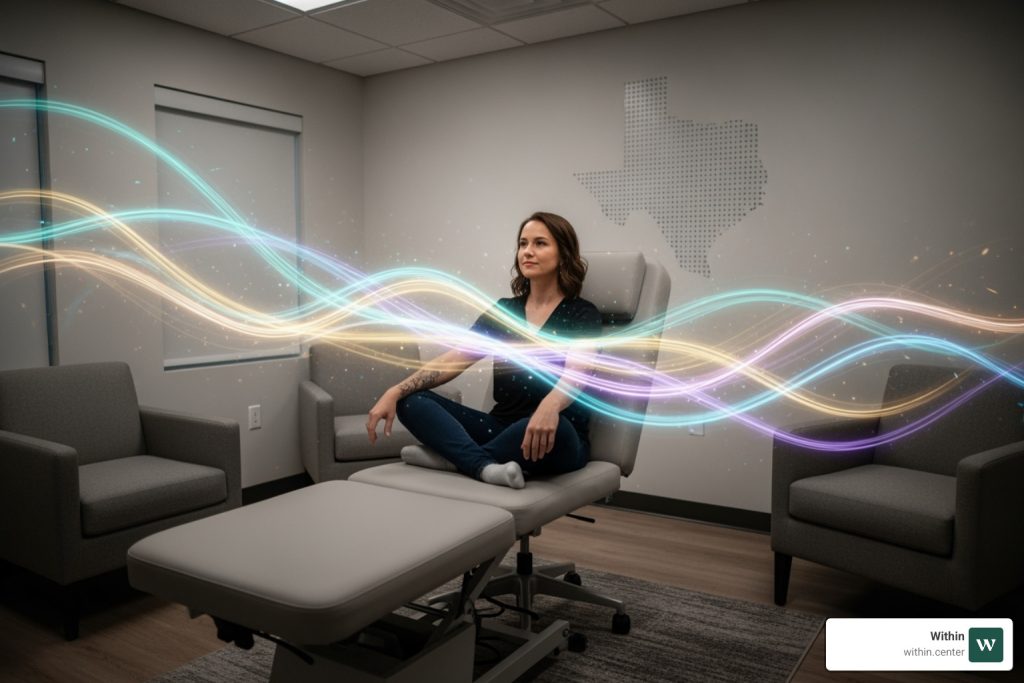
Sensory Immersion Experiences: Many centers offer sensory deprivation float tanks. These soundproof, lightproof tanks filled with high-salinity water allow for deep relaxation, resetting the nervous system, reducing anxiety, improving sleep, and boosting creativity. It’s an incredible way to disconnect and reconnect with yourself.
PEMF Therapy: Pulsed Electromagnetic Field (PEMF) therapy is another modern modality gaining traction. This therapy has the potential to improve physical performance, sleep, and overall health. Research on PEMF therapy benefits suggests its efficacy in various areas.
Infrared Sauna Experiences: These offer therapeutic heat that penetrates deeper than traditional saunas, promoting detoxification, relaxation, and muscle recovery.
Cold Therapy: From localized cryotherapy to full-body cold plunges, this therapy is used to reduce inflammation, boost mood, and improve recovery.
Advanced Lab Testing: Many centers use comprehensive lab services, going beyond standard blood work to include genetic testing, hormone panels, and micronutrient analysis, allowing for highly personalized treatment plans. On-site lab services can provide prompt and accurate results.
Modern Healing Practices: Beyond specific technologies, centers integrate various modern techniques, often combining them with ancient wisdom. This approach treats people through the integration of many different methods of organic healing, both ancient and modern.
The Rise of Psychedelic-Assisted Therapy in Texas
Perhaps one of the most significant and exciting developments in the Texas wellness center space is the emergence and growing acceptance of psychedelic-assisted therapy. This is a new frontier in mental healthcare, offering profound possibilities for healing and personal growth.
Ketamine Therapy for Depression & PTSD: Ketamine, an FDA-approved medication, is increasingly used in therapeutic settings for conditions like treatment-resistant depression, anxiety, PTSD, and chronic pain. Treatments can include both ketamine IV infusions and Spravato nasal spray, with many patients describing the experience as a “light in the darkness.” It works by blocking specific receptors in the brain, reducing overactivity and promoting neural plasticity. What is Ketamine Therapy? digs deeper into this innovative treatment.
Texas’s Investment in Psychedelic Research: Texas has shown a progressive stance, with legislative efforts supporting research into the therapeutic benefits of psychedelics, particularly for veterans and those suffering from PTSD. This indicates a growing recognition of these therapies’ potential.
The Importance of Integration: A crucial aspect of psychedelic-assisted therapy, especially with ketamine, is the integration process. This involves structured therapy sessions before, during, and after the psychedelic experience to help individuals process insights, incorporate new perspectives, and make lasting positive changes in their lives. Without proper integration, the profound experiences can lose their therapeutic impact. How therapy improves ketamine treatment highlights this critical component.
Immersive Retreat Experiences: For those seeking a deeper dive into healing, some wellness centers, like our own at AWKN Ranch near Austin, offer immersive, live-in retreat experiences that include ketamine-assisted therapy. These retreats provide a supportive, community-focused environment where individuals can engage in holistic healing with comprehensive integration support, leading to profound and lasting change. This unique approach allows for a focused and uninterrupted healing journey, away from the distractions of daily life.
Your Path to Wellness: Practical Steps and Considerations
Starting on a wellness journey can feel overwhelming, especially when you’re searching for the perfect Texas wellness center to support your unique needs. The good news? With a little planning and self-reflection, you can find a place that truly resonates with your health goals and personal values.
Think of this process as an investment in yourself. You wouldn’t buy a house without doing your homework, and the same applies to choosing where you’ll focus on healing and growth.
Finding the Right Texas Wellness Center for You
The first step is getting clear on what you actually want to achieve. Are you dealing with chronic stress that’s affecting your sleep and energy? Maybe you’re struggling with treatment-resistant depression and curious about ketamine therapy. Or perhaps you’re simply ready to take a more proactive approach to aging gracefully.
Once you know your goals, start thinking about the environment that feels right for you. Some people thrive in clinical settings that feel familiar and medical. Others prefer spa-like atmospheres with soft lighting and calming music. And then there are those who crave something deeper – an immersive retreat experience where they can step completely away from daily distractions and focus entirely on healing.
The practitioner’s expertise matters tremendously. If you’re interested in hormone optimization, you’ll want someone who specializes in bioidentical hormone therapy. For mental health concerns, look for centers offering both traditional counseling and innovative approaches like ketamine-assisted therapy. Don’t be shy about asking about credentials and experience during your initial consultation.
Consider whether community connection is important to your healing process. Some people prefer one-on-one care, while others find tremendous value in group support and shared experiences. Centers that emphasize community often create lasting bonds that extend well beyond your treatment period.
Location plays a practical role too. Texas is huge, and while some treatments require regular visits, others might be worth traveling for. Finding psychedelic therapy in Austin has become more accessible in recent years, with options ranging from outpatient care for ongoing support to immersive retreat experiences for deeper change.
Reading testimonials can give you a real sense of what to expect. When someone shares that “a single treatment made the cobwebs in my mind disappear,” you get a glimpse into the potential impact. But remember, everyone’s journey is different.
Most importantly, trust your gut during consultations. A good Texas wellness center will welcome your questions about their approach, treatment plans, and how they support you through your healing journey. They should make you feel heard, not rushed.
Understanding Costs and Insurance Coverage
Let’s be honest about money – wellness services can be a significant investment, and it’s important to go in with realistic expectations about costs and coverage.
Service pricing varies widely across Texas. A float session might cost you $70-$115, while comprehensive retreat experiences can start around $2,700 for a week-long immersive program including accommodation. Specialized therapies like IV nutrient infusions or ketamine treatments typically have their own pricing structures, often offered as single sessions or package deals.
Here’s where it gets tricky: insurance coverage for integrative wellness services is inconsistent at best. Many insurance plans don’t fully cover services they consider “alternative” or “preventative,” even when these approaches can prevent more expensive health problems down the road.
Many quality wellness centers operate on a cash-based model, which actually has some advantages. Without insurance company restrictions, practitioners can spend more time with you and create truly personalized treatment plans. They’re not limited by what an insurance company thinks you “should” need.
Membership programs can help make regular services more affordable. Some centers offer annual memberships with discounts on services, while others provide tiered memberships for unlimited access to certain amenities like saunas or IV therapy.
For larger investments in your health, ask about financing options or payment plans. Many centers understand that wellness is a priority worth investing in, even if the upfront cost feels daunting.
If a center does work with insurance, verify whether they’re in-network with your specific plan. Even then, call your insurance company directly to understand your benefits. Ask about coverage for specific services, whether you need referrals, and what your out-of-network benefits might cover.
The most important advice? Verify your benefits before you start treatment. A quick call to your insurance company can prevent surprise bills and help you budget appropriately for your wellness journey. Investing in prevention and wellness now often saves much larger healthcare costs later.
Conclusion: Begin Your Change Journey in Texas
The Texas wellness center landscape is truly something special. From the rolling hills of Austin to the busy medical districts of Houston and Dallas, we’ve finded a state that’s embracing wellness with open arms and innovative minds.
What strikes us most is how Texas centers blend the best of both worlds. You’ll find ancient healing wisdom sitting comfortably alongside cutting-edge technology. Whether it’s PEMF therapy paired with mindfulness practices or ketamine-assisted therapy combined with traditional counseling, the holistic approach is what makes lasting change possible.
A holistic approach is key to lasting health because it recognizes that you’re not just a collection of symptoms. You’re a whole person with physical, mental, emotional, and spiritual needs. The most successful wellness journeys we’ve seen address all these aspects together, not in isolation.
The modern therapies we’ve explored offer genuine hope for people who’ve tried everything else. From advanced IV nutrient therapy to the groundbreaking field of psychedelic-assisted therapy, these treatments are opening doors that seemed permanently closed. Ruth Hereford’s words about ketamine therapy ring true for many: “It’s like someone turned on the light for me.”
Your journey to well-being starts with a single step. Maybe it’s that first consultation with a functional medicine practitioner. Perhaps it’s trying a float session to reset your nervous system. Or it could be taking the bigger leap into an immersive retreat experience where you can focus entirely on healing.
At Within, we believe deeply in the power of immersive healing. Our AWKN Ranch near Austin offers something unique in the Texas wellness landscape – a place where you can step away from daily distractions and dive deep into change. With ketamine-assisted therapy, comprehensive integration support, and a community that truly understands the healing journey, we create space for the kind of profound change that lasts.
The beauty of Texas is that there’s room for every kind of healing journey. Whether you need ongoing outpatient support or you’re ready for a complete reset through an intensive retreat experience, the Lone Star State has acceptd wellness in all its forms.
If you’re ready to explore what’s possible when healing becomes your only focus, we’d love to support you. Start on a psychedelic therapy retreat and find the profound change that awaits in the heart of Texas.
Retreats for veterans with depression offer specialized, immersive programs designed to address the unique mental health challenges faced by those who have served. These programs combine peer support, evidence-based therapies, and holistic healing approaches in supportive environments away from daily stressors.
Key Features of Veteran Depression Retreats:
Duration: 5-7 days to 12-week programs
Group Size: 8-16 participants with similar experiences
Cost: Many programs are free through donor/grant funding
Eligibility: Veterans with PTSD, depression, or trauma diagnoses
Approach: Combines traditional therapy with alternative modalities
Support: Often includes spouses/partners and post-retreat integration
The invisible wounds of military service run deep. While 7.7% of people may develop PTSD in their lifetime, veterans face additional challenges including traumatic brain injury, moral injury, and the complex transition to civilian life. Depression often accompanies these struggles, creating a cycle that can feel impossible to break.
Traditional weekly therapy sessions, while valuable, may not provide the intensive support needed for profound healing. Over 6,000 veteran suicides occur annually, highlighting the urgent need for comprehensive mental health solutions that go beyond conventional approaches.
Specialized retreats create what many describe as sanctuaries – safe spaces where veterans can step away from daily routines and focus entirely on healing. These programs recognize that the warrior who served deserves warrior-level support in recovery.
Why Choose Specialized Retreats for Veterans with Depression?
When healing from the invisible wounds of service, a specialized retreat offers a unique and powerful environment. It’s not just about getting away; it’s about stepping into a focused space where every element is designed for recovery. These programs understand that the journey back from service can be arduous, and they provide a dedicated path.
One of the most profound benefits is the immediate sense of community. Surrounded by others who truly “get it,” the stigma of seeking help melts away. You’re among fellow warriors who share similar experiences, fostering a camaraderie that is incredibly healing. This shared understanding creates a safe space to open up, process emotions, and realize you are not alone.
Retreats are also grounded in mindfulness and nature. The simple act of slowing down and being present is a powerful antidote to stress. Many programs are nestled in peaceful, natural surroundings, which has been shown to reduce stress hormones and improve mood. Connecting with the environment helps calm the nervous system and provides a sense of peace.
Primary Benefits of Veteran Retreats:
Peer Support: Connect with others who share similar experiences, reducing feelings of isolation and shame.
Shared Understanding: Build camaraderie and trust in a judgment-free environment.
Reduced Stigma: Openly discuss challenges without fear of judgment.
Nature Therapy: Use natural environments to reduce stress, improve mood, and promote relaxation.
Mindfulness & Slow Living: Learn techniques to decelerate, be present, and manage stress effectively.
Focused Healing: Dedicate uninterrupted time to mental health recovery.
Holistic Approach: Address mind, body, and spirit for comprehensive well-being.
Skill Building: Acquire practical coping strategies and tools for daily life.
Addressing the Unique Scars of Service
Veterans carry unique scars like Post-Traumatic Stress Disorder (PTSD), Traumatic Brain Injury (TBI), and moral injury—a profound wound to the conscience. These invisible wounds contribute significantly to depression. The cumulative effects of combat, loss, and moral injury can lead to chronic stress, hypervigilance, and isolation, making reintegration into civilian life incredibly difficult. Specialized retreats for veterans with depression are designed to address these multifaceted challenges. They provide a sanctuary where the psychological burdens of service are understood and actively addressed through custom therapeutic approaches, offering a pathway to healing and renewed purpose.
How Do Retreats for Veterans with Depression Differ from Traditional Therapy?
While traditional weekly therapy is invaluable, a retreat offers a different, more intensive model for healing. Think of weekly therapy as regular maintenance, while a retreat is a deep, immersive overhaul.
The key difference is the 24/7 supportive environment. Instead of a 50-minute session, you are immersed in a therapeutic setting for days or weeks, allowing for continuous processing and immediate application of new skills. This holistic approach integrates various healing modalities for mind, body, and spirit.
Retreats also emphasize somatic (body-based) healing. While traditional therapy often focuses on cognitive aspects, trauma also impacts the nervous system. Retreats incorporate practices like yoga and meditation to release stored trauma and regulate the nervous system.
Finally, the community aspect is transformative. Living and healing alongside peers who share similar experiences creates a powerful sense of belonging and support that is difficult to find in individual therapy.
Here’s a quick comparison to illustrate the differences:
| Feature | Weekly Therapy | Immersive Retreat Model
What Happens at a Veteran Wellness Retreat?
Walking into a veteran wellness retreat is entering a carefully designed healing environment. It’s not a vacation; it’s a structured, safe space where you can focus entirely on your mental health journey, free from daily stressors. The atmosphere is intentionally supportive, surrounded by peers who understand the weight of service. This shared understanding creates an immediate sense of belonging.
Retreats for veterans with depression operate on the principle that healing happens best through immersion. Days are thoughtfully structured to balance intensive therapeutic work with restorative activities and skill-building. The goal is to build genuine resilience and provide tools that serve you long after you return home, recognizing that recovery requires both professional guidance and personal empowerment.
Therapeutic Approaches and Activities
The beauty of veteran wellness retreats lies in their comprehensive and holistic approach. They weave together multiple therapies that address the mind, body, and spirit, recognizing that military trauma affects the whole person.
The foundation is evidence-based psychotherapy, including group and individual counseling focused on emotional regulation and healthy communication. This is complemented by somatic (body-based) therapies to help release stored physical tension and reset the nervous system.
Common activities often include:
Mindfulness and meditation to foster presence and calm.
Yoga and gentle movement to connect breath with the body.
Creative therapies like art, music, or writing to express difficult experiences.
Nature-based activities, which are proven to reduce stress and improve mood.
Nutritional guidance to understand the link between diet and mental clarity.
Physical wellness services like massage or acupuncture.
Innovative modalities such as equine therapy or sound baths.
The Structure, Duration, and Cost of a Typical Retreat
Most retreats for veterans with depression are intensive, focused experiences lasting 5 to 7 days. Some organizations offer longer formats, such as 12-week programs that begin with a retreat and include ongoing support.
The daily structure balances therapy with restoration, including group sessions, individual activities, shared meals, and skill-building workshops. Group sizes are kept intimate—usually 8 to 16 participants—to ensure personal attention and foster close bonds.
Encouragingly, many programs are completely free to veterans, thanks to donor funding and grants. These programs typically cover lodging, meals, and all activities. Participants are usually responsible for their own travel, though some assistance may be available.
Eligibility requirements are straightforward, generally requiring proof of service (DD-214) and a service-related mental health diagnosis like PTSD or depression. Some programs also have sobriety requirements.
For veterans exploring other mental health treatment options that might require financial planning, resources like CareCredit can help make treatment more accessible. Financing now available!
The commitment to free programming reflects a deep understanding that financial stress shouldn’t prevent any veteran from accessing the healing they’ve earned.
Finding the Right Program: From Application to Aftercare
The journey to healing begins with a single step, but we know that first step can feel overwhelming. Finding the right retreats for veterans with depression doesn’t have to be a solo mission. Think of it as gathering intelligence for the most important operation of your life – your recovery.
How to Find and Apply for Retreats for Veterans with Depression
Starting your search might feel like navigating uncharted territory, but there’s actually a clear path forward. Most veterans begin with a simple online search using terms like “retreats for veterans with depression” or “PTSD veteran retreats.” You’ll find a wealth of programs, each with their own approach and specialty.
Veteran Service Organizations are your best allies in this search. Major organizations have comprehensive programs – some offer 12-week journeys that begin with intensive five-day retreats, while others provide shorter but equally powerful experiences. Smaller, specialized groups focus on specific healing approaches, from wilderness therapy to creative arts integration.
The VA can also point you in the right direction, even toward programs they don’t directly run. Many VA counselors keep lists of recommended retreat programs and can help you understand which might be the best fit for your specific situation.
When you find a program that resonates with you, the application process is typically straightforward. Most organizations have online forms that ask about your service history, current challenges, and what you hope to gain from the experience. You’ll need proof of service – your DD-214, military ID, or VA Health Care Card will usually do the trick.
Don’t hesitate to pick up the phone and talk to a real person. Program coordinators are there to help, and they can answer questions about everything from daily schedules to what to pack. These conversations often provide the clearest picture of whether a program aligns with your needs and comfort level.
Are There Options for Spouses and Families?
Here’s something that often surprises veterans: many programs actively encourage or even require you to bring your spouse or partner. This isn’t because they don’t trust you to go alone – it’s because they understand that service affects the whole family unit.
Couples retreats recognize that healing happens best together. When both partners learn new communication tools, practice mindfulness techniques, and process experiences in a safe environment, the changes stick. As one military spouse put it, “I haven’t been on the battlefield, but I’ve experienced trauma too.”
Some programs offer family sessions that include children and other loved ones. These create space for family members to understand what you’ve been through, express their own feelings, and learn how to support each other moving forward. It’s about healing the entire family system, not just the individual veteran.
The relationship healing component often becomes one of the most powerful aspects of the retreat experience. Veterans frequently report that learning to reconnect with their loved ones provides motivation and accountability that supports long-term recovery.
What Kind of Post-Retreat Support is Available?
The retreat experience is powerful, but the real change happens when you return home and integrate what you’ve learned into daily life. That’s why aftercare programs are absolutely crucial for lasting change.
Many programs offer structured follow-up support that can last up to 45 weeks. This might include weekly group calls, check-in sessions with counselors, or continued access to program resources. The goal is to help you steer the inevitable challenges that arise when you’re back in your regular environment.
Alumni networks create lasting bonds that extend far beyond the retreat itself. Statistics show that nearly three-quarters of participants in some programs stay in contact with their retreat companions. These peer connections become lifelines – people who truly understand your experience and can offer support when things get tough.
Continued skill practice is where the rubber meets the road. The most successful programs ensure that over 90% of participants continue using at least one coping strategy they learned. Whether it’s daily mindfulness practice, regular nature walks, or the communication techniques from group sessions, these tools become part of your everyday toolkit.
At Within, we’ve learned that profound healing requires ongoing integration support. The insights and breakthroughs from intensive experiences need nurturing and guidance to take root in daily life. This comprehensive approach to aftercare isn’t just helpful – it’s essential for building the foundation of lasting well-being. You can learn more about Why Ketamine Alone Isn’t Enough, and What True Healing Requires.
Frequently Asked Questions about Veteran Depression Retreats
We understand that taking the step toward healing through retreats for veterans with depression can bring up many questions. You’re not alone in wondering about the details, and we’re here to provide clear, honest answers to help you make the best decision for your journey.
What are the success rates for these retreats?
The results from veteran depression retreats are genuinely encouraging, and we want to share what the data shows while being completely transparent about what success looks like. Every veteran’s healing journey is unique, but the patterns we see are consistently positive.
The numbers tell a powerful story. When we look at participants who complete these programs, 86% report a healthier, more positive view of themselves and cite real progress toward personal goals. This isn’t just about feeling better temporarily – it’s about fundamental shifts in how veterans see their own worth and potential.
Relationships often heal alongside the individual. 84% of participants say what they learned helped them develop healthier relationships with spouses, children, friends, and fellow veterans. This ripple effect extends the healing far beyond the retreat itself.
Perhaps most importantly for long-term recovery, over 90% of alumni continue using at least one coping strategy they learned during their retreat experience. These aren’t abstract concepts – they’re practical tools that veterans integrate into daily life, from mindfulness techniques to communication skills.
Real veterans share profound changes. We’ve heard testimonials describing 87% reductions in PTSD symptoms, with participants calling their experiences “eye-opening” and “beneficial for my PTSD and my soul.” Many describe feeling renewed, refreshed, and – crucially – no longer alone in their struggles.
The friendships formed during these retreats often last for years, creating ongoing support networks that continue the healing process long after returning home.
Are there virtual or online retreat options available?
Yes, we recognize that not every veteran can attend an in-person retreat. Geographic distance, health concerns, family responsibilities, or simply feeling more comfortable starting from home can all be valid reasons to seek virtual options.
Several organizations now offer online retreat programs that adapt their core curriculum to a digital format. While these virtual programs can’t replicate the complete immersive experience of being physically present with other veterans, they do provide accessibility and flexibility that can be life-changing for those who need it.
Virtual retreats maintain the community focus that makes these programs so effective. You’ll still connect with other veterans who understand your experiences, participate in group sessions, and learn the same evidence-based coping strategies. The convenience of participating from home can actually make it easier for some veterans to open up and engage fully.
These online options work particularly well for initial engagement or as ongoing support after completing an in-person program. They ensure that more veterans can access crucial mental health support, regardless of their circumstances.
What if I’m in immediate crisis?
If you’re reading this while in crisis, please know that immediate help is available right now. Retreats are designed for healing and growth, not emergency situations. Your safety comes first, always.
Don’t wait – reach out immediately:
The Veterans Crisis Line is your best first resource. Call or text 988, then press 1. You can also chat online at Veterans Crisis Line. This service operates 24/7 with qualified responders who understand veteran experiences. It’s completely confidential.
If you’re in immediate danger, call 911 or go directly to your nearest emergency room. There’s no shame in seeking emergency help – it’s the brave, smart thing to do.
Crisis support is different from retreat support, but both are important parts of the mental health care spectrum. Once you’re stable and safe, retreat programs can provide the deeper, longer-term healing work that helps prevent future crises and builds lasting resilience.
Your life has value, your service mattered, and healing is possible. Please reach out for the immediate support you need right now.
Conclusion: Taking the First Step on Your Healing Journey
The path from military service to civilian life is rarely straightforward, especially when you’re carrying the invisible weight of depression, PTSD, TBI, or moral injury. But here’s what we want you to know: you don’t have to walk this journey alone, and healing is absolutely possible.
Throughout this exploration of retreats for veterans with depression, we’ve seen how these specialized programs create something truly special. They’re not just getaways – they’re sanctuaries where warriors can finally put down their guard and focus entirely on healing. The combination of peer support from those who truly understand, evidence-based therapies that address trauma at its roots, and holistic practices that nurture mind, body, and spirit creates a powerful foundation for change.
The numbers speak volumes about their effectiveness. When 86% of participants report a healthier view of themselves and 84% develop better relationships, we’re witnessing real change. When over 90% continue using coping strategies months after their retreat ends, we’re seeing lasting impact. These aren’t just statistics – they represent thousands of veterans who’ve found their way back to hope and purpose.
Perhaps most importantly, these retreats prove that community truly is medicine. In those group therapy sessions under open skies, in shared meals and quiet conversations, veterans find they’re not broken or beyond help. They’re warriors who deserve warrior-level support in their recovery. The bonds formed in these immersive settings often last for years, creating a network of understanding that extends far beyond the retreat itself.
The integration support and aftercare programs ensure that the profound work done during these retreats doesn’t fade when you return home. Whether it’s ongoing group therapy, alumni networks, or continued skill practice, you’ll have the tools and community to sustain your healing journey.
Taking that first step – reaching out for help, filling out an application, or simply acknowledging that you deserve support – can feel overwhelming. But it’s also the most courageous thing you can do. You’ve already shown incredible bravery in your service; now it’s time to be brave for yourself and your healing.
At Within, we understand the unique challenges veterans face, and we’re committed to supporting your journey toward lasting peace and resilience. Our immersive healing retreats combine the community focus and comprehensive integration support you need with cutting-edge therapeutic approaches. If you’re ready to explore how our holistic approach can support your path to wellness, we invite you to Explore our psychedelic therapy retreats and find what true healing can look like.
Remember: you’ve served with honor, and you deserve to live with peace. The journey ahead holds promise, purpose, and the possibility of profound change.
Psychedelic therapy Texas is experiencing unprecedented growth, with the state investing $50 million in clinical trials and passing groundbreaking legislation to study psychedelic treatments for mental health conditions.
Quick Overview of Psychedelic Therapy Options in Texas:
Legal Now: Ketamine-assisted therapy for depression, PTSD, and anxiety
Research Phase: Psilocybin studies for veterans with PTSD (HB 1802)
Major Investment: $50 million for ibogaine clinical trials (SB 2308)
Leading Institution: UT Austin’s McGill Center for Psychedelic Research
Focus Areas: Treatment-resistant depression, PTSD, chronic pain, substance use disorders
Texas has traditionally taken a conservative stance on drug policy. But something remarkable is happening in the Lone Star State. Veterans returning from combat with invisible wounds are driving change. Traditional treatments aren’t working for everyone.
“Texas should explore the efficacy of psychedelic treatment for veterans within the state,” said State Representative Alex Dominguez, whose bill launched Texas into psychedelic research leadership.
The numbers tell the story. 7.7% of people may develop PTSD in their lifetime. Anxiety affects one-third of adults. Over 10 million Americans struggle with fibromyalgia. These conditions often resist traditional treatments.
Now, Texas is betting big on a different approach. The state has become a global leader in psychedelic research investment. Major medical institutions like Dell Medical School are conducting studies on MDMA, psilocybin, and ketamine.
This isn’t about recreational drug use. It’s about evidence-based medicine delivered in clinical settings with trained professionals. The difference matters – and it’s changing lives.
The Shifting Legal Landscape of Psychedelic Therapy in Texas
Just a few years ago, the idea of psychedelic therapy Texas would have seemed impossible. Our state built its reputation on tough drug laws and conservative policies. But sometimes, crisis creates change.
The mental health crisis hit Texas hard. Our veterans came home carrying invisible wounds that traditional treatments couldn’t heal. Families watched loved ones struggle with PTSD, depression, and addiction. Something had to give.
What happened next surprised everyone. Republicans and Democrats started agreeing on something: we needed new solutions. The evidence was too strong to ignore. Studies from other states and countries showed these medicines could help where everything else had failed.
Texas lawmakers found a smart path forward. While substances like psilocybin and MDMA remain Schedule I under federal law, the state could fund rigorous research. This approach keeps strict oversight while exploring real therapeutic potential.
The economic benefits matter too. Texas leaders realized other states and countries were racing ahead in psychedelic research. Why should Texas miss out on the next breakthrough in mental health treatment?
The Breakthrough Bills: HB 1802 and SB 2308
Everything changed in 2021 with House Bill 1802. Texas became the first state to directly fund psychedelic research with taxpayer dollars. The focus? Psilocybin-assisted therapy for veterans with PTSD.
This wasn’t a small pilot program. It was a bold statement that Texas takes care of its own.
Then came Senate Bill 2308 in 2023. Governor Greg Abbott signed it into law, creating a clinical trial consortium to study ibogaine. This plant medicine shows promise for treating opioid addiction, PTSD, and other mental health conditions.
The real shocker? Texas committed $50 million to this research. That’s more than most countries spend on psychedelic studies. You can read the full bill here to see just how comprehensive this commitment is.
The advocacy from Texas leaders made all the difference. Former Governor Rick Perry’s story stands out. He started as a skeptic but changed his mind after meeting a Navy SEAL veteran struggling with brain injury, PTSD, and addiction. Perry saw how traditional treatments weren’t working. He became convinced that ibogaine could offer hope.
His willingness to follow the science, even when it challenged his previous beliefs, helped build bipartisan support. The message was clear: Texas wants to lead this research, not follow from behind.
Key Research Initiatives in Texas
Texas universities and medical centers jumped at the opportunity. Major institutions started forming partnerships to conduct world-class clinical trials.
The crown jewel is the Charmaine and Gordon McGill Center for Psychedelic Research and Therapy at Dell Medical School at UT Austin. It’s the first center of its kind in Texas, dedicated entirely to advancing psychedelic medicine.
Their research covers treatment-resistant depression, PTSD, traumatic brain injuries, anorexia nervosa, and prolonged grief. These aren’t just symptom studies. Researchers are diving deep into how these medicines work in the brain.
The focus on PTSD and TBI reflects Texas’s commitment to veterans. These conditions often go hand-in-hand, especially for combat veterans. Traditional treatments help some people, but too many fall through the cracks.
Texas research teams are getting creative with technology too. They’re exploring AI and machine learning to predict which patients might benefit most from specific treatments. The goal is personalized medicine that gives each person the best chance at healing.
This isn’t about rushing treatments to market. It’s about doing the science right, so when these therapies become available, we know they work and who they work best for.
The Science of Healing: How Psychedelics Can Rewire the Brain
When you hear about psychedelic therapy Texas breakthroughs, you might wonder what’s actually happening in the brain. The truth is, these aren’t just mystical experiences – they’re profound neurobiological events that can literally help your brain form new connections.
Think of your brain like a well-worn path through the woods. Depression, anxiety, and trauma create deep ruts that your thoughts keep falling into. Neuroplasticity – your brain’s amazing ability to reorganize itself – is how psychedelics help create new pathways through that forest.
The magic happens in your serotonin system, particularly in brain regions that control emotion, memory, and how you see yourself. There’s a network called the default mode network (DMN) that’s often overactive when you’re struggling with mental health conditions. It’s like having a broken record player stuck on negative thoughts about yourself.
Psychedelics temporarily quiet this chatter. Many people describe a sense of “ego dissolution” – that critical inner voice goes quiet, and suddenly you can see your life from a completely different angle. This creates space for emotional breakthroughs that seemed impossible before.
MDMA and Psilocybin: Mechanisms and Benefits
Let’s talk about how specific compounds actually work in your brain:
MDMA-assisted therapy has shown incredible promise for PTSD. MDMA affects your serotonin system in a unique way that reduces fear while increasing feelings of safety, empathy and connection. It’s like having a trusted friend sitting with you while you process difficult memories.
The compound helps with fear extinction and memory reconsolidation – essentially, your brain learns to file traumatic memories in a less threatening way. Instead of those memories triggering your fight-or-flight response, they become just memories. Two major Phase 3 clinical trials showed that people with severe PTSD experienced dramatic improvement after MDMA-assisted therapy.
Psilocybin-assisted therapy works differently but just as powerfully. The active compound in “magic mushrooms” often creates what researchers call “mystical experiences” – profound feelings of connection, meaning, and insight. These experiences are strongly linked to healing outcomes.
Texas researchers are also studying ibogaine, which showed remarkable results in a 2024 Stanford study. Veterans with traumatic brain injury saw significant improvements in PTSD, anxiety, and depression after treatment.
What makes these therapies special is that they often provide faster, more robust, and longer-lasting relief than traditional treatments. They don’t replace conventional therapy – they improve it by creating windows of opportunity for deep healing.
Challenges in Research: Blinding and Expectancy
Here’s the thing about studying psychedelics – they’re really hard to research using traditional methods. When someone takes psilocybin or MDMA, they know they’re not getting a sugar pill. This creates what scientists call the “blinding problem.”
If you know you’ve received the active drug, your expectations might influence how you feel afterward. This placebo effect and expectancy bias make it challenging to prove that the improvements come from the medicine itself rather than just believing it will work.
Researchers are getting creative with solutions. Some use “active placebos” that create mild physical sensations without the full psychedelic experience. Others focus on objective measures like brain scans rather than just asking people how they feel.
The need for rigorous studies is why Texas’s $50 million investment matters so much. We need larger studies with diverse participants, especially veterans, to build rock-solid evidence. The VA evidence brief on psychedelic research provides detailed information about current research standards and findings.
Despite these challenges, the preliminary results are so promising that major medical institutions across Texas are dedicating significant resources to this research. The science is complex, but the potential for healing is undeniable.
Current Therapeutic Options in Texas
If you’re living in Texas and wondering about accessing psychedelic therapy Texas options today, you’re not alone. The landscape is evolving rapidly, but the reality is that most psychedelics like psilocybin and MDMA are still only available through approved clinical trials.
The good news? There’s one powerful exception that’s already helping thousands of Texans heal from depression, PTSD, and anxiety.
No matter which therapeutic approach you choose, success depends on three critical elements: your mindset going in, the environment where you receive treatment, and the support you get afterward. These aren’t just nice-to-haves – they’re the foundation that determines whether your healing journey creates lasting change or just temporary relief.
Ketamine-Assisted Psychotherapy: The Legal Pathway
Here’s what makes ketamine different from other psychedelics: it’s already FDA-approved and completely legal for mental health treatment in Texas. Originally used as an anesthetic, doctors finded its remarkable ability to treat conditions that don’t respond to traditional medications.
Ketamine works by creating what’s called a “dissociative experience.” This might sound scary, but it’s actually therapeutic. For a brief time, you step outside your usual thought patterns and emotional defenses. Imagine being able to observe your trauma or depression from a different perspective – one where you’re not trapped inside it.
The results can be dramatic. While traditional antidepressants take weeks or months to work (if they work at all), ketamine often provides relief within hours or days. It literally helps your brain form new neural pathways, breaking free from the rigid patterns that keep you stuck in suffering.
This is exactly why we focus on ketamine-assisted therapy at Within. It offers a safe, legal pathway to the kind of profound healing that was once only possible in research settings. If you’re curious about how this approach works, we’ve explained the details in What is Ketamine Therapy?.
The Importance of Set, Setting, and Integration for Psychedelic Therapy Texas
Every successful psychedelic experience – whether it’s ketamine, psilocybin, or MDMA – depends on three fundamental elements. Get these wrong, and even the most promising treatment can fall short. Get them right, and you create the conditions for genuine change.
Your mindset, or “set,” is where healing begins. This means approaching the experience with clear intentions, realistic expectations, and an open heart. What are you hoping to heal? What patterns are you ready to release? The preparation work you do beforehand – often through therapy sessions – sets the stage for everything that follows.
Your environment, or “setting,” needs to feel completely safe and supportive. This isn’t just about comfortable furniture and soft lighting (though those matter too). It’s about having trained professionals who understand what you’re going through, who can guide you through difficult moments, and who create a container where you feel protected enough to be vulnerable.
Integration is where the real work happens. The insights and breakthroughs you experience during a session are just the beginning. Without proper integration support, those profound realizations can fade like a dream. True healing requires translating what you’ve learned into actual changes in your daily life – new habits, healthier relationships, different ways of thinking about yourself and your past.
Participating in Research: Clinical Trials for Psychedelic Therapy Texas
Want to access cutting-edge treatments like psilocybin or MDMA therapy? Clinical trials are currently your only legal option in Texas. These studies are carefully designed to test both safety and effectiveness, which means they come with strict requirements.
The screening process is thorough – and for good reason. Researchers need to make sure these powerful treatments are safe for each participant. They’ll look at your medical history, current medications, and psychological profile. Certain conditions like a history of psychosis or serious heart problems might disqualify you, but many people with treatment-resistant depression, PTSD, or anxiety disorders are good candidates.
The University of Texas at Austin is leading much of this research through their McGill Center for Psychedelic Research and Therapy. If you’re interested in exploring these opportunities, you can Participate in Psychedelic Trials at UT Austin.
Veterans have particularly strong opportunities to participate in research, thanks to Texas legislation specifically funding studies for PTSD and traumatic brain injury. These trials represent hope for those who’ve served our country and are still fighting battles at home.
Participating in research isn’t just about accessing new treatments – you’re also contributing to the scientific understanding that will help countless others in the future. It’s a way to be part of the solution to our mental health crisis.
Frequently Asked Questions about Psychedelic Therapy in Texas
The world of psychedelic therapy Texas can feel overwhelming. We get it. Between changing laws, new research, and different treatment options, it’s natural to have questions. Let’s clear up the most common concerns we hear from people exploring this healing path.
Is psychedelic therapy legal in Texas?
The short answer? It depends on what we’re talking about.
Most psychedelics like psilocybin and MDMA remain Schedule I controlled substances under federal law. This means they’re illegal for general use, whether recreational or therapeutic. The only legal access right now is through FDA-approved research studies – like the groundbreaking trials funded by Texas’s HB 1802 and SB 2308.
But here’s where it gets interesting. Ketamine is completely different. As an FDA-approved anesthetic, licensed medical professionals can legally prescribe and administer ketamine for mental health conditions. This “off-label” use has opened the door for ketamine-assisted therapy across Texas.
The key is working with qualified professionals in proper clinical settings. There’s a world of difference between illegal “psychedelic therapy” offered by unlicensed individuals and legitimate ketamine-assisted therapy provided by trained medical teams. Safety and legality go hand in hand.
Who is a good candidate for psychedelic-assisted therapy?
Think of someone who’s tried everything else without finding lasting relief. Maybe traditional antidepressants didn’t work. Perhaps years of talk therapy helped but didn’t fully resolve deep trauma. These are often the people who benefit most from psychedelic-assisted approaches.
Common conditions that respond well include:
Treatment-resistant depression
PTSD (especially in veterans)
Severe anxiety disorders
Substance use disorders
Chronic pain conditions
Traumatic brain injuries
Eating disorders like anorexia
Prolonged grief
But being a good candidate isn’t just about having the right diagnosis. A thorough medical and psychological screening is absolutely essential. We need to rule out conditions like psychosis, certain heart problems, or bipolar disorder that could make treatment risky.
The best candidates are stable enough to engage fully in the process. They’re committed to doing the preparation work beforehand and the integration work afterward. This isn’t a quick fix – it’s a journey that requires dedication.
How does this therapy differ from traditional mental health treatments?
Imagine the difference between managing a problem and actually solving it. That’s often how people describe the contrast.
Traditional treatments usually focus on symptom management. Daily medications can help you function better. Weekly therapy sessions gradually work through issues. Both are valuable, but they often take months or years to create significant change.
Psychedelic therapy Texas approaches work more like a catalyst. Instead of daily medications, you might have just a few intensive medicine sessions over several weeks. But these aren’t just drug sessions – they’re combined with extensive therapy before, during, and after the psychedelic experience.
The magic happens because psychedelics temporarily lower psychological defenses. Suddenly, you can access memories, emotions, and insights that felt locked away. Trauma that seemed impossible to process becomes workable. Patterns that felt permanent start to shift.
This approach aims to address root causes rather than just symptoms. Many people report more rapid and lasting changes compared to traditional methods. The therapy component is crucial to making these insights stick, which is why we emphasize the importance of proper therapeutic support in How Important Is the Therapy Component of Ketamine Therapy?.
The integration phase – where you make sense of your experience and apply insights to daily life – is what transforms a powerful experience into lasting healing. Without this piece, even profound psychedelic experiences can fade without creating real change.
Conclusion: The Future of Mental Wellness in the Lone Star State
Something remarkable is happening in Texas. Our state has become an unexpected champion in mental health innovation. While we’ve traditionally been known for our conservative approach to many issues, the mental health crisis – especially among our veterans – has sparked a different kind of Texas revolution.
The numbers speak for themselves. $50 million invested in clinical trials. Two groundbreaking bills passed with bipartisan support. Major medical institutions conducting cutting-edge research. This isn’t just policy – it’s hope taking action.
Texas as a research leader means more than just funding studies. It means we’re creating a new pathway for healing that could transform lives across the nation. Our focus on evidence-based medicine, delivered in safe clinical settings, sets the standard for how psychedelic therapy Texas should develop.
A new frontier for mental health is emerging right here in the Lone Star State. Veterans who’ve served our country with honor are finally getting the innovative treatments they deserve. But this isn’t just about our military heroes – it’s about every Texan struggling with treatment-resistant depression, PTSD, chronic pain, or anxiety.
The hope for veterans and civilians extends beyond just accessing new medications. It’s about fundamentally changing how we approach mental wellness. Instead of managing symptoms indefinitely, we’re exploring therapies that can address root causes and create lasting change.
But here’s what we’ve learned from our work at Within: the medicine is only part of the story. The critical role of safe, supportive, and holistic environments cannot be overstated. A profound experience in the wrong setting can be ineffective or even harmful. The right environment – with trained professionals, comfortable spaces, and comprehensive support – makes all the difference.
The power of community and integration transforms temporary insights into permanent healing. At Within Center, we’ve seen how our immersive, live-in retreat experience creates the foundation for real change. It’s not just about the ketamine session – it’s about the preparation beforehand, the supportive community during treatment, and the integration work that follows.
Within Center’s approach to healing reflects what we believe the future of mental wellness looks like. We combine the best of modern psychedelic science with the wisdom of holistic care. Our location at AWKN Ranch near Austin puts us at the heart of Texas’s mental health revolution, offering legal ketamine-assisted therapy in a setting designed for deep healing.
The future is bright for mental wellness in Texas. As research continues and new treatments become available, we’ll be here – providing safe, legal, and transformative care for anyone ready to begin their healing journey.
A ketamine treatment program offers hope for treatment-resistant depression, anxiety, PTSD, and other conditions unresponsive to traditional therapies. These programs combine ketamine therapy with psychological support to create lasting change.
Key components of ketamine treatment programs:
Medical supervision – Licensed physicians oversee treatment and monitor safety
Multiple administration methods – IV infusion, oral, or sublingual options
Therapeutic support – Integration sessions to process insights and experiences
Personalized dosing – Custom to individual weight, medical history, and response
Structured timeline – Typically 6-8 sessions over 2-3 weeks for initial series
Ongoing care – Maintenance sessions and long-term support as needed
If traditional treatments haven’t provided lasting relief, you’re not alone. Research shows 22% of people with depression have a treatment-resistant form, for which ketamine offers a new pathway to healing.
Unlike traditional antidepressants, which can take weeks to work, ketamine often brings rapid improvements—sometimes within hours or days. As Dr. Tom Insel noted, ketamine “might be the most important breakthrough in antidepressant treatment in decades.”
The key difference is how ketamine works. Instead of targeting neurotransmitter systems like most psychiatric medications, ketamine blocks NMDA receptors. This promotes neuroplasticity—your brain’s ability to form new connections—creating a “neuroplastic window” where therapy is more effective and lasting change is possible.
Understanding Ketamine Therapy: A New Path to Mental Wellness
Originally an anesthetic from the 1960s, ketamine is now a major breakthrough in mental health. Its unique mechanism of action sets it apart from previous treatments. Most antidepressants, like SSRIs, adjust neurotransmitters such as serotonin. Ketamine is different; it helps the brain build new neural highways.
During therapy, ketamine blocks NMDA receptors. This blockage triggers a release of glutamate, a powerful neurotransmitter that stimulates brain growth. This process boosts brain-derived neurotrophic factor (BDNF), which acts like fertilizer for neurons. BDNF promotes new connections (a process called synaptogenesis), particularly in the prefrontal cortex, which regulates mood and decision-making. This explains ketamine’s rapid effects.
This neuroplastic window—a period of improved brain flexibility—is what makes ketamine-assisted therapy so powerful. It allows for the creation of new, healthier neural pathways, much like forging new trails in a dense forest.
What Conditions Can Ketamine Help Treat?
Initially focused on treatment-resistant depression, clinicians now find ketamine helps a broader range of conditions.
Treatment-resistant depression (TRD) remains its strongest application. For the one in five people with depression who don’t respond to multiple antidepressants, a ketamine treatment program can be life-changing, offering relief in hours or days.
Post-traumatic stress disorder (PTSD) is another condition that responds well. Ketamine creates emotional distance from trauma, allowing for safer processing of difficult memories that were previously inaccessible in therapy.
Anxiety disorders, including generalized anxiety, social anxiety, and panic disorder, often improve as the therapy quiets an overactive nervous system and reduces chronic worry.
Obsessive-compulsive disorder (OCD) shows promising results, with many reporting reduced obsessive thoughts and compulsive behaviors.
Chronic pain conditions, such as fibromyalgia, can also benefit. The neural pathways influencing mood also affect the perception of physical pain.
Bipolar disorder can be treated for depressive episodes, but it requires careful medical supervision and mood stabilization.
The Ways Ketamine is Administered at Within
At Within, your comfort and safety guide our choice of administration methods for your ketamine treatment program.
IV infusion provides precise dosage control. Administered over 40-55 minutes, it allows our medical team to monitor and adjust your dose in real-time, ensuring a consistent experience.
Oral or sublingual lozenges provide a gentler, more gradual onset as they dissolve in the mouth. This method is well-suited to our comfortable, home-like retreat setting.
Every session at Within includes full medical supervision, ensuring you feel safe and supported as you explore the therapeutic potential of your experience.
Who is a Good Candidate for a Ketamine Treatment Program?
Deciding on a ketamine treatment program is a personal choice. At Within, we tailor our approach to your unique health journey. The most common candidates suffer from treatment-resistant depression, having tried at least two antidepressants and therapy without success. This indicates your brain may need a different approach, not that you’ve failed.
We also work with individuals facing severe anxiety, PTSD, or chronic pain who feel stuck with conventional treatments. Your motivation for change is crucial. Ketamine creates opportunities, but success depends on your full engagement in preparation, ketamine sessions, and integration therapy. A comprehensive medical and psychiatric evaluation is required for every participant to ensure ketamine is a safe and appropriate option for your specific health history and needs.
A key benefit of a ketamine treatment program is rapid symptom relief. Unlike traditional antidepressants, ketamine can reduce depressive symptoms within hours or days. This rapid action can be life-saving for those with suicidal thoughts, providing the space needed for deeper therapeutic work.
Ketamine also increases neuroplasticity, creating fertile ground for new, healthier thought patterns. Patients often report feeling more open, creative, and hopeful after treatment.
Temporary side effects can occur. Dissociation, a feeling of detachment, is common and often a profound part of the therapeutic process. Mild nausea is manageable with medication, and we continuously monitor for temporarily increased blood pressure and heart rate. The altered state of consciousness can include vivid imagery and shifts in perception, which often yield valuable insights. Impaired motor coordination lasts for about 24 hours, so driving is prohibited. Long-term side effects are rare with controlled, therapeutic doses.
Contraindications: Who Should Avoid Ketamine Therapy?
Your safety is our priority. Our thorough screening identifies contraindications to ensure ketamine is a safe choice for you.
Ketamine is unsuitable for individuals with:
Active psychosis or mania, as symptoms can worsen.
Uncontrolled high blood pressure, as ketamine temporarily raises it.
Certain heart conditions, such as a recent heart attack or unstable angina.
Pregnancy and breastfeeding, due to a lack of safety research.
Severe liver or kidney disease, which can impair processing the medication.
Allergies to ketamine or related compounds.
Careful consideration is required for those with recent substance use disorders. Other potential contraindications include uncontrolled thyroid issues, recent seizures, or unstable glaucoma. Medication interactions, especially with MAOIs, can be dangerous, so a complete medication list is required. This screening ensures we find the safest, most effective path for you.
The Role of Therapy in a Ketamine Treatment Program
Ketamine isn’t a magic bullet. While it rapidly lifts symptoms, real, lasting change comes from combining it with dedicated therapy. This is the principle behind Ketamine-Assisted Psychotherapy (KAP), the focus of our ketamine treatment programs.
Ketamine creates a “neuroplastic window”—a period when the brain is more flexible and open to new connections. This state makes it easier to reshape thoughts and behaviors that have been stuck for years. This window is temporary, so without therapeutic support to process insights and build new patterns, you risk returning to old ways. Therapy is therefore essential. Our therapists support you at every stage: setting intentions, providing a safe presence during sessions, and guiding you through integration afterward.
As we explore in our article Why Ketamine Alone Isn’t Enough, lasting healing requires more than a chemical shift; it demands understanding, processing, and building new habits.
What to Expect from a Ketamine Treatment Program
Starting a ketamine treatment program can feel daunting, but our process is designed to be comfortable and supportive.
Your journey starts with preparation sessions where we discuss your goals, explain the process, and help you set intentions. During dosing sessions, you’ll be in a peaceful space, supported by our medical team who monitor your vitals. The ketamine experience is unique to each person, often involving a meditative state with profound insights. Painful memories may lose their sting, allowing you to examine them with curiosity. Active effects last 45-90 minutes, but the work continues in integration sessions, where we help you unpack your experience and apply it to your life.
Here’s how a ketamine treatment program compares to traditional depression treatments:
Feature
Ketamine Therapy Program
Traditional Antidepressants
Speed of Relief
Often works within hours or days
Usually takes 4-8 weeks to notice effects
How It Works
Blocks NMDA receptors, promotes new brain connections
Adjusts serotonin and other neurotransmitter levels
Treatment Style
Structured series of sessions with intensive therapy support
Daily pills, often taken long-term
The Experience
Can involve profound insights and altered states of consciousness
Gradual mood stabilization without dramatic experiences
Therapy Component
Deeply integrated – therapy is essential for processing insights
Therapy is helpful but separate from how the medication works
If ketamine creates fertile ground, integration is the work that helps new insights grow into lasting change. It transforms temporary insights into permanent lifestyle shifts.
Our comprehensive integration approach includes:
Therapeutic support: Experienced therapists help you make sense of your experience.
Community connection: At our retreat, sharing with others on a similar path provides powerful support.
Somatic practices: Movement and breathwork help release stored tension.
Journaling and mindfulness: These tools help cement insights and stay present.
Developing new habits: We help you build healthier stress responses and communication skills during this neuroplastic state.
As we discuss in How Important is the Therapy Component of Ketamine Therapy?, the therapy component is what makes the difference between temporary relief and lasting change. Our goal isn’t just to help you feel better for a few weeks. We want to help you build a foundation for long-term wellbeing and resilience.
Navigating the Practicalities of Ketamine Treatment
Choosing a ketamine treatment program involves practical considerations like cost and insurance. We’re here to simplify this for you.
The reality is that ketamine for mental health is still considered “off-label” by the FDA (except for Spravato), so most insurance plans don’t cover it. Most programs are cash-pay. However, associated services like medical consultations and therapy sessions may be reimbursable. We provide superbills for reimbursement that you can submit to your insurance for potential out-of-network coverage. Financing options like CareCredit can also make the investment more accessible. Our team can help you explore these options.
Finding the Right Ketamine Treatment Program for You
Choosing the right ketamine treatment program is a big decision. With many options available, the key is finding an approach that feels right for you.
At Within, our immersive retreat experience at AWKN Ranch near Austin offers a unique alternative to standard clinic visits. This live-in model provides constant support in an environment designed for deep, lasting change.
When exploring programs, prioritize:
Medical supervision: Ensure qualified professionals oversee your care and safety.
Therapeutic support: Effective programs integrate ketamine with psychotherapy, including preparation and integration.
A holistic approach: Look for programs that include elements like mindfulness, somatic work, and community.
Experience and reputation: Research the provider, ask about success rates, and read testimonials.
The environment: The setting is impactful. Ketamine creates a vulnerable state, so feeling safe is paramount. Our peaceful ranch setting provides a nurturing backdrop for deep healing.
Finding the right program means finding the right partners. Our immersive retreat model offers a comprehensive, community-focused approach for genuine change.
Frequently Asked Questions about Ketamine Programs
Considering a ketamine treatment program brings up common questions about speed, safety, and lasting benefits. Let’s explore the answers.
How quickly does ketamine therapy work for depression?
A remarkable aspect of ketamine therapy is its speed. Unlike traditional antidepressants, it often brings relief within hours to days of the first session. Research shows significant improvement in depression and suicidal thoughts within hours. However, the most significant and lasting results come from a full ketamine treatment program with multiple sessions and integration. The initial relief opens a door; therapy helps you walk through it.
Is ketamine therapy addictive?
This is a common and valid concern. While ketamine has misuse potential, the risk of addiction is low when used in a controlled, clinical setting. Our approach minimizes risk. We use controlled, sub-anesthetic doses in a structured program. Our team screens all candidates for substance use history, and you are professionally supervised at all times. The intermittent use in therapy, unlike daily recreational use, also reduces addiction risk.
How long do the benefits of a ketamine treatment program last?
This varies, but the initial antidepressant effects of the medication typically last from days to weeks. Our goal, however, is sustainable improvement. Our comprehensive ketamine treatment program with Ketamine-Assisted Psychotherapy (KAP) uses the neuroplastic window to help you build new thought patterns and coping skills. Many participants opt for maintenance programs—periodic sessions that solidify and extend their progress for long-term success. The key is that ketamine opens the door, while integration builds the foundation for lasting well-being.
Conclusion: A Doorway to Deeper Healing
If traditional approaches haven’t worked, your healing journey isn’t over. A ketamine treatment program offers a genuine breakthrough, combining neuroscience with therapeutic and community support.
Ketamine’s power isn’t just its rapid effects on conditions like depression and PTSD. It’s the neuroplastic window it creates, making the brain flexible and open to change. This allows therapeutic work to create lasting change that was previously out of reach.
We’ve learned that ketamine alone isn’t enough. The real magic requires a supportive container: experienced professionals, a safe environment, and a community of peers who understand. Our immersive retreat experience at AWKN Ranch near Austin provides this healing environment. You get the time and space to integrate your experiences, surrounded by nature, our team, and a supportive community focused on holistic well-being.
The future of mental health is changing. Psychedelic therapy offers new hope, but it’s not a quick fix. It’s about using powerful tools thoughtfully, with proper support, to build the life you actually want to live.
Your healing journey is waiting. And you don’t have to walk it alone.
Find serenity with expert anxiety treatment Texas. Explore traditional & innovative therapies to personalize your path to wellness.
Anxiety treatment Texas offers a wide range of options for those seeking relief and lasting wellness. If you’re looking for help right now, here are key approaches available:
Cognitive Behavioral Therapy (CBT): A leading evidence-based therapy that helps you change negative thought patterns.
Medication Management: Prescription medications can help manage symptoms, often alongside therapy.
Innovative Therapies: Options like Ketamine-Assisted Psychotherapy (KAP) and Microcurrent Neurofeedback (MCN) offer new paths for healing.
Specialized Centers: Texas has dedicated facilities providing comprehensive, individualized treatment plans, from outpatient to immersive programs.
Anxiety is the most common mental illness in the United States, affecting nearly a third of all adults. For many, constant worry and fear can make even simple daily activities tough. It can disrupt sleep, impact relationships, and make you feel stuck in a fog.
But there’s good news. Millions of Texans have found effective help. You don’t have to face anxiety alone. This guide will walk you through the many effective treatment options available across the state. It’s about finding the right path to help you regain control and find lasting serenity.
Nearly everyone experiences anxiety at some point. That knot in your stomach before a big presentation or the stress of a looming deadline are normal responses that help us stay safe. But for some, these feelings become intense and unmanageable, crossing the line from a normal emotion to a clinical anxiety disorder.
In an anxiety disorder, symptoms are so severe they make daily activities difficult or impossible. This persistent state of apprehension leads to a range of emotional and physical symptoms. Emotionally, you might feel overwhelming fear, worry, irritability, and have trouble focusing. Physically, your body might react with a rapid heartbeat, sweating, shortness of breath, muscle tension, nausea, and sleep problems. These symptoms can disrupt work, relationships, and your overall ability to function.
To learn more about the specifics, you can visit the National Institute of Mental Health’s page on What are anxiety disorders?.
What are the Different Types of Anxiety Disorders?
Anxiety isn’t a one-size-fits-all condition; it manifests in various forms. Understanding these types is the first step toward finding the right anxiety treatment Texas.
Here are some of the most common anxiety disorders:
Generalized Anxiety Disorder (GAD): This involves persistent, excessive worry about everyday things, often without a clear reason.
Panic Disorder and Panic Attacks: This involves recurrent, unexpected panic attacks—sudden, intense episodes of fear with severe physical reactions. These attacks can feel terrifying, like you’re losing control or having a heart attack. Agoraphobia often co-occurs.
Social Anxiety Disorder (Social Phobia): This is an intense fear of social situations due to fear of being judged, embarrassed, or humiliated, leading to avoidance of social events.
Specific Phobias: This is an intense, irrational fear of a specific object or situation (like heights or flying) that is disproportionate to the actual danger.
Obsessive-Compulsive Disorder (OCD): While now classified separately, OCD often involves anxiety-provoking obsessive thoughts and compulsive behaviors. Many anxiety treatment programs still address OCD due to the strong symptom overlap.
Post-Traumatic Stress Disorder (PTSD): Also now classified separately, PTSD can develop after a terrifying event. Symptoms include flashbacks, nightmares, and severe anxiety. Treatment programs for anxiety often address PTSD due to the significant anxiety component.
Common Signs You May Need Professional Help
Recognizing the signs is a brave first step. If you experience any of the following persistently, it might be time to seek professional anxiety treatment Texas:
Constant Worry: You worry constantly about things, even if they haven’t happened, and it feels uncontrollable and exhausting.
Overwhelming Fear: You feel intense, persistent fear that is disproportionate to the situation.
Increased Heart Rate and Physical Symptoms: Your body is on high alert, with physical symptoms like a rapid heart rate, sweating, shortness of breath, muscle tension, or nausea.
Difficulty Sleeping: You have trouble falling or staying asleep, which can make anxiety worse.
Avoiding Social Situations: You avoid activities or social gatherings you once enjoyed due to fear or self-consciousness.
Trouble Concentrating: The constant worry makes it hard to focus on work, school, or conversations.
When anxiety symptoms interfere with your work, relationships, and overall happiness, professional support can make a profound difference. You can find more information on common symptoms of anxiety from the Mayo Clinic: Common symptoms of anxiety.
Navigating Anxiety Treatment in Texas: From Traditional to Innovative Approaches
Starting on the journey of anxiety treatment Texas means finding a whole spectrum of helpful approaches. Our goal isn’t just to manage symptoms, but to equip you with long-term skills, help you cope with triggers, and ultimately guide you toward a healthier, more fulfilling life. Often, the most effective path involves combining different therapies, all personalized to your unique needs and goals.
Foundational Therapies for Lasting Relief
When it comes to effective anxiety treatment Texas, some therapeutic approaches truly stand out for their proven results. These are often the first steps and form the strong foundation for many people’s recovery journeys.
One cornerstone is Psychotherapy, often known as Talk Therapy. This involves working with a trained mental health professional to explore the roots of your worries, understand your patterns, and develop healthier ways to cope. It’s about gaining deep insights and building inner strength.
Cognitive Behavioral Therapy (CBT) is considered the “gold standard” for anxiety treatment. This research-backed therapy is based on the connection between our thoughts, feelings, and behaviors. CBT helps you identify and change unhelpful thought patterns, like catastrophizing, and replace them with more realistic ones. It often includes exposure therapy—gradually facing feared situations in a safe environment to build confidence. Many people find significant relief within 8 to 12 weeks. You can explore more about the research behind CBT for anxiety here: Research on CBT for anxiety.
Finally, Mindfulness-Based Therapy brings in practices that focus on being fully in the present moment, without judgment. It teaches you to observe anxious thoughts and feelings without getting caught up in them, which can significantly reduce the intensity of your symptoms.
The Role of Medication in Anxiety Management
For many, medication is a crucial part of a comprehensive anxiety treatment Texas plan, especially for severe symptoms. It’s most effective when combined with psychotherapy.
Medication for anxiety is prescribed and managed by a psychiatrist, who can assess your needs and find the right type and dosage. Common medications include antidepressants (like SSRIs) for long-term management and benzodiazepines (like Xanax) for short-term relief of severe anxiety. Medication management involves regular check-ups to monitor effectiveness and side effects. The goal is to use medication as a tool to ease symptoms so you can fully engage in therapy and build lasting coping skills.
Innovative and Psychedelic-Assisted Therapies at Within
At Within, we are dedicated to offering cutting-edge anxiety treatment Texas options, especially for those who haven’t found relief through traditional methods. We believe in using neuroscience and holistic healing to open doors to profound change.
One of our key offerings is Ketamine-Assisted Psychotherapy (KAP), which combines low-dose ketamine with structured psychotherapy. Ketamine promotes neuroplasticity—the brain’s ability to form new, healthy connections. This “rewiring” of neural pathways creates a unique window for deeper therapeutic work, helping unconscious feelings surface and making therapy more effective. KAP can accelerate healing for tough-to-treat anxiety, depression, and PTSD, with results often felt in weeks, not years. You can dig deeper into this exciting therapy on our dedicated page: What is Ketamine Therapy?.
Another groundbreaking approach we use is Microcurrent Neurofeedback (MCN). This therapy gently applies brief microcurrent stimulation to encourage your brain and nervous system to reorganize themselves. MCN helps “disentrain” the nervous system, leading to better brainwave harmony and improved mental well-being. It’s been shown to help with anxiety, OCD, depression, and PTSD. Many clients notice positive changes in as few as 1 to 3 sessions.
We strongly emphasize that while these innovative therapies are powerful, the therapy component is essential. The insights gained are most effectively sustained when processed within a supportive therapeutic framework. This integration is the key to turning temporary relief into lasting change. Learn more about The importance of the therapy component.
Choosing Your Path to Wellness in Texas
Navigating the myriad of options for anxiety treatment Texas can feel overwhelming, but finding the right fit is crucial for your healing journey. Your path to wellness should be as unique as you are, custom to your specific needs, preferences, and lifestyle.
At Within, we understand that true healing goes beyond symptom management. That’s why we offer an immersive, live-in retreat experience at AWKN Ranch near Austin, Texas, coupled with comprehensive integration support and a strong community focus. This contrasts with traditional outpatient models, providing a deeply holistic approach to well-being.
Here’s a comparison of outpatient care versus our immersive retreat model:
Feature
Outpatient Treatment
Immersive Retreat Treatment (e.g., Within)
Setting
Clinic visits, remote sessions, daily life continues
Full-time, structured program with constant support
Focus
Symptom management, skill-building
Holistic healing, deep change, integration
Environment
Daily stressors remain, requires self-discipline
Removed from triggers, dedicated to healing
Community
Limited peer interaction, individual focus
Strong community bonds, shared healing journey
Integration Support
Often limited to therapy sessions
Comprehensive, ongoing support post-retreat
Ideal For
Mild-moderate anxiety, maintaining daily routine
Chronic/complex anxiety, desire for deep, rapid change
What to Look for in an Anxiety Treatment Center
When seeking anxiety treatment Texas, choose a center that resonates with your values. Here’s what we believe you should prioritize:
Specialized Clinicians: Seek centers with anxiety specialists, not just generalists. Their deep understanding of anxiety disorders and effective interventions can significantly improve your treatment quality.
Evidence-Based Practices: Ensure the center uses treatments backed by research, such as CBT, Mindfulness-Based Therapy, and, where appropriate, innovative therapies like KAP or MCN.
Individualized Treatment Plans: A good center will conduct a thorough assessment and develop a personalized treatment plan custom to your unique needs, goals, and severity of anxiety.
Holistic Approach: Effective treatment addresses the whole person—mind, body, and spirit. Look for centers offering a comprehensive approach with therapy, wellness education, and stress management. At Within, our immersive retreat provides holistic healing and comprehensive integration support to ensure lasting well-being within a supportive community.
Environment and Setting: The treatment environment plays a significant role in healing. Look for a setting that feels safe, supportive, and conducive to recovery, whether it’s a calming clinic or an immersive retreat like our AWKN Ranch.
Our team of experts at Within is dedicated to providing compassionate, individualized, and effective care. You can learn more about the passionate professionals guiding our programs here: Our Team of experts.
Specialized Anxiety Treatment in Texas for Different Age Groups
Anxiety treatment needs can vary across life stages. Anxiety treatment Texas offers specialized programs to meet these unique needs.
Children’s Programs: For children, anxiety can appear as excessive worry or school refusal. Treatment often involves play therapy, family therapy, and age-appropriate CBT to manage fears.
Adolescent Support: Teens face unique pressures fueling anxiety. Programs focus on coping skills, self-esteem, and social anxiety, often using individual, group, and family therapy.
Adult-Focused Care: Adult programs address the full spectrum of anxiety disorders, incorporating individual and group therapy, medication management, and stress management techniques.
Senior Anxiety: Anxiety in older adults can be overlooked. Programs for seniors focus on coping with life transitions, managing chronic health conditions, and reducing social isolation.
Family Involvement: Family involvement is often key to successful healing. Many centers offer family therapy or educational groups to help loved ones understand the disorder and provide effective support.
How to Handle Insurance and Payment in Texas
Navigating the financial aspects of anxiety treatment Texas can be stressful, but understanding your options can help.
Verifying Benefits: First, contact your insurance company to verify your mental health benefits. Ask about deductibles, co-pays, and out-of-pocket maximums for specific services like therapy or specialized programs.
In-Network vs. Out-of-Network: Check if a provider is in-network with your insurance. In-network providers usually mean lower out-of-pocket costs. Out-of-network providers may still be partially covered.
Private Pay Options: Many choose to self-pay for more flexibility and privacy, especially for innovative treatments not always covered by insurance.
Financing Plans: Some centers offer financing options like CareCredit to make treatment more accessible. Ask providers about payment plans or financing solutions.
Frequently Asked Questions about Anxiety Treatment
Starting the journey toward anxiety treatment Texas naturally brings up many questions. Let’s address the most common ones.
How long does anxiety treatment typically take?
The duration of treatment is unique to each person, depending on the type of anxiety and the chosen approach. With therapies like Cognitive Behavioral Therapy (CBT), many feel meaningful relief within 8-12 weeks.
However, the goal of effective anxiety treatment Texas is to develop lasting skills, not just quick symptom relief. Some benefit from short, intensive programs, while others need longer-term support. The investment in treatment provides long-term benefits for your well-being.
What is the first step to getting help for anxiety in Texas?
Taking the first step is simpler than it seems. While self-assessments can be helpful, the most valuable action is to schedule an initial consultation with a mental health professional.
In this conversation, you can share your experiences and receive expert guidance. A professional can determine if you have clinical anxiety, identify the type, and create a personalized treatment plan. Reaching out is a sign of strength. If you’re ready, you can Contact us for a consultation to begin your healing journey.
Can anxiety be cured completely?
Anxiety is typically not “cured” in the traditional sense, but it can be effectively managed. Effective anxiety treatment Texas focuses on reducing the frequency and intensity of symptoms and developing powerful coping skills.
Treatment teaches you to manage anxiety so it no longer controls your life, becoming more like background noise than a constant alarm. With the right tools and support, you can live a full, joyful, and productive life. Lasting relief means having the freedom to thrive.
Conclusion: Your Journey to Serenity Starts Here
What a journey we’ve been on together! We’ve explored the ins and outs of anxiety, from understanding its many forms to finding the wide world of anxiety treatment Texas has to offer. It’s clear that feeling overwhelmed by worry is something many of us experience. But, just as clearly, hope and effective solutions are abundant. You truly don’t have to face this alone.
The power of professional help can’t be overstated. Imagine finding relief through proven paths like Cognitive Behavioral Therapy (CBT), or finding how medication can help calm the storm. Perhaps cutting-edge options like Ketamine-Assisted Psychotherapy (KAP) or Microcurrent Neurofeedback (MCN) could be your path to profound healing. The key is finding a specialized center that offers personalized, holistic care, understanding that everyone’s journey is unique.
Taking that first step, reaching out for help, is one of the bravest acts of self-love you can make. It’s about acknowledging your struggles and committing to your own well-being. Here at Within, we are deeply committed to providing an immersive, live-in retreat experience at our beautiful AWKN Ranch. It’s designed for holistic healing within a supportive community, focusing on deep, lasting change with robust integration support. We believe this comprehensive approach nurtures your mind, body, and spirit, helping you build a truly serene future.
Your journey to a calmer, more fulfilling life truly starts now. Don’t let anxiety hold you back any longer. We invite you to explore the possibilities and take that vital first step toward reclaiming your peace.
A residential wellness program is a comprehensive, live-in treatment approach that addresses mental health challenges through holistic healing methods, combining therapy, lifestyle changes, and community support in a structured environment.
Key Features of Residential Wellness Programs:
Duration: Typically 7 days to 8 weeks
Setting: Immersive, retreat-like environment away from daily stressors
Approach: Holistic healing addressing mind, body, and spirit
Support: 24/7 professional care and peer community
Focus: Root cause healing rather than symptom management
Integration: Ongoing support for lasting change
If you’re struggling with chronic anxiety, depression, PTSD, or burnout, you know that traditional weekly therapy sessions often feel like drops in an ocean of pain. You need something deeper. Something that addresses not just your symptoms, but the whole you.
That’s exactly what residential wellness programs offer – a complete break from your regular life to focus entirely on healing and personal growth.
Unlike traditional rehab centers that primarily focus on addiction recovery, residential wellness programs take a four-pillar approach to healing: physical, mental, emotional, and spiritual wellness. These programs create safe spaces where you can explore personal strengths, challenge limiting beliefs, and build healthy life strategies.
The research shows impressive results. In comprehensive wellness programs, 99% of participants report significant improvements in depression, with 54% reporting no depression at all by program completion. Participants also see measurable physical health improvements, including decreased BMI, lower cholesterol, and reduced triglycerides.
Whether you’re dealing with trauma that won’t heal, anxiety that controls your days, or simply feeling stuck in patterns that no longer serve you, residential wellness programs offer the immersive support and professional guidance needed for profound change.
The Core Pillars of a Holistic Residential Wellness Program
At the heart of every effective residential wellness program is the understanding that true healing is holistic. It’s not just about addressing a single symptom; it’s about nurturing the entire person – mind, body, emotions, and spirit. This integrated approach ensures that we dig into the root causes of distress, fostering lasting change. Our immersive, live-in retreat experiences, like those offered at AWKN Ranch near Austin, Texas, are designed to facilitate this deep, comprehensive healing.
Mental and Emotional Well-being: The Foundation of a Residential Wellness Program
Mental and emotional well-being are foundational to our overall health. In a residential wellness program, these aspects are prioritized through structured therapeutic interventions and supportive environments.
Individual therapy is a cornerstone, providing a safe space for one-on-one sessions with qualified professionals to explore personal strengths, challenge limiting beliefs, and address underlying trauma. Many programs use Cognitive Behavioral Therapy (CBT) to help guests recognize and correct distorted thought patterns contributing to anxiety and depression, aiming to treat the root cause rather than just managing symptoms.
Group counseling complements individual therapy, offering a powerful sense of community. Sharing stories with supportive peers can be incredibly validating and accelerate healing, helping build emotional resilience and improve relationships.
The vital role of therapy in psychedelic healing is a testament to the depth of emotional work undertaken. For those seeking advanced modalities, programs like ours at Within integrate these experiences with comprehensive therapeutic support. Furthermore, resources like free guided meditations for mindfulness are often provided to help cultivate inner calm and self-awareness.
Conditions like depression, anxiety, trauma, and burnout are frequently addressed. The structured environment, away from daily triggers, allows for intensive focus on healing. Research on immersive programs shows profound impact, with studies indicating that the vast majority of participants experience significant improvement in depression, and more than half report being depression-free by the program’s end.
Physical Health: Nutrition, Fitness, and Integrated Care
A healthy mind resides in a healthy body, a core pillar of any residential wellness program. Physical health components are carefully integrated to support mental and emotional healing.
Nutrition plays a crucial role. Programs provide nutritious, balanced meals, often with a focus on plant-based diets, to fuel the body and mind. Guests learn healthy eating skills and understand the link between diet and mood. Physical fitness is equally important, with daily movement like yoga, hiking, and weight training. Regular physical activity improves physical health while significantly boosting mood and reducing stress.
Integrated medical care is a distinguishing feature, with many programs offering on-site wellness clinics. This includes physical exams, lab screenings, and primary care, which is vital as individuals with mental health challenges face higher risks for physical conditions.
Many programs also maintain a nicotine-free campus. Nicotine use can impede mental health recovery, mask symptoms, and inhibit the effectiveness of certain medications. For young adults especially, nicotine can lead to addiction and mood disorders.
The impact of this integrated approach is tangible. Research shows that participants in comprehensive wellness programs experience significant decreases in BMI, total cholesterol, and triglycerides. This demonstrates how addressing physical health directly contributes to better mental health outcomes. Programs often provide support for nicotine cessation and may recommend resources where you can browse over-the-counter wellness products to support your journey.
Specialized and Experiential Therapies
Beyond talk therapy and physical conditioning, residential wellness programs often incorporate specialized and experiential therapies. These modalities offer unique pathways to healing by tapping into different aspects of our being.
Here are some examples of specialized therapies you might encounter:
Ketamine-assisted therapy: As pioneers in psychedelic-assisted therapy, we at Within offer this innovative approach at AWKN Ranch. In a controlled setting, ketamine can facilitate breakthroughs and the processing of difficult emotions. You can learn about the ketamine therapy experience through our resources.
Psychedelic integration: A crucial component following any psychedelic experience, our immersive retreat includes comprehensive integration support to help apply insights to daily life for lasting change.
Equine and Canine therapy: Interacting with animals like horses and dogs can be incredibly therapeutic, helping to build trust, develop communication skills, and reduce anxiety.
Nature therapy: Immersing in natural settings through hiking, gardening, or simply being outdoors has profound benefits for mental well-being.
Creative and Somatic Therapies: Modalities like art therapy, sound baths, and breathwork offer non-verbal ways to process trauma, regulate the nervous system, and gain self-awareness.
NAD+ Therapy: This treatment administers a vital coenzyme (NAD+) to boost mental and physical energy and support cellular health.
Trip excursions: Many programs incorporate off-site activities that build confidence, foster teamwork, and create growth-oriented experiences.
These diverse therapies work synergistically, offering multiple avenues for healing and leading to more comprehensive and enduring personal growth.
From Retreat to Real Life: Ensuring Lasting Change
The magic you experience during a residential wellness program doesn’t have to end when you pack your bags. The real test comes when you return home, armed with new insights but facing old stressors. This is where the best programs shine, recognizing that lasting change requires ongoing support and intentional integration.
How a Residential Wellness Program Supports Long-Term Well-being
Think of your time in a residential wellness program like learning a new skill—mastery requires practice. The same principle applies to mental health.
Quality programs focus heavily on integration support, helping you translate breakthrough moments and coping strategies into your real-world routine. The key is making new insights stick.
Building healthy life strategies becomes your personalized roadmap home. Your integration plan helps you protect and nurture what you’ve learned, like how morning meditation regulates your mood or how certain environments drain your energy.
Developing coping mechanisms is about building emotional muscle memory, so healthy responses become automatic. This includes relapse prevention strategies to help you recognize warning signs and take action before old patterns return.
Many programs offer follow-up programs to extend support. At Within, we know this continuation is crucial, which is why we encourage you to explore classes, events, and memberships to stay connected to your healing journey.
The community focus from your stay continues after you leave. Bonds with fellow participants become lifelines, providing a peer support network for encouragement, accountability, and a reminder that you’re not alone.
The Role of Family Support and Community
Healing can change family dynamics. When you return home, your family may not know how to respond to the new you.
This is where family therapy becomes invaluable. It creates a safe space to improve communication skills and heal relationships, which is a crucial investment in long-term recovery.
Building a support network extends beyond family. Friendships formed during your program often become your most meaningful relationships due to powerful shared experiences.
Peer support is essential for maintaining progress. These connections provide an ongoing community to keep you grounded in your new way of being.
At Within, our team of professionals understands that your healing journey involves your whole support system. We work with individuals and the web of relationships that will support your continued growth.
The transition from retreat to real life doesn’t have to be jarring. With proper integration support and a strong community, you can step confidently into your next chapter.
How to Choose the Right Program for Your Journey
So, you’ve decided to start on a journey of profound healing—that’s wonderful! Now comes the step of choosing the right residential wellness program for you. Think of this as investing in your most valuable asset: yourself. Finding the perfect fit is about finding a sanctuary where you can truly thrive and experience lasting change.
Key Factors to Consider When Selecting a Program
When making this informed decision, consider a few key elements. First, look for accreditation from trusted organizations like The Joint Commission or CARF, which ensures the program meets high standards for quality and safety.
Next, review the staff qualifications. You’ll want a team of licensed therapists, medical doctors, and experienced wellness coaches. At Within, our diverse team of professionals brings a wealth of expertise to support your holistic healing.
Consider the therapeutic modalities offered. Does the program offer therapies that resonate with you, such as CBT, trauma-informed care, or experiential options like equine therapy? If you’re interested in advanced modalities, ensure they offer ketamine-assisted therapy and psychedelic integration, which we specialize in at Within.
Don’t forget the location and setting. Some people thrive in serene natural environments, while others prefer a more structured feel. Our AWKN Ranch, for example, offers a beautiful, immersive environment near Austin, Texas, where nature’s restorative power amplifies the therapeutic work.
Program duration is another piece of the puzzle, with options ranging from 7-day retreats to 8-week programs. The best length depends on your personal healing goals.
Finally, consider cost and insurance. Residential wellness programs are an investment, so ask about all-inclusive rates and what’s covered. It’s always smart to check for programs available with your health plan to understand your options, and inquire about financing or scholarships.
The Importance of Program Philosophy and Environment
Beyond practical details, the philosophy and environment of a residential wellness program are incredibly important. It’s about finding a place that feels right.
Does the program’s approach resonate with your values? Some centers may have a specific focus, like being Christ-centered. Others, like us at Within, accept a broad holistic healing approach, blending modern science with timeless wisdom. Getting to know our approach to healing can help you see if we’re a good match.
Also, consider the target demographic. Some programs are custom for young adults, executives, or those with specific conditions. Finding a community that understands your background can make a world of difference.
The best program will offer a safe and supportive environment where you feel empowered to explore your strengths, challenge limiting beliefs, and begin to heal. It’s about finding a sanctuary where you feel secure, accepted, and ready for profound change.
Frequently Asked Questions about Residential Wellness Programs
Starting on a healing journey often brings up practical questions. Here are answers to some common queries about residential wellness programs to help you make an informed decision.
What is the typical duration of a stay in a residential wellness program?
The length of a stay is flexible and depends on your needs. Programs can be intensive 7-day retreats for a focused reset, or more extended stays like 30-day or even 8-week programs for comprehensive healing. The best duration is custom to your individual goals, providing enough time to develop sustainable, healthy habits.
What is the cost of residential wellness programs and what payment options are available?
The cost of residential wellness programs varies based on duration, services, and level of luxury. Many programs offer all-inclusive rates covering accommodation, meals, therapy, and activities. Payment options often include private pay, and it’s worth checking if your health insurance provider offers coverage. We recommend contacting the program’s admissions team and your insurer to understand your options. Many centers also discuss financing options or can guide you toward foundations that offer financial assistance.
Who is a good candidate for a residential wellness program?
A residential wellness program is an excellent option for individuals ready for an immersive, comprehensive approach to healing. You might be a good candidate if you are:
Seeking immersive healing and feel weekly therapy isn’t enough.
Struggling with conditions like chronic depression, anxiety, trauma, PTSD, or burnout.
Needing a break from daily stressors to focus on recovery.
Desiring holistic change that addresses mind, body, and spirit.
Ready to commit to intensive therapeutic work and meaningful lifestyle changes in a structured, supportive environment.
It’s a powerful option for anyone ready to invest in themselves and begin a journey toward lasting well-being.
Conclusion: Begin Your Transformative Journey
When we think about healing, most of us imagine sitting in a therapist’s office once a week, hoping that an hour of conversation will somehow untangle years of pain. But what if there was a different way? What if you could step completely away from your daily stressors and immerse yourself in a healing environment designed specifically for your change?
That’s exactly what residential wellness programs offer – and it’s why they’re creating such profound changes in people’s lives.
Throughout this guide, we’ve explored how these programs work differently than traditional treatment. Instead of just managing symptoms, they address the root causes of your struggles through a holistic approach that nurtures your mind, body, emotions, and spirit all at once.
The immersive support you receive – from individual therapy and group counseling to specialized modalities like equine therapy and breathwork – creates the perfect environment for breakthrough moments. When you’re surrounded by others on similar journeys, supported by qualified professionals 24/7, and free from the distractions of everyday life, real healing becomes possible.
But perhaps most importantly, these programs don’t just help you feel better temporarily. They equip you with the tools, insights, and community connections you need for lasting well-being. The integration support ensures that the changes you make during your stay become permanent parts of your life.
At Within, we’ve seen how transformative this approach can be. Our unique approach combines the power of ketamine-assisted therapy with comprehensive holistic healing at AWKN Ranch near Austin, Texas. What sets us apart is our deep focus on integration and community – we don’t just offer breakthrough experiences, we help you weave those insights into a life of genuine well-being.
Our immersive, live-in retreat experience creates the perfect container for profound personal growth. You’re not just a client visiting for appointments; you’re part of a healing community where every meal, every conversation, and every quiet moment contributes to your change.
If you’re ready to move beyond managing symptoms and step into true healing, we’re here to guide you. Explore our psychedelic therapy retreats to start your path to recovery and find how our blend of cutting-edge therapy and timeless wisdom can support your journey to the life you’ve always wanted.
Your change is waiting. The only question is: are you ready to begin?
A transformative wellness experience goes beyond traditional spa treatments. It’s a structured journey for lasting personal change, using evidence-based practices, expert guidance, and deep self-findy.
Key elements of transformative wellness experiences:
Holistic approach – Addresses mind, body, and spirit together
Personal growth focus – Aims for lasting change, not temporary relief
Expert guidance – Led by qualified practitioners and therapists
Integration support – Helps you maintain changes after the experience
Community connection – Builds meaningful relationships with others on similar journeys
Safe environment – Provides psychological and physical safety for deep work
The wellness tourism market is projected to reach $1.8 trillion by 2030, up from $738.8 billion in 2022, reflecting a major shift in how people approach personal development.
Unlike traditional vacations, these experiences leave you renewed and equipped with practical tools for ongoing growth. As one retreat founder noted, “Imagine a vacation that you don’t need a vacation from.”
These experiences blend ancient wisdom with modern science, combining practices like meditation with cutting-edge therapies. The goal is to build a foundation for a more conscious, fulfilling life, not just temporary relief.
What is a Transformative Wellness Experience?
Imagine returning from a trip not needing another vacation, but feeling like a renewed version of yourself. That’s the essence of a transformative wellness experience.
This isn’t a typical spa weekend. It’s a purposeful journey for lasting change in how you think, feel, and live, designed to spark self-findy and build a foundation for sustained well-being.
What makes these experiences special is their holistic approach to health. They recognize that your physical health, emotional state, mental clarity, and spiritual connection are all deeply interconnected. The philosophy of mindfulness plays a central role in understanding these connections.
It’s personal evolution in action. You’re not just taking a break; you’re actively working to transform your life. The goal is to help you return to your natural state of well-being, refreshed and with a renewed sense of purpose.
Beyond Relaxation: The Goal of a Transformative Wellness Experience
While you’ll feel relaxed during these experiences, relaxation is just the beginning.
The real magic happens when you start addressing root causes instead of just treating symptoms. Whether it’s chronic stress or old emotional wounds, a truly transformative experience helps you understand what’s happening beneath the surface.
These journeys are designed to help you build genuine resilience that lasts long after you return home. You’ll learn to process past experiences in healthier ways, overcome limiting blocks, and set meaningful intentions for your future.
Yes, it requires stepping outside your comfort zone. You may need to sit with uncomfortable feelings or face truths you’ve been avoiding. But this inner work, while challenging, leads to profound emotional healing and a deeper understanding of who you are.
The result? You return home with practical tools, new perspectives, and a renewed sense of self that helps you steer life with more clarity and joy. More info about healing through awe and connection explores how these profound shifts happen.
The Role of Nature and Cultural Immersion
Combining personal growth work with the healing power of nature and authentic cultural experiences is a powerful formula for change.
Nature becomes your co-therapist. Whether you’re practicing forest bathing, meditating to the sound of ocean waves, or watching a sunrise, these natural settings provide a profound sense of peace and perspective.
The Japanese practice of “shinrin-yoku” or forest bathing shows that spending mindful time in nature can reduce stress hormones and improve well-being. Immersion in unique ecosystems can provide particularly powerful backdrops for change.
Cultural immersion adds another layer of richness. Engaging authentically with local traditions—participating in ancient healing practices or sharing meals with local families—helps you see the world through different eyes.
These cultural exchanges deepen your connection to your own humanity, revealing that despite different backgrounds, we all share fundamental desires for connection, purpose, and well-being.
The combination of nature’s healing power and authentic cultural connection creates an environment where change feels not just possible, but natural.
Key Components of Transformative Wellness
What makes a transformative wellness experience life-changing? It’s not one ingredient, but how key elements work together. The most powerful programs are built on four pillars: personalization, expert guidance, a safe and supportive environment, and a strong community focus.
Since you’re unique, cookie-cutter approaches rarely work. The best experiences are personalized to meet you where you are, whether your focus is trauma healing, creative breakthrough, or spiritual connection. This ensures your journey is relevant and meaningful.
Expert guidance is the difference between a nice vacation and genuine change. Qualified professionals—doctors, licensed therapists, or experienced healers—provide the structure and wisdom needed for deep work, creating a safe container for growth.
A nurturing environment is crucial. This includes physical comfort and psychological safety, allowing you to explore and struggle without judgment. This safety enables a deeper healing process.
Finally, connecting with others on similar journeys is powerful. The community aspect creates lasting bonds. Sharing experiences, supporting each other, and celebrating breakthroughs together amplifies the entire experience, often leading to lifelong friendships. This therapeutic community approach is why the importance of the therapeutic component extends far beyond individual sessions.
Foundational Practices for Mind and Body
Every transformative wellness experience is built on time-tested practices that nurture human wellbeing. These are proven pathways to balance and healing.
Yoga is more than stretching; it weaves together breath, movement, and mindfulness to create a profound mind-body connection, building both physical strength and emotional resilience.
Meditation is a scientifically validated tool that rewires your brain, helping you find inner peace and develop a presence that transforms how you move through the world.
Breathwork uses intentional breathing techniques to calm your nervous system, process emotions, and access deeper states of consciousness, making it a profound healing tool.
Nutrient-dense, farm-to-table cuisine—often organic and locally sourced—nourishes your body, connects you to the local land, and supports natural detoxification.
Mindful movement might include conscious hiking or meditative walks, with the goal of reconnecting with your body as a source of wisdom and strength.
Quality sleep is emphasized by creating the perfect conditions for deep, restorative rest. When your nervous system can truly relax, healing accelerates.
Advanced and Modern Modalities
While ancient practices provide the foundation, today’s transformative wellness experiences also accept cutting-edge therapies. This blend of timeless wisdom with modern science creates new opportunities for healing.
Sensory deprivation float tanks offer a modern form of meditation. Floating weightlessly in a sound- and light-free environment resets the nervous system, often leading to profound insights and deep relaxation.
Cryotherapy involves brief exposure to near-freezing temperatures. Many find it incredibly energizing, as it can reduce inflammation, boost energy, and improve mood.
Sound baths and vibro-acoustic technology use carefully crafted vibrations to guide you into meditative states. Technologies like the Opus Sound Bed create immersive experiences where you feel healing frequencies throughout your body.
Many programs now include medically-supervised treatments like IV nutrient therapy, specialized detoxification protocols, or advanced treatments for trauma and depression. Having medical professionals on your team ensures both safety and efficacy.
Other innovations include functional wellness drinks with adaptogens, gene-based wellness plans custom to your DNA, and virtual reality relaxation for immersive healing.
These advanced modalities represent the exciting frontier of wellness, where the future of psychedelic therapy and other innovative treatments are opening new doorways to healing.
The Critical Role of Integration
The real magic of a transformative wellness experience happens afterward, when you weave new insights into your everyday life. This process, called integration, is crucial for creating lasting change.
Without proper integration, even profound experiences can fade as old patterns reassert themselves. That’s why the best programs emphasize what happens after your stay.
Post-retreat support may include follow-up sessions with therapists, access to online communities, or ongoing guidance from practitioners.
During your experience, daily integration classes teach you to develop practical strategies for applying your insights at home.
Journaling and reflection are invaluable tools for solidifying insights and tracking your progress over time.
The community connections you build provide ongoing peer support and accountability long after you leave.
Integration also involves learning to turn routine into ritual, infusing everyday activities with mindfulness and ceremony.
Integration ensures your experience becomes a catalyst for lasting change, not just a memory. This is precisely why integration is essential for true healing—it’s where temporary insights become permanent.
How to Choose Your Ideal Transformative Wellness Experience
Choosing the right transformative wellness experience is a critical step. With many options available, a thoughtful choice is key to achieving the profound change you’re seeking.
First, clarify your intentions. Are you seeking emotional healing, stress reduction, spiritual growth, or a digital detox? Your “why” will be your North Star, guiding you to the right fit.
Next, research the details. Examine the daily schedule and the qualifications of the guides—are they licensed therapists, medical doctors, or experienced practitioners? The program structure is also key; does it include integration support to help you maintain progress at home?
Read testimonials with a discerning eye, looking for stories of long-term change, not just how relaxed people felt during the retreat. Consider the environment as well. Do you prefer mountains or the ocean? Cultural immersion or seclusion?
Finally, don’t hesitate to ask questions. Reputable centers welcome curiosity and often offer consultations to ensure you’re a good fit. The Changeal Travel Council offers valuable guidance for those seeking purposeful, life-changing travel.
Matching the Experience to Your Personal Goals
Your transformative wellness experience should feel like it was designed for you. Different retreats excel in different areas, so finding your perfect match is crucial.
Spiritual growth retreats focus on connecting with your purpose through meditation, breathwork, nature reflection, and ceremonial practices.
Physical detox and rejuvenation programs emphasize cleansing through plant-based nutrition and functional movement, often including spa treatments and medical evaluations to track health markers.
For mental health and stress reduction, the best programs combine mindfulness with therapeutic support like group therapy or expressive arts, focusing on providing practical, long-term tools.
Trauma healing requires skilled guidance. These programs use therapeutic modalities, guided integration, and somatic practices to help the body release stored tension and pain. For those exploring deeper options, ketamine therapy for mental health is an innovative approach showing remarkable results.
Creative inspiration retreats are perfect for feeling stuck. They use nature immersion, digital detox, and art workshops to quiet the analytical mind and let your creative spirit emerge.
The key is being honest about what kind of support would be most helpful. Your ideal retreat should challenge you gently while providing the specific tools you need to grow.
What to Expect and How to Prepare
Preparing for a transformative wellness experience can help you get the most from your investment. It’s normal to feel both excited and nervous.
The most important thing to bring is openness. True change happens when we’re willing to be vulnerable and step outside our comfort zone. Accept the uncertainty of the process—it’s often where the magic happens.
Mental preparation can start weeks before. Try clearing your calendar, starting a simple meditation practice, and eating cleaner to make any detox process easier.
Disconnecting from technology is usually a key part of the experience. Be prepared to put your phone away to truly connect with yourself and others.
When it comes to packing, think comfort over style. You’ll want loose, breathable clothing and layers. A sturdy water bottle is essential.
Your journal might be the most important item you pack for capturing insights and processing emotions.
Pack comfortable walking shoes for nature walks, plus basics like sunscreen and bug spray if you’ll be outdoors. Most importantly, bring your sense of humor to help steer challenging moments with grace.
For a comprehensive packing guide, check out what to bring to a wellness retreat. Being well-prepared allows you to fully surrender to the process ahead.
Frequently Asked Questions about Transformative Wellness
It’s natural to have questions about what makes a transformative wellness experience unique and effective. Here are answers to some common inquiries.
How is a transformative wellness trip different from a regular spa vacation?
The difference is intention and depth. A spa vacation offers pampering and temporary relaxation, while a transformative wellness experience is designed for deep, lasting personal growth and healing.
After a spa weekend, the effects are often temporary. After a transformative retreat, you’re equipped with new tools, perspectives, and practices that fundamentally shift how you approach life. It involves structured programs with expert guidance and integration support to address root causes, not just symptoms.
Can a transformative wellness experience really create lasting change?
Yes, and the science backs this up. The key is the immersive design and the emphasis on integration.
In an environment free from daily distractions, your brain is more open to forming new neural pathways. You’re not just learning new practices; you’re living them, which helps cement them into your routine.
The integration support—including post-retreat community and follow-up sessions—provides a foundation for sustained change. Healing is an ongoing process, not a one-time event.
Do I need to be an expert in yoga or meditation to attend?
Not at all. This is a common concern, but most transformative wellness retreats welcome participants of all levels, from complete beginners to experienced practitioners.
The focus is on your personal journey and willingness to grow, not on perfecting a yoga pose or silencing your mind. Being a beginner can even be an advantage, as you approach the experience with fresh eyes.
Expert guides are there to support you regardless of your starting point. Your openness and curiosity matter far more than any previous experience.
Conclusion: Your Journey to a Renewed Self
The future of wellness travel is shifting from temporary escape to pursuing lasting change. The wellness tourism market is projected to reach $1.8 trillion by 2030, driven by people like you investing in genuine personal growth.
This movement’s power lies in intentional travel. You’re not checking out of life, but checking into a deeper version of yourself. These experiences offer a chance to pause, reflect, and rebuild from a place of wisdom.
Investing in yourself through a transformative wellness experience is an act of self-respect. You’re choosing to address the root causes of stress or stagnation, and the lifelong benefits can touch every aspect of your life.
At Within, we know your healing journey is personal. Our comprehensive approach combines psychedelic-assisted therapy with holistic practices in an immersive retreat at AWKN Ranch near Austin, Texas. We focus on robust integration support and community connections that last long after you return home.
The power of intentional travel creates space for profound shifts. When you step away from familiar patterns and surround yourself with expert guidance and a supportive community, change becomes inevitable.
Your path to change is unique. Finding the right catalyst is key, whether you seek healing from trauma, clarity on your purpose, or a deeper connection to yourself. The journey starts with a single intentional step.
Ready to explore what’s possible? Find your path to profound healing by exploring a psychedelic therapy retreat designed to honor your individual journey while providing the support needed for lasting change.