
Category

Wellness Retreat

Home Away From Home: Understanding Residential Wellness Programs

By Wellness RetreatNo Comments

A residential wellness program is a comprehensive, live-in treatment approach that addresses mental health challenges through holistic healing methods, combining therapy, lifestyle changes, and community support in a structured environment.

Key Features of Residential Wellness Programs:

  • Duration: Typically 7 days to 8 weeks
  • Setting: Immersive, retreat-like environment away from daily stressors
  • Approach: Holistic healing addressing mind, body, and spirit
  • Support: 24/7 professional care and peer community
  • Focus: Root cause healing rather than symptom management
  • Integration: Ongoing support for lasting change

If you’re struggling with chronic anxiety, depression, PTSD, or burnout, you know that traditional weekly therapy sessions often feel like drops in an ocean of pain. You need something deeper. Something that addresses not just your symptoms, but the whole you.

That’s exactly what residential wellness programs offer – a complete break from your regular life to focus entirely on healing and personal growth.

Unlike traditional rehab centers that primarily focus on addiction recovery, residential wellness programs take a four-pillar approach to healing: physical, mental, emotional, and spiritual wellness. These programs create safe spaces where you can explore personal strengths, challenge limiting beliefs, and build healthy life strategies.

The research shows impressive results. In comprehensive wellness programs, 99% of participants report significant improvements in depression, with 54% reporting no depression at all by program completion. Participants also see measurable physical health improvements, including decreased BMI, lower cholesterol, and reduced triglycerides.

Whether you’re dealing with trauma that won’t heal, anxiety that controls your days, or simply feeling stuck in patterns that no longer serve you, residential wellness programs offer the immersive support and professional guidance needed for profound change.
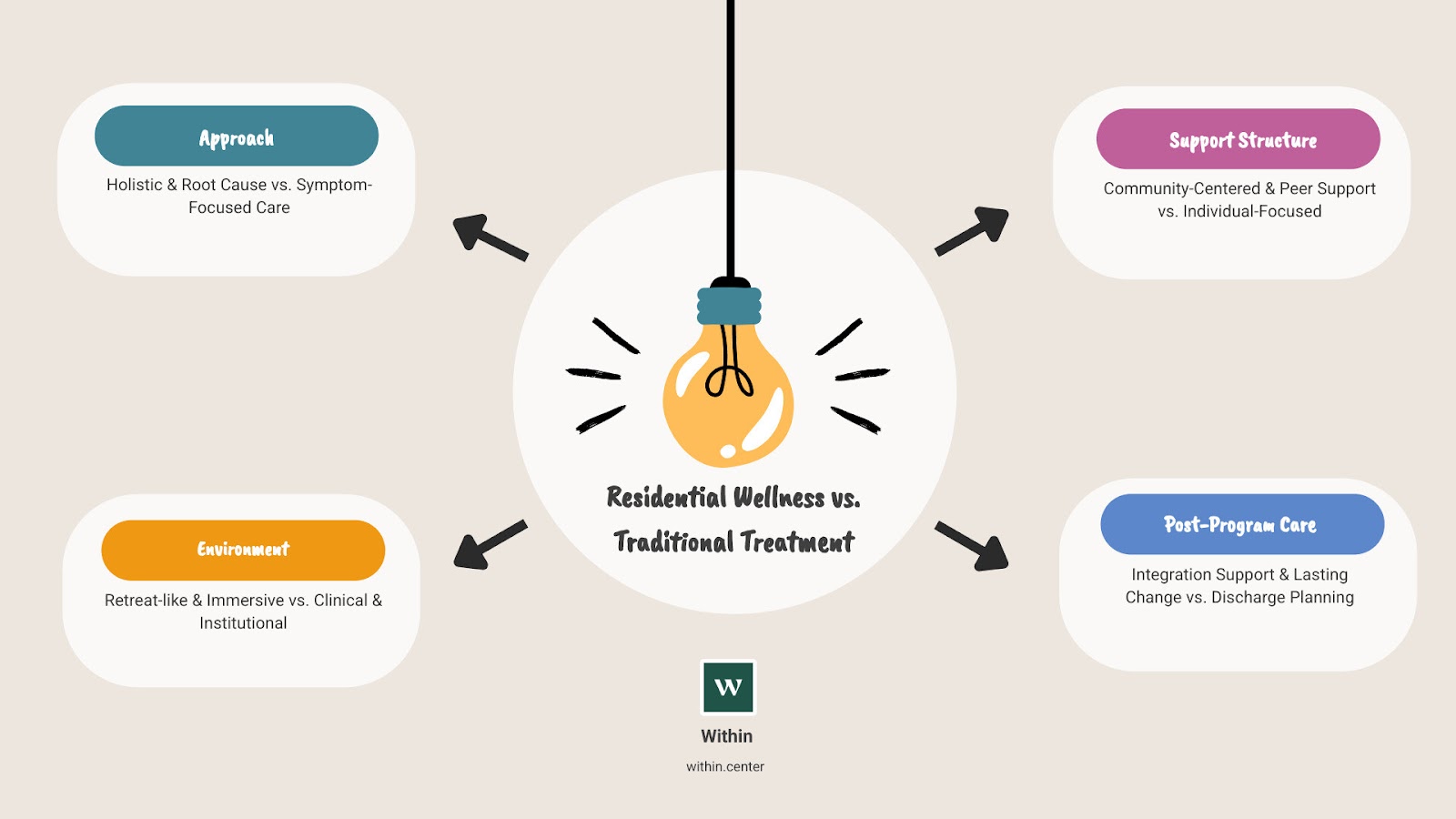
Infographic showing the key differences between residential wellness programs and traditional treatment centers, including holistic vs symptom-focused approaches, retreat-like vs clinical environments, community-centered vs individual-only care, and integration support vs discharge planning - Residential wellness program infographic brainstorm-4-items

The Core Pillars of a Holistic Residential Wellness Program

At the heart of every effective residential wellness program is the understanding that true healing is holistic. It’s not just about addressing a single symptom; it’s about nurturing the entire person – mind, body, emotions, and spirit. This integrated approach ensures that we dig into the root causes of distress, fostering lasting change. Our immersive, live-in retreat experiences, like those offered at AWKN Ranch near Austin, Texas, are designed to facilitate this deep, comprehensive healing.

Mental and Emotional Well-being: The Foundation of a Residential Wellness Program

Mental and emotional well-being are foundational to our overall health. In a residential wellness program, these aspects are prioritized through structured therapeutic interventions and supportive environments.

Individual therapy is a cornerstone, providing a safe space for one-on-one sessions with qualified professionals to explore personal strengths, challenge limiting beliefs, and address underlying trauma. Many programs use Cognitive Behavioral Therapy (CBT) to help guests recognize and correct distorted thought patterns contributing to anxiety and depression, aiming to treat the root cause rather than just managing symptoms.

Group counseling complements individual therapy, offering a powerful sense of community. Sharing stories with supportive peers can be incredibly validating and accelerate healing, helping build emotional resilience and improve relationships.

The vital role of therapy in psychedelic healing is a testament to the depth of emotional work undertaken. For those seeking advanced modalities, programs like ours at Within integrate these experiences with comprehensive therapeutic support. Furthermore, resources like free guided meditations for mindfulness are often provided to help cultivate inner calm and self-awareness.

Conditions like depression, anxiety, trauma, and burnout are frequently addressed. The structured environment, away from daily triggers, allows for intensive focus on healing. Research on immersive programs shows profound impact, with studies indicating that the vast majority of participants experience significant improvement in depression, and more than half report being depression-free by the program’s end.

Physical Health: Nutrition, Fitness, and Integrated Care

A healthy mind resides in a healthy body, a core pillar of any residential wellness program. Physical health components are carefully integrated to support mental and emotional healing.

Nutrition plays a crucial role. Programs provide nutritious, balanced meals, often with a focus on plant-based diets, to fuel the body and mind. Guests learn healthy eating skills and understand the link between diet and mood. Physical fitness is equally important, with daily movement like yoga, hiking, and weight training. Regular physical activity improves physical health while significantly boosting mood and reducing stress.

Integrated medical care is a distinguishing feature, with many programs offering on-site wellness clinics. This includes physical exams, lab screenings, and primary care, which is vital as individuals with mental health challenges face higher risks for physical conditions.

Many programs also maintain a nicotine-free campus. Nicotine use can impede mental health recovery, mask symptoms, and inhibit the effectiveness of certain medications. For young adults especially, nicotine can lead to addiction and mood disorders.

The impact of this integrated approach is tangible. Research shows that participants in comprehensive wellness programs experience significant decreases in BMI, total cholesterol, and triglycerides. This demonstrates how addressing physical health directly contributes to better mental health outcomes. Programs often provide support for nicotine cessation and may recommend resources where you can browse over-the-counter wellness products to support your journey.

Specialized and Experiential Therapies

Beyond talk therapy and physical conditioning, residential wellness programs often incorporate specialized and experiential therapies. These modalities offer unique pathways to healing by tapping into different aspects of our being.

Here are some examples of specialized therapies you might encounter:

  • Ketamine-assisted therapy: As pioneers in psychedelic-assisted therapy, we at Within offer this innovative approach at AWKN Ranch. In a controlled setting, ketamine can facilitate breakthroughs and the processing of difficult emotions. You can learn about the ketamine therapy experience through our resources.
  • Psychedelic integration: A crucial component following any psychedelic experience, our immersive retreat includes comprehensive integration support to help apply insights to daily life for lasting change.
  • Equine and Canine therapy: Interacting with animals like horses and dogs can be incredibly therapeutic, helping to build trust, develop communication skills, and reduce anxiety.
  • Nature therapy: Immersing in natural settings through hiking, gardening, or simply being outdoors has profound benefits for mental well-being.
  • Creative and Somatic Therapies: Modalities like art therapy, sound baths, and breathwork offer non-verbal ways to process trauma, regulate the nervous system, and gain self-awareness.
  • NAD+ Therapy: This treatment administers a vital coenzyme (NAD+) to boost mental and physical energy and support cellular health.
  • Trip excursions: Many programs incorporate off-site activities that build confidence, foster teamwork, and create growth-oriented experiences.

These diverse therapies work synergistically, offering multiple avenues for healing and leading to more comprehensive and enduring personal growth.

From Retreat to Real Life: Ensuring Lasting Change

The magic you experience during a residential wellness program doesn’t have to end when you pack your bags. The real test comes when you return home, armed with new insights but facing old stressors. This is where the best programs shine, recognizing that lasting change requires ongoing support and intentional integration.

People connecting and supporting each other in a a community setting - Residential wellness program

How a Residential Wellness Program Supports Long-Term Well-being

Think of your time in a residential wellness program like learning a new skill—mastery requires practice. The same principle applies to mental health.

Quality programs focus heavily on integration support, helping you translate breakthrough moments and coping strategies into your real-world routine. The key is making new insights stick.

Building healthy life strategies becomes your personalized roadmap home. Your integration plan helps you protect and nurture what you’ve learned, like how morning meditation regulates your mood or how certain environments drain your energy.

Developing coping mechanisms is about building emotional muscle memory, so healthy responses become automatic. This includes relapse prevention strategies to help you recognize warning signs and take action before old patterns return.

Many programs offer follow-up programs to extend support. At Within, we know this continuation is crucial, which is why we encourage you to explore classes, events, and memberships to stay connected to your healing journey.

The community focus from your stay continues after you leave. Bonds with fellow participants become lifelines, providing a peer support network for encouragement, accountability, and a reminder that you’re not alone.

The Role of Family Support and Community

Healing can change family dynamics. When you return home, your family may not know how to respond to the new you.

This is where family therapy becomes invaluable. It creates a safe space to improve communication skills and heal relationships, which is a crucial investment in long-term recovery.

Building a support network extends beyond family. Friendships formed during your program often become your most meaningful relationships due to powerful shared experiences.

Peer support is essential for maintaining progress. These connections provide an ongoing community to keep you grounded in your new way of being.

At Within, our team of professionals understands that your healing journey involves your whole support system. We work with individuals and the web of relationships that will support your continued growth.

The transition from retreat to real life doesn’t have to be jarring. With proper integration support and a strong community, you can step confidently into your next chapter.

How to Choose the Right Program for Your Journey

So, you’ve decided to start on a journey of profound healing—that’s wonderful! Now comes the step of choosing the right residential wellness program for you. Think of this as investing in your most valuable asset: yourself. Finding the perfect fit is about finding a sanctuary where you can truly thrive and experience lasting change.

Person reflectively looking at a brochure or website for a wellness program - Residential wellness program

Key Factors to Consider When Selecting a Program

When making this informed decision, consider a few key elements. First, look for accreditation from trusted organizations like The Joint Commission or CARF, which ensures the program meets high standards for quality and safety.

Next, review the staff qualifications. You’ll want a team of licensed therapists, medical doctors, and experienced wellness coaches. At Within, our diverse team of professionals brings a wealth of expertise to support your holistic healing.

Consider the therapeutic modalities offered. Does the program offer therapies that resonate with you, such as CBT, trauma-informed care, or experiential options like equine therapy? If you’re interested in advanced modalities, ensure they offer ketamine-assisted therapy and psychedelic integration, which we specialize in at Within.

Don’t forget the location and setting. Some people thrive in serene natural environments, while others prefer a more structured feel. Our AWKN Ranch, for example, offers a beautiful, immersive environment near Austin, Texas, where nature’s restorative power amplifies the therapeutic work.

Program duration is another piece of the puzzle, with options ranging from 7-day retreats to 8-week programs. The best length depends on your personal healing goals.

Finally, consider cost and insurance. Residential wellness programs are an investment, so ask about all-inclusive rates and what’s covered. It’s always smart to check for programs available with your health plan to understand your options, and inquire about financing or scholarships.

The Importance of Program Philosophy and Environment

Beyond practical details, the philosophy and environment of a residential wellness program are incredibly important. It’s about finding a place that feels right.

Does the program’s approach resonate with your values? Some centers may have a specific focus, like being Christ-centered. Others, like us at Within, accept a broad holistic healing approach, blending modern science with timeless wisdom. Getting to know our approach to healing can help you see if we’re a good match.

Also, consider the target demographic. Some programs are custom for young adults, executives, or those with specific conditions. Finding a community that understands your background can make a world of difference.

The best program will offer a safe and supportive environment where you feel empowered to explore your strengths, challenge limiting beliefs, and begin to heal. It’s about finding a sanctuary where you feel secure, accepted, and ready for profound change.

Frequently Asked Questions about Residential Wellness Programs

Starting on a healing journey often brings up practical questions. Here are answers to some common queries about residential wellness programs to help you make an informed decision.

What is the typical duration of a stay in a residential wellness program?

The length of a stay is flexible and depends on your needs. Programs can be intensive 7-day retreats for a focused reset, or more extended stays like 30-day or even 8-week programs for comprehensive healing. The best duration is custom to your individual goals, providing enough time to develop sustainable, healthy habits.

What is the cost of residential wellness programs and what payment options are available?

The cost of residential wellness programs varies based on duration, services, and level of luxury. Many programs offer all-inclusive rates covering accommodation, meals, therapy, and activities. Payment options often include private pay, and it’s worth checking if your health insurance provider offers coverage. We recommend contacting the program’s admissions team and your insurer to understand your options. Many centers also discuss financing options or can guide you toward foundations that offer financial assistance.

Who is a good candidate for a residential wellness program?

A residential wellness program is an excellent option for individuals ready for an immersive, comprehensive approach to healing. You might be a good candidate if you are:

  • Seeking immersive healing and feel weekly therapy isn’t enough.
  • Struggling with conditions like chronic depression, anxiety, trauma, PTSD, or burnout.
  • Needing a break from daily stressors to focus on recovery.
  • Desiring holistic change that addresses mind, body, and spirit.
  • Ready to commit to intensive therapeutic work and meaningful lifestyle changes in a structured, supportive environment.

It’s a powerful option for anyone ready to invest in themselves and begin a journey toward lasting well-being.

Conclusion: Begin Your Transformative Journey

When we think about healing, most of us imagine sitting in a therapist’s office once a week, hoping that an hour of conversation will somehow untangle years of pain. But what if there was a different way? What if you could step completely away from your daily stressors and immerse yourself in a healing environment designed specifically for your change?

That’s exactly what residential wellness programs offer – and it’s why they’re creating such profound changes in people’s lives.

Throughout this guide, we’ve explored how these programs work differently than traditional treatment. Instead of just managing symptoms, they address the root causes of your struggles through a holistic approach that nurtures your mind, body, emotions, and spirit all at once.

The immersive support you receive – from individual therapy and group counseling to specialized modalities like equine therapy and breathwork – creates the perfect environment for breakthrough moments. When you’re surrounded by others on similar journeys, supported by qualified professionals 24/7, and free from the distractions of everyday life, real healing becomes possible.

But perhaps most importantly, these programs don’t just help you feel better temporarily. They equip you with the tools, insights, and community connections you need for lasting well-being. The integration support ensures that the changes you make during your stay become permanent parts of your life.

At Within, we’ve seen how transformative this approach can be. Our unique approach combines the power of ketamine-assisted therapy with comprehensive holistic healing at AWKN Ranch near Austin, Texas. What sets us apart is our deep focus on integration and community – we don’t just offer breakthrough experiences, we help you weave those insights into a life of genuine well-being.

Our immersive, live-in retreat experience creates the perfect container for profound personal growth. You’re not just a client visiting for appointments; you’re part of a healing community where every meal, every conversation, and every quiet moment contributes to your change.

If you’re ready to move beyond managing symptoms and step into true healing, we’re here to guide you. Explore our psychedelic therapy retreats to start your path to recovery and find how our blend of cutting-edge therapy and timeless wisdom can support your journey to the life you’ve always wanted.

Your change is waiting. The only question is: are you ready to begin?

Nourish Your Whole Self: A Guide to Holistic Wellness Programs

By Wellness RetreatNo Comments

A holistic wellness program goes beyond traditional gym memberships and health screenings to address every dimension of well-being, from physical and mental health to financial security and spiritual fulfillment.

Key Components of Holistic Wellness Programs:

  • Physical wellness – fitness, nutrition, ergonomics, preventive care
  • Mental/emotional wellness – stress management, therapy access, mindfulness training
  • Social wellness – community building, team activities, relationship support
  • Financial wellness – financial planning, debt management, retirement guidance
  • Spiritual wellness – purpose alignment, meditation spaces, values exploration
  • Intellectual wellness – continuous learning, skill development, creativity support
  • Environmental wellness – healthy workspaces, sustainability initiatives
  • Occupational wellness – meaningful work, career development, work-life balance

The research is clear: 93% of employees believe wellbeing is as important as their salary, and companies with comprehensive wellness programs see up to 227% ROI for every dollar invested. These programs reduce absenteeism by 1.5-1.7 days per employee annually while cutting healthcare costs significantly.

Holistic wellness recognizes that everything is connected. Financial stress affects sleep, which in turn impacts emotional regulation and physical health. While traditional programs treat symptoms, holistic programs address root causes.

As one workplace wellness expert noted: “Wellness is not a one-size-fits-all model.” The most effective programs understand that true well-being requires addressing the whole person, not just isolated health metrics.

For individuals struggling with chronic mental health challenges like anxiety, depression, or burnout, workplace holistic wellness programs can provide crucial support and resources that complement personal healing journeys.

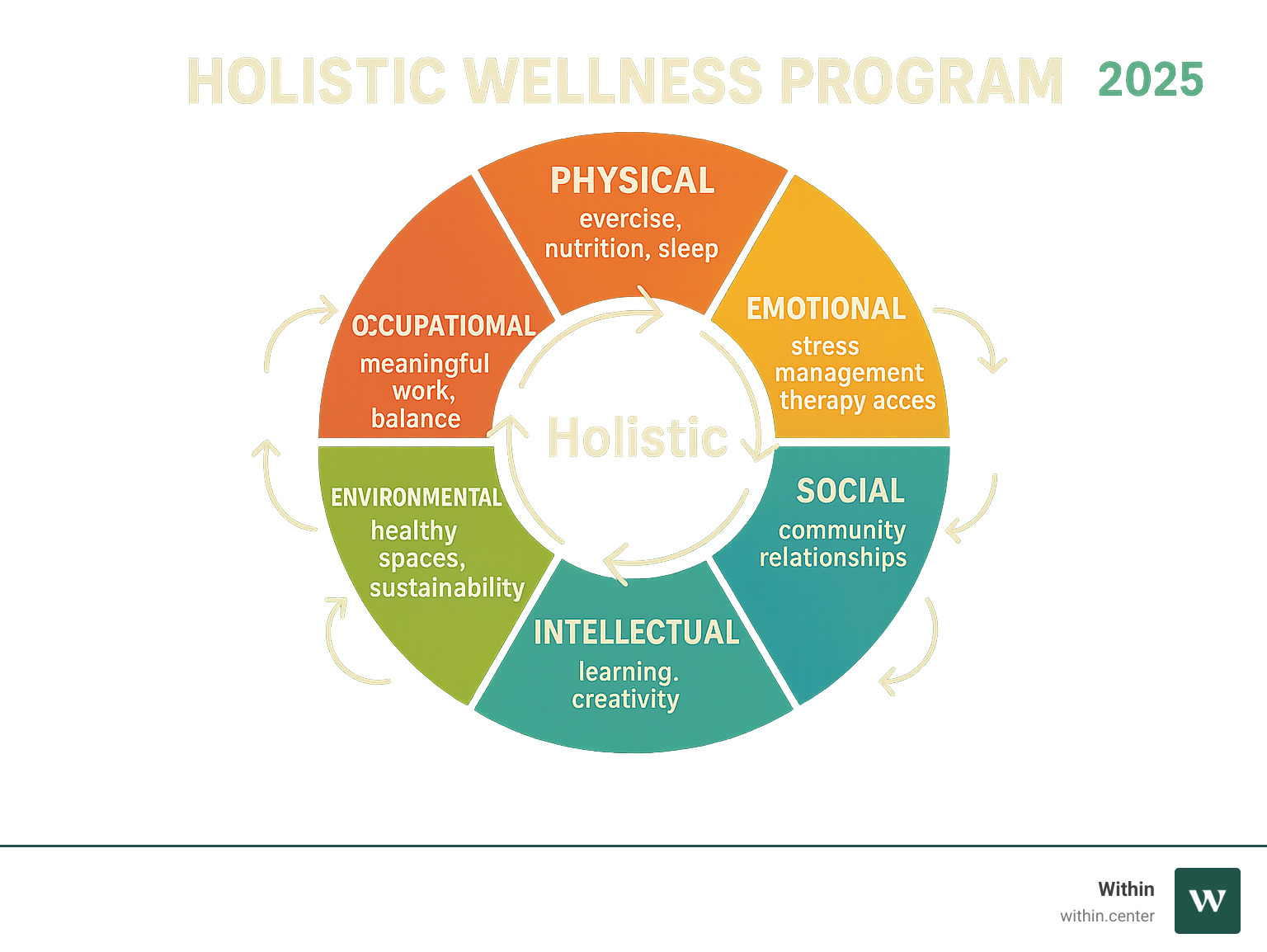
Comprehensive infographic showing the 8 interconnected dimensions of holistic wellness: Physical (exercise, nutrition, sleep), Emotional (stress management, therapy access), Social (community building, relationships), Spiritual (purpose, mindfulness), Intellectual (learning, creativity), Financial (planning, security), Environmental (healthy spaces, sustainability), and Occupational (meaningful work, balance), with arrows showing how each dimension influences the others - Holistic wellness program infographic

What is Holistic Wellness? A Whole-Person Philosophy

True wellness goes beyond hitting the gym or eating a salad. A holistic wellness program is built on the understanding that every part of our well-being is connected. This approach views our physical, mental, emotional, social, financial, spiritual, intellectual, environmental, and occupational dimensions are deeply woven together. Damage to one area affects the whole.

This approach is proactive, building resilience from the ground up rather than just treating symptoms after problems arise. At Within, we deeply understand this interconnected approach to healing. As we explore in our article on The Future of Healing: How Holistic Modalities and Integrative Therapies Are Changing Mental Health, true change requires looking at the whole person.

Here’s how a holistic wellness program differs from traditional approaches:

FeatureTraditional Wellness ProgramsHolistic Wellness Programs
FocusGym discounts, annual health screenings, basic health metricsMulti-dimensional support addressing all aspects of well-being
ApproachReactive – addresses problems after they occurProactive – builds resilience and prevents issues
ScopePhysical health primarilyPhysical, mental, emotional, social, financial, spiritual, intellectual, environmental, and occupational wellness
MethodOne-size-fits-all solutionsPersonalized, flexible programs that adapt to individual needs
SupportLimited to physical health resourcesComprehensive resources including mental health, financial literacy, community building

The Key Pillars of an Integrated Life

Understanding holistic wellness means exploring its key dimensions. We are complex beings who thrive when all parts of our lives are nurtured.

Physical wellness—fitness, nutrition, and sleep—is the foundation. Poor physical health impacts every other area of life, from work performance to emotional balance.

Emotional and mental wellness involves managing stress, building resilience, and having access to mental health support. Research from A study on the importance of community and belonging for health shows how critical this is to our overall health.

Social and community wellness is essential, as we are wired for connection. Building meaningful relationships and a sense of belonging is vital for thriving.

Financial wellness is crucial because financial stress impacts sleep, anxiety, and relationships. A holistic program must include financial literacy and planning support.

Spiritual wellness is about finding meaning and purpose, whether through meditation, nature, or service. It provides the “why” that fuels our well-being.

Intellectual wellness keeps our minds engaged through continuous learning and creativity, contributing to confidence and life fulfillment.

The beauty of holistic wellness lies in how these dimensions support each other. Improving one area, like physical health, often boosts another, like emotional balance. This interconnected approach is what makes holistic wellness so powerful.

The Ripple Effect: Benefits for Individuals and Organizations

Implementing a holistic wellness program creates a ripple effect of benefits for both individuals and the organization. This win-win scenario translates investment in people directly into organizational success.

a person looking relaxed and focused at their clean, ergonomic desk with a plant - Holistic wellness program

Let’s look at the organizational benefits:

Reduced absenteeism is an immediate, measurable benefit. Wellness programs can cut sick days by 1.5-1.7 days per employee annually, leading to significant cost savings and productivity gains.

Lower healthcare costs follow naturally. Healthier employees lead to lower healthcare utilization and costs, a powerful financial incentive that makes these programs self-funding.

Increased employee engagement soars when people feel genuinely cared for. They become more invested, creative, and committed, fostering a vibrant workplace culture.

Higher morale and job satisfaction are the natural outcomes. When employees feel valued as whole human beings, they create a positive, contagious energy.

Improved talent attraction and retention is a key advantage in a competitive market. With 81% of employees seeking mental health support, a holistic program is a powerful recruiting and retention tool.

The numbers speak for themselves. A Harvard meta-analysis on wellness program ROI indicates that companies can see up to 227% ROI for every dollar spent. This isn’t just a perk—it’s a strategic business imperative.

How Holistic Wellness Boosts Personal Resilience

Beyond organizational benefits, a holistic wellness program empowers individuals to build deep personal resilience.

Stress management becomes proactive. Holistic programs offer practical tools like mindfulness and therapy access, helping employees actively reduce stress rather than just cope with it.

Improved sleep is fundamental to health. Holistic wellness emphasizes good sleep hygiene and provides resources to improve it, which is a game-changer for cognitive function.

Improved mental clarity emerges when mental and emotional well-being are addressed. This leads to better focus and decision-making, boosting productivity.

Greater sense of purpose develops through engagement with spiritual and occupational wellness. Finding meaning in life and work is linked to better health and lower stress.

Increased energy levels happen naturally when all dimensions of wellness are supported. This includes the mental and emotional vitality that comes from an integrated approach.

True healing and resilience require a comprehensive approach that recognizes how mind, body, and spirit work together. To understand why a singular focus isn’t enough, read more in Why a Multi-Modal Approach is Essential for True Healing.

Designing an Effective Holistic Wellness Program

An effective holistic wellness program isn’t a one-size-fits-all solution. It requires building an authentic program custom to your company’s culture and people’s unique needs.

a diverse team collaborating on a whiteboard with wellness ideas - Holistic wellness program

Securing leadership buy-in is the critical first step. Leaders must champion the program, participate visibly, and integrate wellness into the company’s DNA to show that it’s a true priority.

Assessing employee needs comes next. Don’t assume you know what your people want. Use anonymous surveys and focus groups to understand their real struggles, which transforms a generic program into one that is valued and used.

Customization and flexibility are essential because your workforce is diverse. Offer multiple pathways to well-being that allow employees to choose what’s most relevant to their life stage and needs.

Your communication strategy is vital. Use multiple channels to ensure employees know about the program and how to access it. Appointing wellness champions in different departments can also boost engagement.

The beauty of holistic wellness is how it mirrors comprehensive healing modalities. You can learn more about one such approach in our article on What is Ketamine Therapy?.

Practical Strategies for a Thriving Workplace

Here are some practical ideas for supporting each dimension of wellness:

  • Physical: Offer ergonomic assessments, standing desks, and fitness challenges. Provide nutrition workshops and healthy snacks. Encourage at least 150 minutes of moderate exercise weekly, per WHO guidelines on physical activity.
  • Mental/Emotional: Provide subscriptions to mindfulness apps, Mental Health First Aid training, and easy access to therapy via EAPs. Create quiet zones for meditation and reflection.
  • Social: Foster connection with team volunteering days, book clubs, healthy potlucks, and family-friendly events.
  • Financial: Offer workshops on budgeting and investing, access to financial advisors, and retirement planning support to reduce financial stress.
  • Intellectual: Promote growth with Lunch & Learn sessions, skill development courses, and educational content like our Going Within Podcast.

Measuring the ROI of Your Holistic Wellness Program

Measuring success helps you understand what’s working and how to improve your holistic wellness program.

  • Employee satisfaction surveys: Use surveys to get direct feedback and track changes over time.
  • Absenteeism rates: Track absenteeism rates before and after implementation to see the concrete impact.
  • Healthcare claims data: Analyze aggregated healthcare claims data for long-term trends, such as decreases in stress-related conditions.
  • Retention and turnover rates: Monitor retention and turnover rates, which often improve with strong wellness programs.
  • Participation metrics: Use participation metrics to see what’s popular and where you might need to adjust your strategy.

The ROI of wellness extends beyond numbers to improved morale, a stronger culture, and a more resilient workforce.

Overcoming Challenges in Implementation

Implementing a holistic wellness program has its challenges, but each one is an opportunity for improvement and refinement.

a leader speaking to their team in a supportive and open manner - Holistic wellness program

Addressing low participation is a common hurdle. It often occurs because employees are too overwhelmed to add another activity. The solution is to integrate wellness into the workday. Offer walking meetings, provide healthy snacks, or create quiet spaces for breaks. Make participation easy and accessible, not another burden.

Budgeting for wellness can be a sticking point, but many impactful initiatives are low-cost. Start small with things like a designated quiet room, flexible work arrangements, or peer support groups.

Gaining leadership support is crucial. Present a clear business case with data on ROI, reduced absenteeism, and improved retention. Emphasize that wellness is a strategic initiative for creating a high-performing workplace.

Catering to a diverse and remote workforce requires a flexible approach. A one-size-fits-all program fails here. The key is to offer a variety of options that meet different needs and work situations.

The Critical Role of Leadership in Fostering a Wellness Culture

The most successful holistic wellness programs have leaders who don’t just approve them, but live them.

Leading by example is key. When leaders are authentic about their own wellness journey—like taking a mental health day—it signals that prioritizing well-being is respected and encouraged.

Creating psychological safety is perhaps the most important role of a leader. This means fostering an environment where employees feel safe discussing challenges and where asking for help is seen as a sign of strength.

Allocating resources consistently shows that wellness is an ongoing commitment, not a one-time project. This includes time, money, and personnel.

Integrating wellness into company values transforms it from a perk into a core part of the culture. It becomes embedded in the company’s mission and daily operations.

At Within, we’ve seen how strong, compassionate leadership guides people toward genuine well-being. Our team embodies this commitment. You can learn more about the people behind our mission at Our Team.

Frequently Asked Questions about Holistic Wellness Programs

Here are answers to the most common questions organizations have about implementing a holistic wellness program.

How much does a holistic wellness program cost?

Costs are scalable. You can start with free initiatives like walking challenges or healthy potlucks. More comprehensive programs might include mental health coverage or premium wellness retreats. A good strategy is to start small and scaling up, perhaps with mindfulness app subscriptions ($5-15 per employee monthly) and then adding more components over time. The key is to focus on the ROI. With returns of up to 227%, the savings from reduced absenteeism and higher retention often far outweigh the program costs.

How do you get employees to participate?

Start by asking employees what they need through surveys or focus groups. Involve them in the planning to create ownership. Ensure leadership participates to signal its importance. Finally, make activities accessible, rewarding, and genuinely enjoyable, not another chore. When a program feels like a helpful break rather than homework, participation will follow.

Can a holistic program work for a small business?

Absolutely. Small businesses can be nimble and should focus on high-impact, low-cost initiatives. An Employee Assistance Program (EAP) offers comprehensive support for a low per-employee cost. Flexibility in work hours or location is a powerful, free benefit. You can also partner with local businesses for discounts or workshops. A successful program is about genuine commitment and creativity, not a massive budget. Caring for the whole person is a philosophy that can be adapted to any size company.

Conclusion: Begin Your Journey to Integrated Well-being

We’ve explored how a holistic wellness program can transform both individuals and organizations. Moving beyond outdated views of wellness, we’ve acceptd a whole-person philosophy that recognizes the interconnectedness of our physical, mental, emotional, social, financial, spiritual, intellectual, environmental, and occupational well-being.

The evidence is compelling. When organizations invest in comprehensive wellness, everyone wins. Reduced absenteeism and lower healthcare costs provide financial benefits, while increased employee engagement and improved talent retention create lasting advantages. Most importantly, these programs empower individuals to build resilience and find deeper meaning in their lives.

Think of wellness not as a corporate initiative, but as the foundation for a culture where people thrive. Supporting the whole person open ups their full potential.

The journey to integrated well-being is personal, yet it flourishes in community. For those ready to dive deeper, the most profound changes can happen when we immerse ourselves in the process of growth. At Within, we’ve created a unique space for this kind of deep healing, combining cutting-edge therapeutic approaches with the wisdom of holistic wellness in a supportive environment.

Your journey starts with a single decision to prioritize your whole self. Whether that begins with a holistic wellness program at work or exploring more intensive healing opportunities, the path is waiting. Find how our immersive approach to healing can support your journey by exploring our holistic ketamine retreats.

Wallet-Friendly Wellness: Top Affordable Depression Retreats

By Wellness RetreatNo Comments

Affordable retreats for depression offer hope to the millions struggling with mental health challenges without the luxury price tag. With more than 260 million people worldwide suffering from depression, finding quality treatment that fits your budget has never been more crucial.

Quick Answer: What Makes Depression Retreats Affordable?

  • Nature-based settings instead of luxury resorts
  • Group programs rather than all individual sessions
  • Shorter durations (3-7 days vs. weeks)
  • Basic accommodations with shared rooms
  • Sliding-scale fees based on income
  • Non-profit organizations offering reduced rates
  • Off-season pricing for better deals

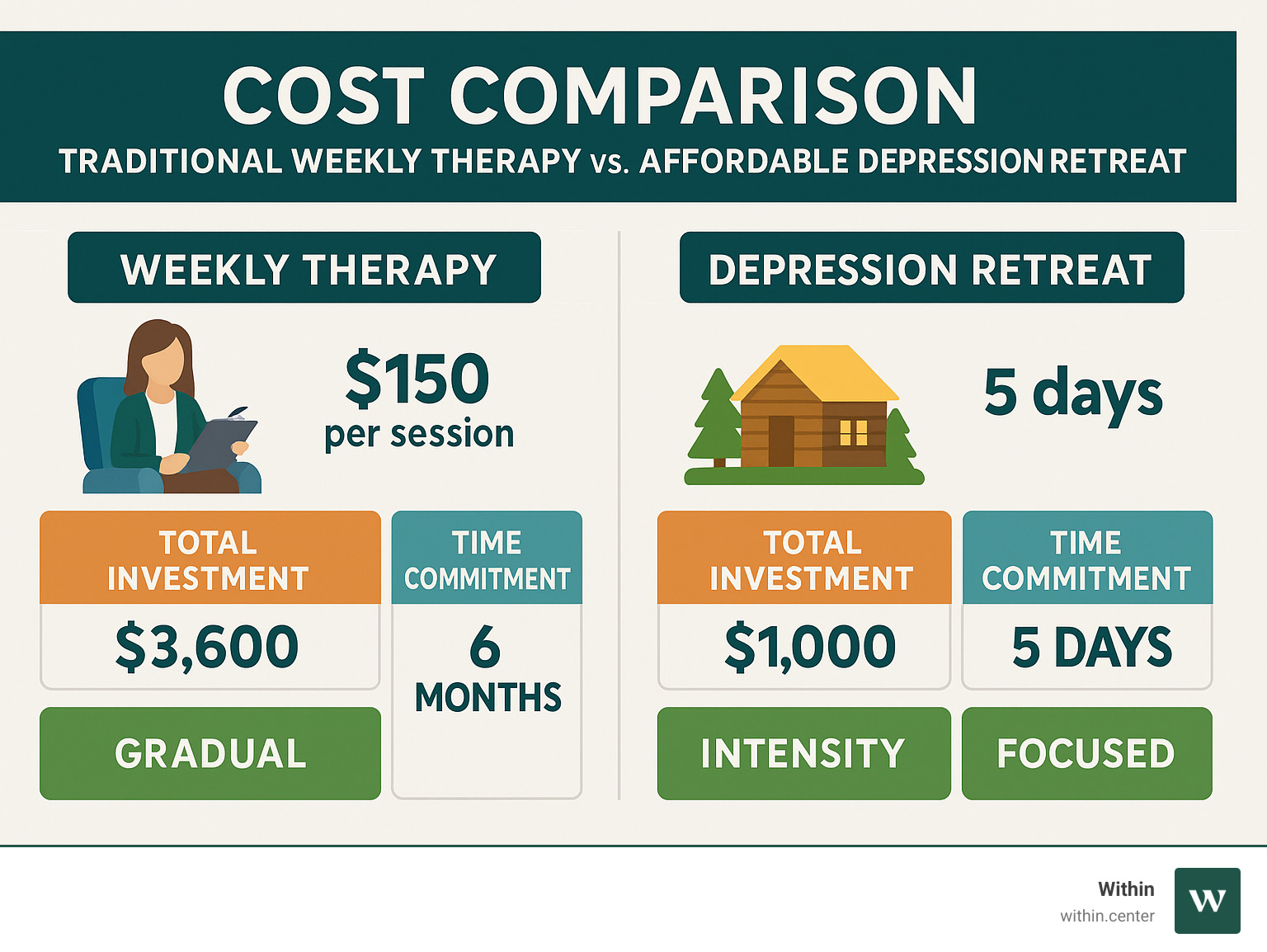
The reality is stark: traditional mental health care can cost hundreds per session, and luxury retreats often run $3,000-$5,000 per week. But here’s what most people don’t know – effective healing doesn’t require premium amenities.

Research shows that over 90% of participants experience lasting mental health benefits from retreat programs. The key isn’t marble bathrooms or gourmet meals. It’s having licensed professionals, evidence-based therapies, and a supportive environment away from daily stressors.

One retreat participant shared: “I feel like a new person. More calm, collected, and rational.” This change didn’t happen at a $10,000 resort – it came from a simple program focused on therapeutic quality over luxury features.

The challenge isn’t finding help that works. It’s finding help you can actually afford while dealing with depression’s impact on your career and finances.

Infographic showing cost comparison between traditional weekly therapy sessions over 6 months versus a 5-day affordable depression retreat, highlighting total investment, time commitment, and intensity of healing approach - affordable retreats for depression infographic

What Defines an “Affordable” Depression Retreat?

When we talk about affordable retreats for depression, we’re not hunting for the cheapest option on the internet. Instead, we’re looking for something much more valuable: exceptional therapeutic quality that won’t leave you choosing between healing and paying rent.

Think of it this way – you wouldn’t buy a car based solely on price, right? You’d want something reliable that gets you where you need to go. The same logic applies here. An affordable depression retreat should deliver real, lasting change without the luxury price tag.

The secret is understanding what you actually need versus what feels nice to have. The most effective retreats focus their resources on what truly matters: licensed therapists, evidence-based treatments, and creating a safe space for healing. Everything else is just window dressing.

Here’s what typically defines an affordable approach:

Core therapeutic quality remains non-negotiable. This is where affordable retreats should never cut corners. You’ll still find qualified mental health professionals, structured programming, and proven treatment methods. The difference is in the packaging, not the medicine.

Fewer luxury amenities means your money goes toward therapy instead of marble countertops. You might not find daily massages or gourmet dining, but you’ll get what actually helps: quality counseling, supportive community, and holistic healing activities.

Nature becomes your spa. Many affordable options accept outdoor settings – forests, mountains, or lakeside locations. Research consistently shows that spending time in nature reduces stress, improves mood, and supports recovery from depression. Plus, a sunrise over the mountains costs the same as a sunrise over a resort pool (free), but often feels more meaningful.

Accommodations focus on comfort over luxury. Think clean, safe, and cozy rather than opulent. Many programs offer shared rooms, which actually improves the community experience. Some participants find that sharing space with others on similar journeys becomes one of the most valuable parts of their healing.

Shorter duration options make retreats accessible to more people. While longer stays can be beneficial, many effective programs run 3-7 days. This works better for both your schedule and your budget, while still providing intensive therapeutic support.

Group-focused programming reduces costs while increasing connection. Instead of all individual sessions, you’ll participate in group therapy, workshops, and community activities. Many people find that healing alongside others creates powerful bonds and shared understanding.

FeatureAffordable RetreatLuxury Retreat
AccommodationShared rooms, basic private rooms, cabinsPrivate suites, villas, high-end design
Staff-to-guestBalanced, focus on group facilitationHigh, often 1:1 personalized attention
AmenitiesEssential comfort, nature access, shared spacesSpa, gourmet dining, concierge, private facilities
Therapy TypesEvidence-based, holistic, group-orientedHighly specialized, often 1:1, bespoke programs
Price RangeTypically $500 – $2,500 per weekOften $3,000 – $10,000+ per week

The bottom line? Value beats luxury every time when it comes to mental health. The goal isn’t to impress your Instagram followers – it’s to return home with new tools, perspectives, and hope for your future.

How to Find High-Value, Affordable Retreats for Depression

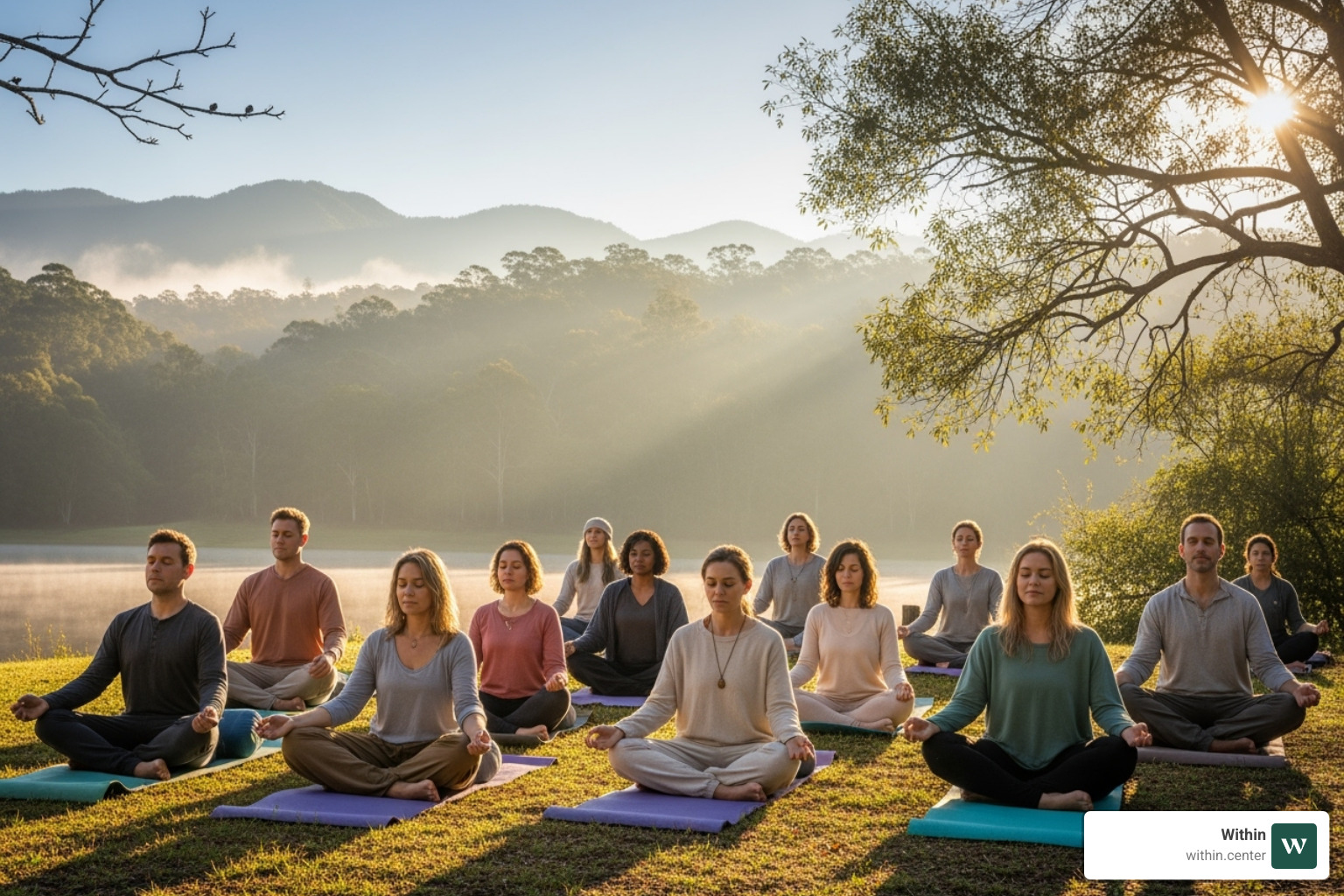
Diverse group of people meditating outdoors - affordable retreats for depression

Finding affordable retreats for depression that deliver real healing doesn’t have to feel like searching for a needle in a haystack. With the right approach, you can find programs that offer genuine therapeutic value without emptying your bank account.

The secret is knowing where to look and what questions to ask. Many people assume that quality mental health care always comes with a premium price tag, but that’s simply not true.

Non-profit organizations often provide some of the best value in retreat experiences. These centers focus on accessibility rather than profit margins, which means their pricing reflects their mission to help people heal. While their facilities might be simpler, they often employ deeply experienced facilitators who are passionate about their work.

Don’t hesitate to ask about sliding-scale fees when you’re researching options. Many retreat centers offer income-based pricing specifically to make their programs accessible to people from all financial backgrounds. It’s not charity – it’s smart business that recognizes healing shouldn’t be a luxury.

Off-season booking can lead to significant savings, just like planning any other type of travel. Mid-week programs and retreats during less popular months often cost substantially less. If you have flexibility in your schedule, this strategy alone can save you hundreds or even thousands of dollars.

Here’s something many people overlook: insurance verification could help cover portions of your retreat costs. The Affordable Care Act requires mental health coverage as an essential health benefit. While your insurance might not pay for the entire retreat, components like individual therapy sessions or psychiatric consultations could be reimbursable. Always call your provider directly to understand your specific benefits and ask about “Superbills” for out-of-network services.

Financial aid and scholarships exist at many retreat centers, though they’re not always advertised prominently. Mental health foundations and some retreat organizations set aside funds specifically to help people who demonstrate financial need. It takes some research, but these opportunities can make otherwise unaffordable programs accessible.

Nature-based programs offer incredible therapeutic value while keeping costs manageable. Research on nature’s mental health benefits consistently shows that connecting with the natural world reduces stress, improves mood, and supports overall well-being. Retreats that accept outdoor settings often have lower overhead costs than those requiring extensive indoor facilities, and nature itself becomes a powerful, free healing resource.

Mindfulness retreats can provide an excellent foundation for managing depression symptoms through practices that don’t require expensive equipment or elaborate facilities. These programs focus on developing self-awareness and inner peace – skills that continue serving you long after the retreat ends.

You’re looking for high value, not just the lowest price. A program that costs a bit more but offers licensed professionals, evidence-based care, and genuine therapeutic support will always be a better investment than a bargain option that lacks qualified staff or clear treatment protocols.

The goal is finding that sweet spot where affordability meets effectiveness – and with these strategies, that perfect program is definitely within reach.

Core Components of an Effective Program

Finding an affordable retreat for depression is just the first step. The real magic happens when you understand what makes a program truly effective. Let’s be honest – you’re not just looking for a budget-friendly vacation. You’re seeking genuine healing, and that requires specific therapeutic elements working together.

One-on-one therapy session in a comfortable, simple setting - affordable retreats for depression

The foundation of any quality depression retreat starts with evidence-based treatment. This means therapies that have been scientifically proven to work – not just feel-good activities. Look for programs using Cognitive Behavioral Therapy (CBT), Dialectical Behavior Therapy (DBT), or Interpersonal Therapy (IPT). These aren’t just fancy names; they’re the heavy hitters in mental health treatment.

Licensed professionals should be leading your therapeutic sessions. This isn’t negotiable, even when you’re watching your budget. Whether it’s individual counseling or group work, the person guiding you through your healing should have proper credentials – licensed therapists, psychologists, or psychiatrists who specialize in depression treatment.

A well-designed retreat also provides clear program structure. While some flexibility is nice, you’ll want a purposeful daily schedule that gives you direction. This structure becomes your safety net, allowing you to dive deep into healing without feeling lost or overwhelmed.

The best programs blend different therapeutic modalities seamlessly. You might start your day with individual therapy, move into group sessions where you connect with others facing similar struggles, then participate in skill-building workshops. Some retreats incorporate innovative approaches too – ketamine-assisted therapy, for instance, has shown remarkable results for treatment-resistant depression when delivered in supportive, immersive settings.

Holistic activities round out effective programs because mental health isn’t just about the mind. Yoga helps calm your nervous system. Meditation builds self-awareness. Nature walks ground you in the present moment. These aren’t just nice extras – they’re proven therapeutic tools that help you develop lasting healthy habits.

Vetting the Quality of Affordable Retreats for Depression

Your mental health deserves the best care possible, regardless of your budget. Here’s how to ensure you’re choosing a quality program that happens to be affordable, not just a cheap option.

Start by digging deeper into staff credentials. Don’t just confirm they’re licensed – ask about their specific experience treating depression. Do they specialize in trauma-informed care? Have they worked with people facing similar challenges to yours? A transparent retreat will gladly share their team’s expertise.

Clinical oversight matters enormously. Someone with extensive clinical experience should be designing and overseeing the therapeutic program. This might be a medical director or lead therapist who ensures everything runs safely and effectively.

Testimonials and reviews tell the real story. Look for consistent themes in feedback, especially about program effectiveness and staff support. When people consistently mention feeling genuinely supported and experiencing lasting change, that’s a green flag.

Don’t forget about safety protocols. How does the retreat handle medical or mental health emergencies? Responsible programs have clear procedures in place and aren’t shy about sharing them.

Aftercare planning separates good retreats from great ones. Your healing journey doesn’t end when you pack your bags. Quality programs offer follow-up sessions, resources, or community networks to help you integrate your learnings into daily life. This ongoing support often makes the difference between temporary relief and lasting recovery.

What to Expect from an Affordable Retreat for Depression

So you’ve found a promising affordable retreat for depression – what happens next? While every program has its unique flavor, certain elements create that transformative healing environment you’re seeking.

Individual therapy remains a cornerstone, even in budget-conscious programs. You’ll get personalized attention from a licensed therapist who can address your specific challenges and provide custom guidance for your unique situation.

Group sessions often become the heart of affordable retreats. There’s something incredibly powerful about sharing your story in a safe, facilitated space. You’ll find you’re not alone, and other people’s insights might open up breakthroughs you never expected. Many retreat participants find these connections become lasting friendships that extend far beyond the program.

Skill-building workshops give you practical tools to take home. You might learn mindfulness techniques, stress reduction exercises, or communication strategies. These become your everyday toolkit for managing depression symptoms. The types of talking therapies often form the foundation of these workshops.

Yoga and meditation appear in almost every program for good reason. They’re gentle yet powerful ways to calm your nervous system and reconnect with yourself. Don’t worry if you’re a beginner – the focus is on healing, not perfect poses.

The community connection you’ll build might surprise you with its impact. Living and healing alongside others creates natural bonds and a support network that often continues long after the retreat ends. This sense of belonging becomes a crucial part of your ongoing recovery journey. Programs like those described in The Doorway In: Psychedelic Therapy and Community Care highlight how vital these connections are in the healing process.

Frequently Asked Questions about Affordable Retreats for Depression

Person looking thoughtful and calm in a natural environment - affordable retreats for depression

We know that considering a mental health retreat brings up lots of questions – and rightfully so! You’re making an important decision about your well-being, and we want you to feel completely informed. Here are the questions we hear most often about affordable retreats for depression.

Are affordable retreats as effective as luxury ones?

Here’s the truth that might surprise you: yes, affordable retreats can be just as effective as their luxury counterparts – sometimes even more so.

The magic of healing doesn’t happen because of Egyptian cotton sheets or five-star dining. It happens because of therapeutic quality, qualified staff, and a program structure designed specifically for your recovery. Think of it this way – would you rather have a world-class therapist in a simple cabin, or a mediocre one in a marble palace?

What really matters is having licensed mental health professionals who know their stuff. Both budget-friendly and expensive retreats should employ qualified therapists – this is your non-negotiable baseline. The evidence-based treatments that actually work (like CBT or mindfulness approaches) cost the same to deliver whether you’re in a rustic lodge or a luxury resort.

Actually, many affordable retreats for depression have a secret advantage: they often create stronger community bonds. When you’re sharing meals and activities with fellow participants, you build deeper connections. This sense of belonging can be incredibly healing – something that gets diluted in highly individualized luxury settings.

The research backs this up too. More than 90% of participants experience lasting mental health benefits from retreat programs, regardless of price. Your long-term outcomes depend much more on how engaged you are with the process and whether you use your new skills back home.

Can my insurance help pay for a depression retreat?

The insurance maze can feel overwhelming, but there’s actually more hope than you might think! While your plan probably won’t cover an entire retreat as one package, many insurance plans will cover specific therapeutic services that happen during your stay.

Thanks to the Affordable Care Act, mental health coverage is now an essential health benefit. This means most plans must offer some form of mental health support. The trick is understanding how to use these benefits creatively.

Your insurance might cover individual therapy sessions, group therapy, or psychiatric consultations that are part of the retreat program. The key is asking the retreat center to break down their services for you. Many can provide what’s called a “Superbill” – basically a detailed receipt showing exactly which therapeutic services you received.

In-network versus out-of-network makes a big difference in your costs. If the retreat’s therapists are in your network, you’ll pay less out of pocket. Even if they’re out-of-network, you might still get partial reimbursement.

Here’s our best advice: call your insurance company directly. Ask specific questions like “Do you cover psychotherapy sessions if provided by a licensed therapist during a mental health retreat?” Have the retreat’s provider information ready if possible.

It takes some paperwork and patience, but exploring your benefits can significantly reduce the cost of an affordable retreat for depression. Every dollar saved makes healing more accessible.

What’s the difference between a wellness retreat and a depression retreat?

This is such an important question because mixing these up could mean the difference between getting the help you need and just having a nice vacation (though nice vacations have their place too!).

Wellness retreats are wonderful for general self-care and recharging. Think yoga, meditation, healthy meals, maybe some spa treatments. They’re perfect when you’re feeling burnt out or just need to hit the reset button. But they’re designed for people who are generally okay and want to feel better.

Depression retreats are a completely different animal. These are clinical programs specifically designed for people struggling with depression. They’re not vacations – they’re intensive therapeutic experiences with clear treatment goals.

The clinical focus is the biggest difference. A depression retreat has licensed mental health professionals – psychologists, psychiatrists, therapists – who specialize in treating mental health conditions. They use types of talking therapies and other evidence-based treatments to help you manage symptoms and develop coping skills.

Staff expertise varies dramatically too. A wellness retreat might have certified yoga instructors or nutritionists (which are valuable!), but a depression retreat will have clinical staff trained specifically in mental health treatment.

If you’re dealing with diagnosed depression, an affordable retreat for depression gives you targeted, structured support that addresses your specific condition. It’s the difference between a gentle tune-up and actual repair work – both have their place, but you need the right tool for the job.

At places like Within Center, we combine clinical expertise with innovative approaches like psychedelic therapy and community care, creating immersive healing experiences that go far beyond typical wellness offerings.

Conclusion

Your journey toward healing doesn’t have to wait for the perfect financial situation. Affordable retreats for depression represent hope made real – tangible pathways to profound change that won’t drain your life savings.

Throughout this guide, we’ve finded that the most powerful healing happens when retreats focus on what truly matters: licensed professionals who understand depression, evidence-based therapies that actually work, and supportive communities where you can heal alongside others who get it. The magic isn’t in marble countertops or five-star dining. It’s in that moment when you realize you’re not alone, when coping strategies finally click, and when you start to feel like yourself again.

Healing is accessible. Whether it’s finding a nature-based program that leverages the outdoors as your therapy room, finding sliding-scale fees that match your budget, or navigating insurance coverage for therapeutic components, there are real solutions out there. The key is knowing where to look and what questions to ask.

We’ve seen how taking this first step – whether it’s a weekend mindfulness retreat or a week-long intensive program – becomes a powerful declaration that your mental health matters. It’s choosing to invest in your future self, the one who feels more calm, collected, and genuinely hopeful about what’s ahead.

Focus on value, not just price. The most affordable retreat is one that creates lasting change in your life. When you prioritize qualified staff, structured programming, and solid aftercare support, you’re making a smart investment that pays dividends long after you return home.

For those ready to explore deeply immersive programs that combine cutting-edge therapies with holistic healing, our approach at Within Center offers comprehensive integration support and genuine community connection. We believe everyone deserves access to transformative care in a setting designed for authentic, lasting change.

Don’t let financial concerns keep you from the healing you deserve. Your path forward is waiting, and it’s more accessible than you might think.

Explore Psychedelic Therapy Retreats to begin your journey.

The Healing Journey: Discovering Transformative Retreats

By Wellness RetreatNo Comments

Deep healing retreat - Deep healing retreat

A deep healing retreat offers an immersive experience for profound personal change, designed to help you address the root causes of distress, not just the symptoms.

  • What it is: An immersive, holistic program combining therapeutic and spiritual practices in a supportive environment for deep personal growth.
  • Issues it addresses: Chronic issues like anxiety, depression, trauma (including PTSD), burnout, grief, and feelings of being “stuck.”
  • Core benefits: Lasting change, emotional release, increased self-awareness, a renewed sense of purpose, and greater inner peace.

Life’s challenges can leave us feeling overwhelmed or disconnected. We might carry deep-seated issues like chronic anxiety, depression, or the lingering effects of trauma. While traditional therapy is valuable, sometimes a more intensive approach is needed.

This is where a deep healing retreat comes in. It’s not a vacation, but a focused journey to shed old patterns and find lasting change. By creating a safe space away from daily distractions, often in a beautiful natural setting, these retreats allow you to dive deep into emotional and spiritual growth with expert facilitators and a supportive community. The goal is to move beyond temporary relief toward clarity, authentic self-expression, and expanded consciousness.

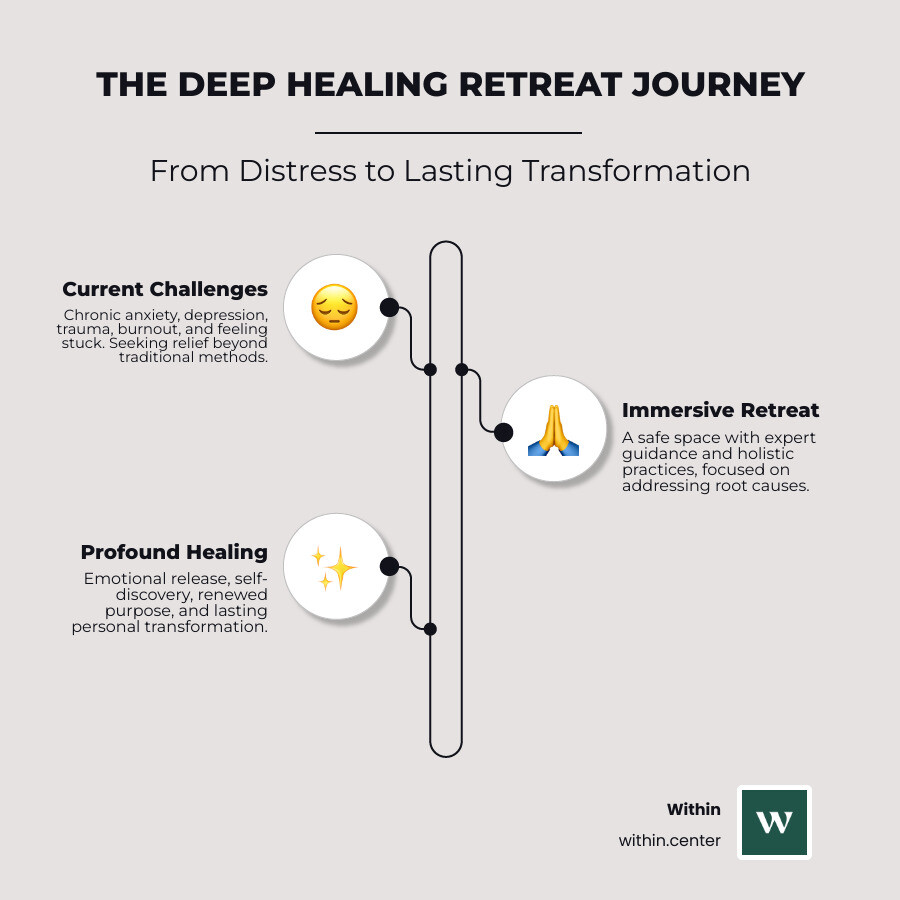
Infographic: The Deep Healing Retreat Journey - From Stress & Trauma (Anxiety, Depression, PTSD, Burnout) to Immersive Retreat (Safe Space, Expert Guidance, Holistic Practices) leading to Profound Healing (Emotional Release, Self-Findy, Lasting Change) - Deep healing retreat infographic infographic-line-3-steps-neat_beige

Understanding the Essence of a Deep Healing Retreat

What makes a deep healing retreat different from a typical getaway? It’s a world apart from a vacation or a wellness weekend, designed specifically to create space for real, lasting change.

small group of people sitting in a circle, sharing and listening in a supportive environment - Deep healing retreat

A deep healing retreat creates the conditions for profound healing to unfold naturally through several core components:

  • Immersive Environment: You step away from daily routines and distractions, creating the mental and emotional space to turn inward.
  • Expert Facilitation: You work with experienced therapists and guides who create a safe container for you to explore your deepest wounds and patterns.
  • Community Support: Sharing your journey with others who understand fosters a powerful sense of connection and reminds you that you’re not alone.
  • Holistic Approach: The retreat honors the mind-body-spirit connection, using practices like breathwork and meditation to work with all parts of you, rather than treating symptoms in isolation.

While weekly therapy is valuable, a retreat offers concentrated, immersive work. The intensity creates opportunities for breakthroughs that might otherwise take months or years to achieve. You can learn more about healing through awe and connection and how this approach goes beyond traditional methods.

What to Expect from a Deep Healing Retreat

Knowing what to expect can help you prepare for the journey. A typical retreat includes a digital detox to deepen your connection with yourself and others. The core of the experience is built around intensive workshops, group processing, and time for individual reflection. You’ll also engage in somatic practices to release stored trauma from the body, learn mindfulness to stay present with your emotions, and find healing through connection with nature.

How Deep Healing Retreats Differ from Wellness Vacations

It’s easy to confuse the two, but they serve very different purposes. A wellness vacation offers relaxation, while a deep healing retreat aims for lasting change.

FeatureDeep Healing RetreatWellness Vacation
FocusRoot causes & lasting changeRelaxation & temporary relief
FacilitationTherapeutic guidanceActivity hosting
IntegrationOngoing support providedNo follow-up
EnvironmentPsychological safetyLeisure & comfort

The key differences are the therapeutic facilitation by trained professionals, the focus on psychological safety for deep emotional work, and the inclusion of integration support to help you apply what you’ve learned to your everyday life. This ensures the changes you make are sustainable long after the retreat ends.

Who Can Benefit and What Can Be Healed?

A deep healing retreat is a powerful journey for anyone ready for profound change. If you feel stuck, overwhelmed, or are wrestling with persistent emotional challenges, these retreats offer a clear path forward toward lasting change.

person journaling peacefully outdoors - Deep healing retreat

These retreats are especially effective for addressing a wide range of issues:

  • Trauma and PTSD: A safe space to process difficult experiences and turn sources of pain into inner strength.
  • Anxiety and Depression: Tools and understanding to get to the root of worry or persistent low moods. Scientific research from Johns Hopkins has shown significant improvements in well-being for participants in psychedelic-assisted therapy.
  • Grief and Loss: A supportive community and guided ways to honor grief, allowing for emotional release and a path back to joy.
  • Burnout and Stress: A vital pause to reset, recharge, and learn lasting practices to manage stress in daily life.
  • Addiction Recovery: Complementary support to unpack underlying emotional triggers and grow self-awareness.
  • Life Transitions: Clarity and support during pivotal times like career changes or relationship endings.
  • Self-Findy: A profound journey of self-reflection and soul integration to find a deeper understanding of yourself and your purpose.

The Transformative Benefits of Immersive Healing

The gifts from a deep healing retreat ripple out into every part of your life. Participants often experience profound shifts, including:

  • Emotional Release: Letting go of pent-up feelings like anger, sadness, or fear that have been held inside for years.
  • Lasting Behavioral Change: Breaking free from old, unhelpful patterns and building healthier ways of coping and living.
  • Increased Self-Awareness: Connecting more profoundly with your inner world and understanding your motivations with greater clarity.
  • Renewed Purpose: Finding a new compass for your journey after shedding old conditioning.
  • Improved Relationships: Fostering more genuine connection and authentic love with others.
  • Spiritual Connection: Creating a profound sense of being interconnected and at peace.
  • Improved Resilience: Gaining the inner strength to handle life’s challenges with grace.

These retreats are about profound, lasting personal growth that truly transforms your life. You can Read real voices and expert insights into these transformative experiences.

A Spectrum of Healing: Exploring Different Types of Deep Healing Retreats

The world of deep healing retreats is beautifully diverse. Whether you’re drawn to ancient wisdom or cutting-edge science, there’s a path that will resonate with your journey. Common approaches include:

  • Meditation and Mindfulness: Cultivating present-moment awareness to quiet a busy mind.
  • Somatic and Body-Based Approaches: Using breathwork and movement to release trauma stored in the body.
  • Nature Immersion: Reconnecting with the earth’s rhythms in beautiful, natural environments.
  • Modern Therapeutic Approaches: Applying proven psychological techniques in an immersive setting.
  • Psychedelic-Assisted Therapy: Combining guided psychedelic experiences with therapeutic support for profound breakthroughs. You can learn more about our psychedelic therapy retreats here.

The Role of Psychedelic-Assisted Therapy

Psychedelic-assisted therapy is an exciting development in deep healing. It uses powerful tools in a safe, therapeutic context to facilitate lasting change. Ketamine-assisted therapy, which we offer at Within, can create non-ordinary states of consciousness that allow for deep introspection.

This approach is powerful because of the therapeutic context. Every experience is held by trained medical professionals and therapists in an environment designed for safety. Research suggests psychedelics can promote neuroplasticity, helping your brain form new pathways and break free from stuck patterns of depression, anxiety, or trauma. These experiences can bypass usual psychological defenses, allowing access to buried insights and emotions. Learn more about What is Ketamine Therapy?

Finding a Deep Healing Retreat for Specific Needs

Today’s retreat landscape is highly specialized, with programs designed for different communities and needs. You can find women’s retreats focused on sisterhood, men’s retreats that encourage vulnerability, and LGBTQ+ inclusive spaces where you can explore your authentic self without judgment. There are also specialized retreats for founders dealing with the pressures of leadership and couple’s retreats for partners looking to heal and deepen their connection. The key is finding a retreat that feels like home.

Choosing Your Path: How to Select the Right Retreat

Selecting the right deep healing retreat is a crucial step. The quality of your experience hinges on finding a space that feels safe, supportive, and aligned with your goals.

calm and professional facilitator speaking with a retreat participant - Deep healing retreat

Here’s what to look for when choosing your path:

  • Qualified Facilitators: The heart of any retreat lies with its guides. Look for professionals with extensive experience, reputable qualifications, and relevant certifications. Their expertise ensures a skilled and compassionate hand is guiding your process.
  • Therapeutic Alignment: Research the specific therapeutic approaches used. Whether it’s somatic work, CBT, or psychedelic-assisted therapy, make sure the methodology feels right for your unique needs.
  • Safety and Ethics: A reputable retreat prioritizes your physical and psychological safety. This includes a thorough medical screening process, which is especially critical for retreats involving psychedelic substances. There should also be adequate psychological support available throughout the retreat and during the integration phase afterward.
  • The Setting: The physical environment plays a significant role. Look for places that offer tranquility, natural beauty, and a sense of sanctuary. A comfortable, relaxed environment helps participants feel safe enough to do deep work.
  • A Compassionate Environment: A truly transformative retreat fosters an atmosphere of non-judgment, acceptance, and genuine care. This allows you to feel secure enough to let uncomfortable feelings surface and transform.

Choosing wisely means asking questions, doing your research, and trusting your intuition. We’re proud of our expert team and their dedication to your well-being, and we encourage you to learn more about them: Meet our expert team

The Journey Doesn’t End: Preparing for and Integrating Your Experience

A deep healing retreat is a powerful spark, but the true magic begins after you leave. How you prepare for and integrate your experience makes all the difference in creating lasting change.

Pre-Retreat Preparation

Thoughtful preparation enriches your experience. Start by setting intentions: get clear on what you hope to gain, whether it’s emotional peace, clarity, or a deeper spiritual connection. Your intention will act as a compass. Also, consider mental and physical prep, such as getting more rest, spending time in quiet reflection, or following any dietary guidelines provided by the retreat to help prepare your body and mind.

Post-Retreat Integration

Integration is the most vital part of your healing journey. It’s how you weave the insights from your retreat into your everyday life, ensuring that breakthroughs don’t fade and old patterns don’t return. This is essential for long-term, sustainable change.

Key integration practices include:

  • Journaling: Writing about your experiences and insights helps solidify your learnings and track your progress.
  • Community Support: Connecting with fellow retreat participants or a supportive group at home provides a nurturing space to share your journey.
  • Ongoing Therapy: Continuing to work with a therapist is invaluable for processing new insights and applying what you’ve learned to your daily life, especially when working through deep-seated issues.

At Within, we believe that psychedelic medicine requires comprehensive integration support for true, lasting healing. You can learn more about this vital perspective here: Why psychedelic medicine alone isn’t enough

Frequently Asked Questions about Deep Healing Retreats

It’s natural to have questions when considering a meaningful investment in your well-being. Here are answers to some common concerns.

How long should a healing retreat be?

The ideal length depends on your goals. Weekend retreats are great for a gentle reset or an introduction to healing work. Week-long immersions (typically 5-10 days) are often the sweet spot for significant change, allowing your nervous system to settle and new insights to take root. Extended programs may be needed for more complex issues. Your personal needs and the depth of work you’re seeking should guide your choice.

Are healing retreats safe for everyone?

While powerful, these retreats aren’t right for everyone. Safety is paramount. Reputable centers conduct thorough medical and psychological screening to ensure the experience is appropriate for you. Contraindications exist, especially for intensive modalities like psychedelic-assisted therapy. Certain mental health conditions (like active psychosis) or physical health issues may require stabilization first. Always be honest about your health history and consult with your doctor or therapist before booking to ensure the timing and approach are right for you.

What is the average cost of a deep healing retreat?

The investment varies widely, from a few hundred to tens of thousands of dollars. Most quality week-long experiences fall between $1,000 and $5,000. Key factors influencing cost include:

  • Duration: A weekend retreat costs less than a two-week immersion.
  • Location: Remote or luxury settings typically have higher prices.
  • Modalities: Specialized approaches like psychedelic-assisted therapy require more resources.
  • Facilitator Expertise: Programs led by licensed professionals with deep experience reflect that value.
  • Inclusions: Costs vary based on whether packages include private sessions, specialized treatments, and integration support.

Focus on the value you’re receiving. The quality of facilitation, safety protocols, and ongoing support are what create lasting change.

Conclusion: Your Path to Profound Change

Well, friend, we’ve journeyed together through the incredible world of deep healing retreats! It’s clear by now that these aren’t just getaways; they’re profound trips into yourself, designed to bring about real, lasting change.

We’ve seen how these immersive experiences can truly transform lives. They help you gently address those deep-seated anxieties, the lingering effects of trauma, and that feeling of burnout that holds you back. The benefits ripple out, leading to greater self-awareness, a renewed sense of purpose, and a life lived with more peace and authentic connection.

Choosing the right deep healing retreat is a step of courage and self-love. It’s about finding experts you trust, in a safe, compassionate space. And don’t forget the power of preparation and, perhaps most importantly, integrating those amazing insights back into your everyday life. That’s where the real magic happens, extending the retreat’s gifts long after you’ve left.

Your path to healing is uniquely yours, and taking this first step is a powerful declaration to yourself that you deserve a life filled with joy and authenticity. It’s about shedding old stories that no longer serve you and embracing the vibrant, whole person you truly are.

At Within, we deeply believe in the transformative power of immersive healing. If you’re ready to accept profound change and explore a unique approach to finding clarity and peace, we warmly invite you to learn more.

Start your remarkable journey today: Explore our immersive psychedelic therapy retreats to begin your journey

Texas Retreats: Your Guide to Spiritual and Wellness Getaways

By Ketamine Retreat, Wellness RetreatNo Comments

Why Texas is Your Next Wellness Destination

Texas Hill Country landscape at sunrise - wellness retreat Texas

Wellness retreat Texas experiences offer a unique blend of natural beauty, Southern hospitality, and innovative healing practices that create the perfect environment for change. Whether you’re battling anxiety, depression, PTSD, or burnout, Texas provides diverse landscapes and world-class facilities designed for profound personal healing.

Top Texas wellness retreat destinations include:

  • Austin area – A hub for award-winning spas and destination resorts known for their innovative wellness programs
  • Hill Country – Rolling hills and serene ranches perfect for mindfulness and reflection
  • East Texas Piney Woods – Secluded forest retreats focused on women’s healing and community
  • Gulf Coast beaches – Waterfront wellness experiences combining spa treatments with nature

What makes Texas special for wellness seekers:

  • Diverse landscapes from tranquil lakes to expansive deserts
  • Year-round mild climate ideal for outdoor healing activities
  • Cultural richness rooted in warm hospitality and innovative wellness practices
  • Range of retreat types from luxury all-inclusive resorts to intimate ranch experiences

Texas offers something for every healing journey. From comprehensive wellness centers with structured programs to women-focused sanctuaries, the Lone Star State has welcomed thousands seeking restoration since the early 2000s.

The state’s wellness scene combines traditional practices like yoga and meditation with cutting-edge approaches to mental health healing. Many retreats offer all-inclusive packages covering accommodations, healthy meals, spa treatments, and expert-led programs ranging from $649 for weekend experiences to luxury week-long stays.

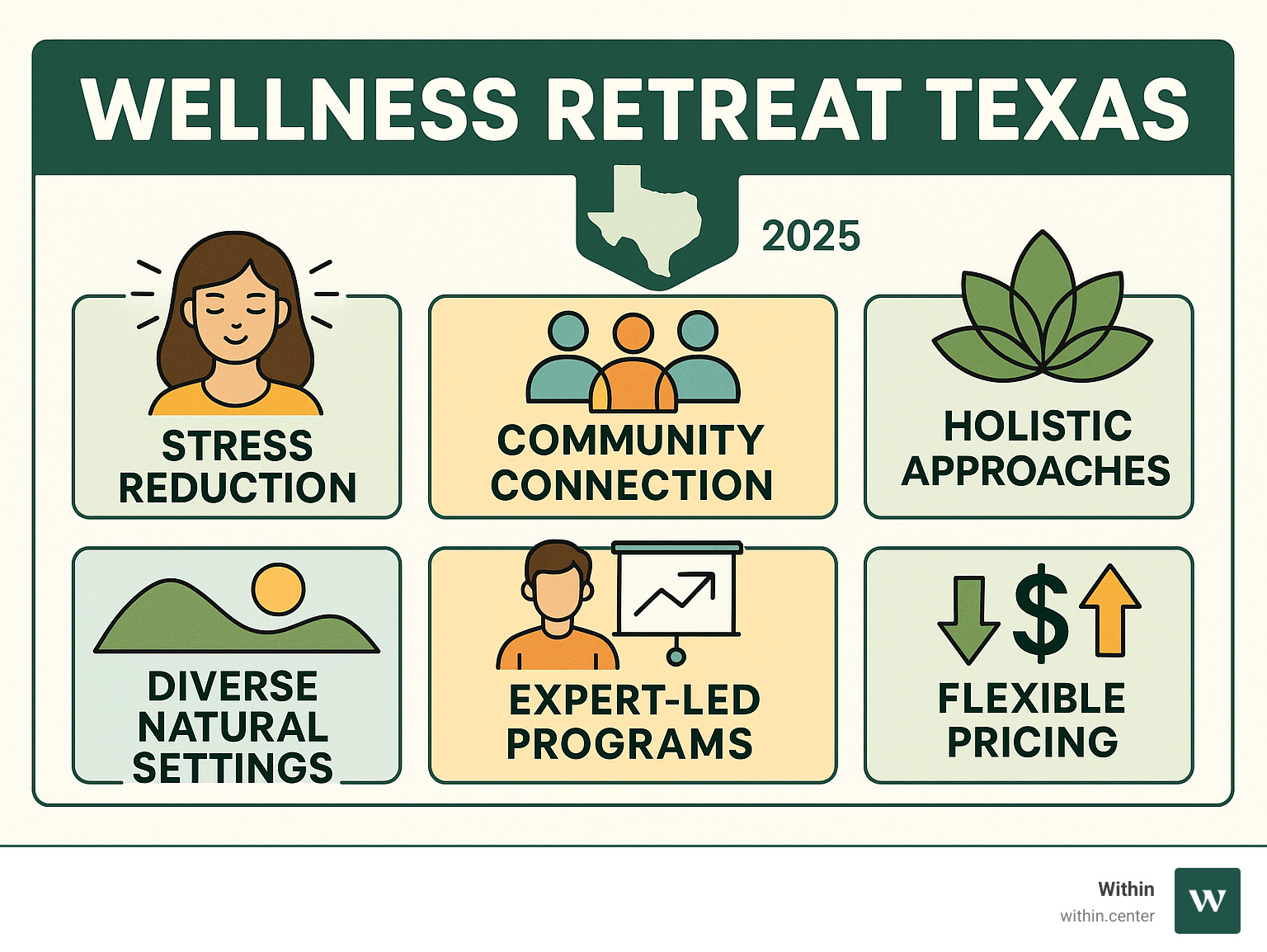
Infographic showing key benefits of Texas wellness retreats including stress reduction, community connection, holistic healing approaches, diverse natural settings, expert-led programs, and flexible pricing options from budget-friendly to luxury experiences - wellness retreat Texas infographic

What to Expect From a Texas Wellness Getaway

Starting a wellness journey can feel overwhelming, but understanding what awaits you helps create the perfect foundation for change. A wellness retreat Texas experience goes far beyond a typical vacation – it’s an immersive opportunity for self-findy, rejuvenation, and profound healing. This section breaks down the common components of retreats to help you plan your transformative escape.

Common Activities and Programs

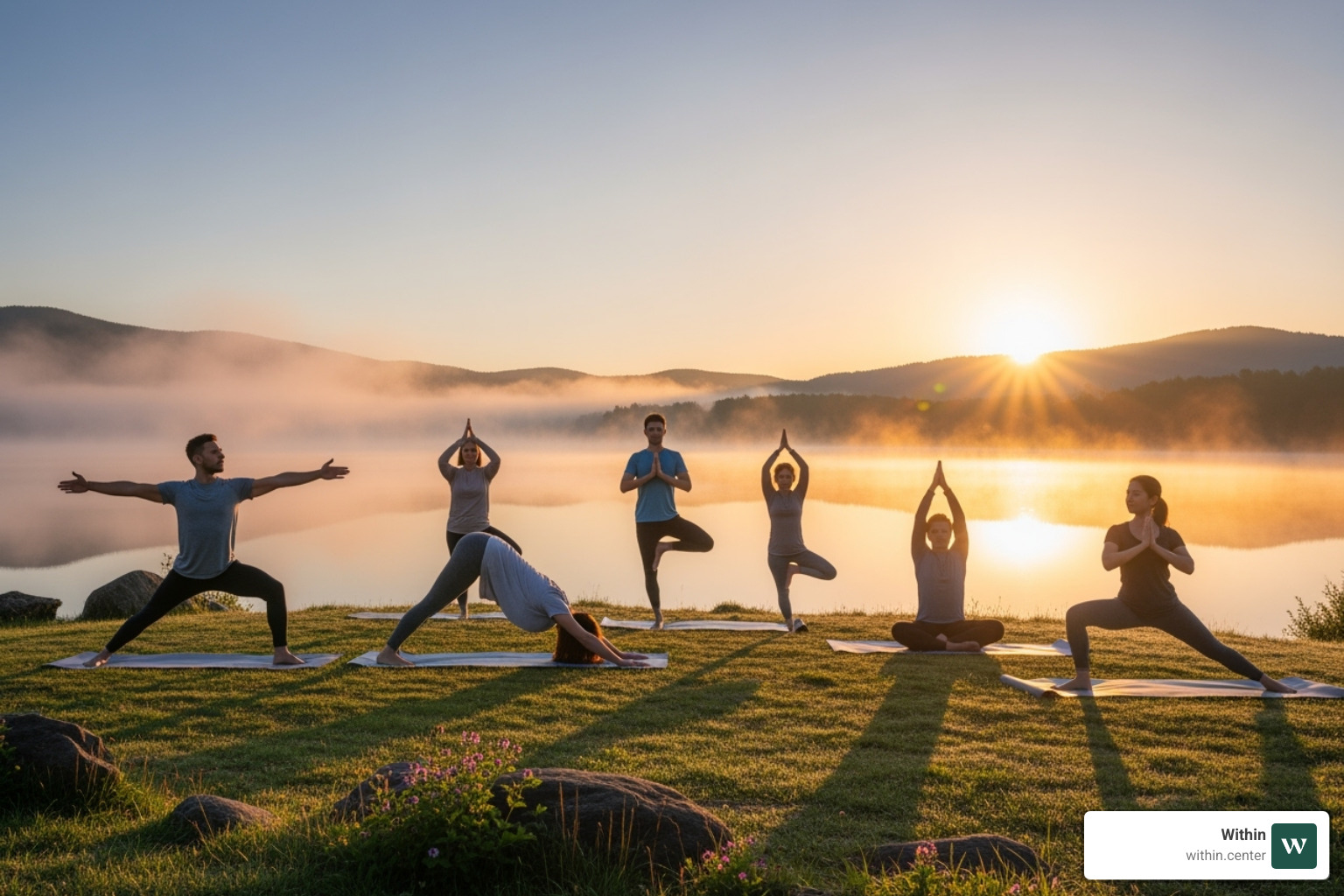
yoga class overlooking a lake - wellness retreat Texas

Texas wellness retreats accept a holistic approach to well-being, addressing your mind, body, and spirit as interconnected parts of your whole self. While each retreat has its unique personality, you’ll find several common threads woven throughout these healing experiences.

Movement and mindfulness form the foundation of most programs. Yoga and meditation sessions welcome all levels, from complete beginners to advanced practitioners. These practices help you deepen your connection to yourself, find inner peace, and improve both flexibility and mental focus. Some retreats offer unique twists – imagine practicing yoga alongside gentle horses or meditating in ancient oak groves.

Spa and body treatments provide luxurious pathways to healing. You might indulge in therapeutic massages, rejuvenating facials, or detoxifying body wraps. These treatments aren’t just about pampering – they’re designed to release physical tension, improve circulation, and support your body’s natural healing processes.

Given Texas’s stunning natural diversity, outdoor activities are a retreat staple. You’ll find yourself hiking through rolling Hill Country landscapes, riding horses across expansive ranches, or kayaking on pristine lakes. These activities connect you with nature while boosting your physical fitness and mental clarity.

Holistic healing and workshops address your deeper needs for growth and understanding. You might participate in mindfulness workshops, attend motivational talks, or explore educational sessions about wellness. Unique offerings include sound baths that wash over you with healing vibrations, cacao ceremonies that open your heart, or chakra showers that balance your energy centers.

Culinary experiences nourish both body and soul. Most retreats feature farm-to-table dining with ingredients sourced from on-site gardens or local farms. Many also offer cooking classes, teaching you to prepare delicious, healthy meals you can recreate at home.

For those seeking deeper healing, some Texas retreats offer specialized modalities that address complex mental health challenges. At Within Center, we provide unique healing approaches that include psychedelic-assisted therapy. These immersive, live-in experiences combine comprehensive integration support with strong community connections to foster true holistic well-being. To learn more about how these innovative approaches are changing mental health, explore Within Center’s unique healing modalities.

Typical Inclusions, Accommodations, and Costs

When considering a wellness retreat Texas, understanding what’s typically included, accommodation styles, and price ranges helps you set realistic expectations and budget appropriately.

Most high-quality wellness retreats operate on an all-inclusive model, which means once you’ve paid for your stay, you’re covered for the essentials. This typically includes accommodations ranging from luxurious private villas to charming rustic cabins or unique glamping experiences. Your healthy meals and beverages are usually covered, featuring fresh, locally sourced ingredients and often plant-based options. Most retreats happily accommodate dietary restrictions like vegetarian, vegan, gluten-free, and dairy-free needs.

Your daily activities and programs are included – think yoga classes, meditation sessions, fitness activities, and wellness workshops. Spa access to facilities like saunas, hot tubs, and relaxation rooms is typically part of your stay, though specific treatments might cost extra. Many luxury retreats operate on a gratuity-free model, simplifying your experience, and some even provide airport transportation for more remote locations.

Accommodation options vary widely based on your preferences and budget. Luxury villas and suites offer privacy, high-end amenities, and often personalized service. Charming cottages and rooms provide comfort with local character and rustic appeal. Rustic cabins and glamping options let you connect more closely with nature without sacrificing comfort. Boutique hotel stays in urban areas combine wellness experiences with full spa and fitness facilities.

Cost and duration for a wellness retreat Texas varies significantly based on luxury level, length, and specific inclusions. Weekend retreats can start around $649 for shorter, more basic experiences. Week-long stays at comprehensive wellness centers typically range from $2,675 to $2,855, covering tuition, room, and meals. Luxury resort experiences often start from $1,500 per guest per night. Overall, you might find options ranging from approximately $240 for shorter retreats to over $18,500 for extended, highly specialized luxury experiences.

FeatureBudget-Friendly Retreat (Weekend)Luxury Retreat (Week-long)
MealsYes, all meals, usually healthy and sometimes locally sourcedYes, all meals, including gourmet options, usually locally sourced and customized to preferences, plus unlimited snacks and non-alcoholic beverages
AccommodationBasic to mid-range comfortHigh-end luxury rooms, villas, or suites with private bathrooms
Wellness ActivitiesDaily yoga, meditation, basic fitness classesExtensive schedule including yoga, meditation, advanced fitness, specialized workshops (sound baths, equine therapy), and private sessions
Spa AccessAccess to general spa facilities if availableFull access to world-class spa facilities, often including hydrotherapy pools and relaxation lounges
Expert GuidanceGroup instruction with limited individual attentionExpert-led counseling, private coaching, personalized itineraries, and access to specialists like nutritionists and therapists
Outdoor ActivitiesGuided hikes and nature walksHorseback riding, challenging activities, specialized water sports, and unique nature experiences
TransportationSelf-arranged or limited shuttle serviceOften includes airport transfers
Additional AmenitiesBasic communal areasResort credits, welcome gifts, pools, hot tubs, and unique dining experiences
FocusReset, relaxation, basic wellnessDeep change, specialized healing, and luxury comfort

Exploring the Diverse Landscape of the Wellness Retreat Texas Scene

group meditating in a natural, wooded setting - wellness retreat Texas

The beauty of Texas lies not just in its sprawling landscapes, but in how these diverse settings create the perfect backdrop for every type of healing journey. Whether you’re drawn to the rolling hills of the Hill Country or the peaceful forests of East Texas, there’s a wellness retreat Texas experience waiting that speaks directly to your soul.

Each retreat scene across Texas has developed its own personality and specialty. Some focus on the solo traveler seeking quiet reflection, while others create sacred spaces specifically for women’s healing. Many have pioneered innovative approaches to mental health and stress reduction, while luxury retreats offer five-star comfort alongside change. Let’s explore what makes each of these retreat types special.

For the Solo Traveler Seeking Self-Findy

There’s something powerful about taking time away just for yourself. No one else’s schedule to consider, no compromises to make – just you and the space to refind who you are beneath all the daily noise.

Texas retreats have mastered the art of creating safe environments where solo travelers can dive deep into personal growth. Most welcome participants of all experience levels, so whether you’ve never meditated before or you’re a seasoned practitioner, you’ll find your place.

What makes solo-focused retreats special is their emphasis on quiet reflection. You’ll find ample time for journaling by a peaceful lake, silent meditation in natural settings, and simply sitting with your thoughts without distraction. The mindfulness workshops are designed to help you clarify what you really want from life and develop the self-awareness to get there.

Interestingly, while these retreats honor your need for solitude, they also offer community connection when you’re ready for it. Many solo travelers are surprised by the deep bonds they form with like-minded people on similar journeys. You can choose to join group activities or retreat to your private space – whatever feels right in the moment.

For Women-Only Sanctuaries

Sometimes we need a space where we can completely let our guard down, surrounded by others who truly understand our experiences. Women-only retreats in Texas create these precious healing spaces where judgment simply doesn’t exist.

These sanctuaries focus on connection and support in ways that feel deeply nurturing. Picture yourself in women’s circles where stories are shared openly, collaborative workshops that build each other up, and shared meals that feel like gathering with your closest sisters. The empowerment that emerges from these connections often surprises participants with its strength.

The nurturing environments combine gentle yoga practices with guided meditation and intentional self-care, all set within Texas’s most serene natural settings. Many of these retreats sit on acres of trees and natural beauty, creating the perfect backdrop for deep healing work.

What sets these retreats apart are their custom programs designed specifically for women’s unique needs. You might find workshops on setting healthy boundaries, developing intuition, or practicing radical self-care – all topics that resonate deeply with the female experience.

Finding a Mental Health and Stress Reduction Wellness Retreat in Texas

In our always-connected world, stress and burnout have become unwelcome companions for many of us. The good news? Texas has become a leader in offering specialized retreats for stress reduction and emotional healing, combining time-tested practices with cutting-edge therapeutic approaches.

These retreats often start with a digital detox – a chance to disconnect from screens and reconnect with yourself and the natural world around you. It’s amazing how much mental space opens up when we’re not constantly checking our phones.

Many centers offer expert-led counseling through both individual and group therapy sessions with qualified professionals. The focus extends beyond just managing symptoms to addressing underlying causes and building lasting resilience.

Some Texas retreats are pioneering innovative approaches to mental health treatment. The state has acceptd new therapeutic modalities that show remarkable promise for conditions like treatment-resistant depression, anxiety, chronic pain, and PTSD. These approaches often emphasize the importance of comprehensive integration support and community connection for lasting healing.

For those seeking profound healing and connection, an immersive experience can be life-altering. We at Within Center offer guided psychedelic therapy retreats designed for deep, lasting well-being, combining innovative therapeutic approaches with comprehensive integration support in a community-focused environment.

What to Look for in a Luxury Wellness Retreat in Texas

high-end spa facility or infinity pool - wellness retreat Texas

Sometimes change calls for a touch of luxury. Texas’s high-end wellness retreats understand that healing can happen beautifully when we’re surrounded by comfort, elegance, and world-class service.

Five-star amenities set the stage for your experience – think private plunge pools overlooking Hill Country vistas, beautifully designed common areas that invite relaxation, and accommodations that feel more like a luxury home than a hotel room.

The gourmet cuisine at luxury retreats lifts healthy eating to an art form. Award-winning chefs create exquisite meals using locally sourced, organic ingredients that nourish both body and soul. Every meal becomes a meditation on flavor, presentation, and mindful eating.

Personalized itineraries mean your retreat experience is crafted specifically for you. Rather than following a set schedule, you might enjoy private sessions with wellness experts, custom fitness plans designed for your goals, and one-on-one consultations that address your unique needs.

World-class spa services go far beyond basic treatments. Expect extensive menus of advanced therapies, hydrotherapy circuits, and highly trained therapists who understand that true wellness touches every aspect of your being.

The secluded locations of luxury retreats offer something money can’t usually buy – true privacy and peace. Whether nestled in a sprawling Hill Country ranch or perched beside a serene lake, these settings allow you to disconnect completely from the outside world.

Most importantly, luxury retreats accept all-inclusive comfort that removes every worry about logistics. From airport transfers to gratuity-free policies, every detail is handled so you can focus entirely on your healing journey.

How to Choose Your Perfect Texas Retreat

Finding the right wellness retreat Texas experience doesn’t have to feel overwhelming. With some thoughtful reflection and research, we can find a retreat that truly speaks to our needs and creates lasting change. This guide will help us align our personal intentions with the perfect healing environment.

Define Your Intention and Goals

Before we start exploring options, we need to get clear on what we’re really seeking. What’s driving us to take this step toward wellness?

Maybe we’re drowning in stress and burnout, feeling like we’re running on empty and need more than just a weekend off. Or perhaps we have specific fitness goals – wanting to jumpstart a healthier lifestyle, deepen our yoga practice, or reconnect with our body through movement in nature.

For some of us, the call is deeper – a need for spiritual growth and connection with our inner wisdom. We might be drawn to meditation, mindfulness practices, or exploring the profound healing that comes from truly seeing ourselves.

Others are navigating emotional healing, whether it’s processing grief, managing anxiety or depression, or seeking support through a major life transition. Sometimes we simply need general rejuvenation – a chance to step away from daily demands and remember who we are beneath all the doing.

Setting a clear purpose for our retreat helps us cut through the noise and find experiences that will actually serve our healing journey. It’s the difference between a nice vacation and a truly transformative experience.

Consider the Location and Best Time to Visit

Texas offers us an incredible variety of healing landscapes, each with its own unique energy and benefits.

The Texas Hill Country wraps us in rolling hills and endless sky, perfect for those seeking peace and natural beauty. There’s something about those wide-open spaces that helps our minds settle and our hearts open. The East Texas Piney Woods offers deep forest healing – the kind of quiet that only comes from being surrounded by ancient trees and wildlife.

If water calls to our soul, the Gulf Coast provides the rhythmic healing of waves and sea breezes. And the Austin area has become a true wellness hub, combining innovative healing approaches with the city’s creative, welcoming spirit.

Timing matters too. Spring (March through May) is magical here, with wildflowers painting the Hill Country and temperatures perfect for outdoor healing. Fall (September to November) brings comfortable weather and beautiful colors, especially in East Texas.

Summer can be intense with the Texas heat, so if we’re planning a warm-weather retreat, we’ll want to look for places with plenty of shaded spaces and water activities. Winter is surprisingly mild, making Texas a wonderful escape from colder climates – and often less crowded too.

Research and Read Reviews

Once we know what we’re seeking and where we want to go, it’s time to dig deeper into our options.

We want to check facilitator credentials, especially for retreats focusing on mental health or specialized healing modalities. The people guiding our journey should have the training and experience to hold safe, sacred space for our change.

Reading testimonials and reviews gives us real insight into what we can expect. Look beyond the retreat’s own website to get a fuller picture. Pay attention to what people say about the atmosphere, the food, how supported they felt, and whether they experienced real change.

We also want to understand each retreat’s philosophy and approach. Does it resonate with our values and beliefs? Some places have a more spiritual focus, others emphasize physical wellness, and some integrate cutting-edge therapeutic approaches.

Don’t be shy about asking questions directly. Any reputable retreat will be happy to discuss dietary accommodations, accessibility, what a typical day looks like, and how they support participants through their healing journey.

For those interested in how innovative mental health approaches are changing the wellness landscape, we encourage you to read about Austin’s wellness revolution, which explores how Texas is becoming a leader in holistic healing practices.

Frequently Asked Questions about Texas Wellness Retreats

When we’re considering a wellness retreat Texas experience, it’s natural to have questions. Here are the most common concerns we hear from people planning their first retreat, along with honest answers to help you feel prepared and confident about your journey.

Do I need prior experience with yoga or meditation?

Absolutely not! This is probably the biggest worry people have, and we completely understand why. The thought of walking into a yoga class when you can barely touch your toes can feel intimidating. But here’s the truth: most retreats welcome all levels, and that’s not just marketing speak.

Retreat instructors are trained to work with complete beginners. They’ll show you modifications, offer props like blocks and straps, and create a supportive environment where no one judges your downward dog. Many retreats even have specific beginner sessions or offer different levels of the same class.

The same goes for meditation. You don’t need to sit in perfect lotus pose for hours. Most meditation sessions start with just a few minutes of breathing exercises. Advanced practices are available for those who want them, but the focus is always on meeting you where you are right now.

What should I pack for my retreat?

Packing for a Texas wellness retreat doesn’t have to be complicated, but a little planning goes a long way. The key is thinking about comfort and the unpredictable Texas weather.

For clothing, pack comfortable, breathable pieces like yoga pants, loose cotton tops, and clothes you can move in easily. Texas weather can surprise you – it might be warm during the day but cool in the evening, so bring layers for temperature changes. A light sweater or jacket will save you from shivering during early morning meditation sessions.

Don’t forget comfortable walking shoes for hiking trails or exploring the grounds. Most retreats have pools or spa facilities, so pack a swimsuit even if you’re not planning to swim. You might change your mind when you see that beautiful infinity pool overlooking the Hill Country.

Sunscreen is non-negotiable in Texas – the sun is stronger than you think, even in winter. A reusable water bottle is essential for staying hydrated, and most retreats have refill stations throughout their facilities.

Bring a journal and pen for capturing insights and reflections. These quiet moments often bring unexpected clarity, and you’ll want to remember them. If you’re heading to a wooded area or lakeside retreat, insect repellent will make your outdoor time much more enjoyable.

Are retreats accommodating to special dietary needs?

Yes, most wellness retreats cater to dietary restrictions beautifully. In fact, nourishing food is often one of the highlights of the retreat experience. Texas wellness retreats typically serve fresh, locally-sourced meals that celebrate both healthy eating and regional flavors.

Whether you’re vegetarian, vegan, gluten-free, or dealing with specific allergies, retreats are usually well-equipped to handle your needs. Many have experience with complex dietary requirements and take pride in creating delicious meals that everyone can enjoy.

The key is to inform the retreat in advance about any restrictions or allergies. Don’t wait until you arrive – give them time to plan menus and source appropriate ingredients. When you book, mention everything from severe allergies to simple preferences. Most retreat coordinators are happy to discuss your needs and ensure you’ll be well-fed throughout your stay.

If you have multiple restrictions or severe allergies, consider having a phone conversation with the retreat staff before booking. They’ll appreciate your proactive approach, and you’ll have peace of mind knowing they can accommodate you safely.

Conclusion: Begin Your Transformative Journey in Texas

person looking out peacefully over a Texas vista - wellness retreat Texas

Texas isn’t just a place on the map—it’s a doorway to change. When we choose a wellness retreat Texas experience, we’re stepping into a state that understands the power of wide-open spaces, genuine hospitality, and the kind of healing that happens when we give ourselves permission to slow down.

From the peaceful lakes around Austin to the gentle hills of the Hill Country, from the whispering pines of East Texas to the endless horizons that stretch beyond what we can see, Texas offers something special. It’s not just the scenery that makes the difference—though watching a sunrise over rolling hills can shift something inside us. It’s the way this state accepts both traditional healing practices and cutting-edge wellness approaches.

Whether we’re carrying the weight of stress, working through emotional challenges, or simply feeling disconnected from ourselves, the right retreat experience can be the catalyst we’ve been looking for. We’ve seen people arrive feeling exhausted and leave with a spark in their eyes. We’ve watched guests find strengths they didn’t know they had and find peace they thought was impossible.

The beauty of Texas wellness retreats lies in their diversity. Some of us need the gentle accept of women-only sanctuaries. Others thrive in luxury settings where every detail is handled with care. Still others are drawn to innovative approaches that address healing at the deepest levels. Whatever calls to us, Texas has created space for that journey.

For those seeking profound healing and connection, an immersive experience can truly be life-altering. The combination of expert guidance, supportive community, and the expansive Texas landscape creates conditions where real change becomes possible.

At Within, we understand that true change happens when we address the whole person—mind, body, and spirit. That’s why we offer guided psychedelic therapy retreats designed for deep, lasting well-being. Our immersive, live-in experiences at AWKN Ranch provide comprehensive integration support and a strong community focus, creating the foundation for holistic healing.

Your journey to peace and profound change is waiting. In the heart of Texas, surrounded by nature’s wisdom and supported by caring professionals, you can find what’s possible when you give yourself the gift of true wellness. The vista ahead is yours to explore.