
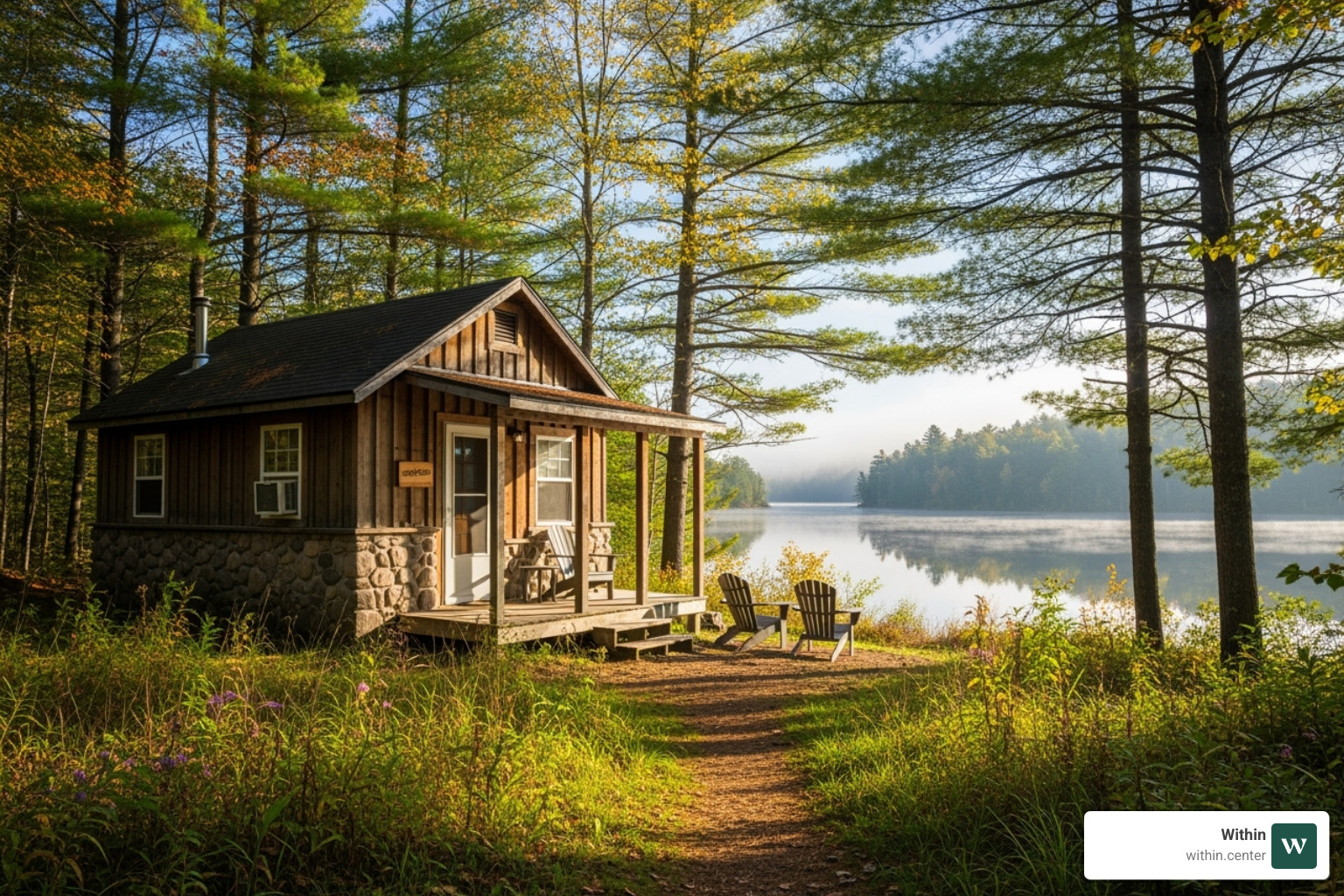
Affordable retreats for depression offer hope to the millions struggling with mental health challenges without the luxury price tag. With more than 260 million people worldwide suffering from depression, finding quality treatment that fits your budget has never been more crucial.
Quick Answer: What Makes Depression Retreats Affordable?
- Nature-based settings instead of luxury resorts
- Group programs rather than all individual sessions
- Shorter durations (3-7 days vs. weeks)
- Basic accommodations with shared rooms
- Sliding-scale fees based on income
- Non-profit organizations offering reduced rates
- Off-season pricing for better deals
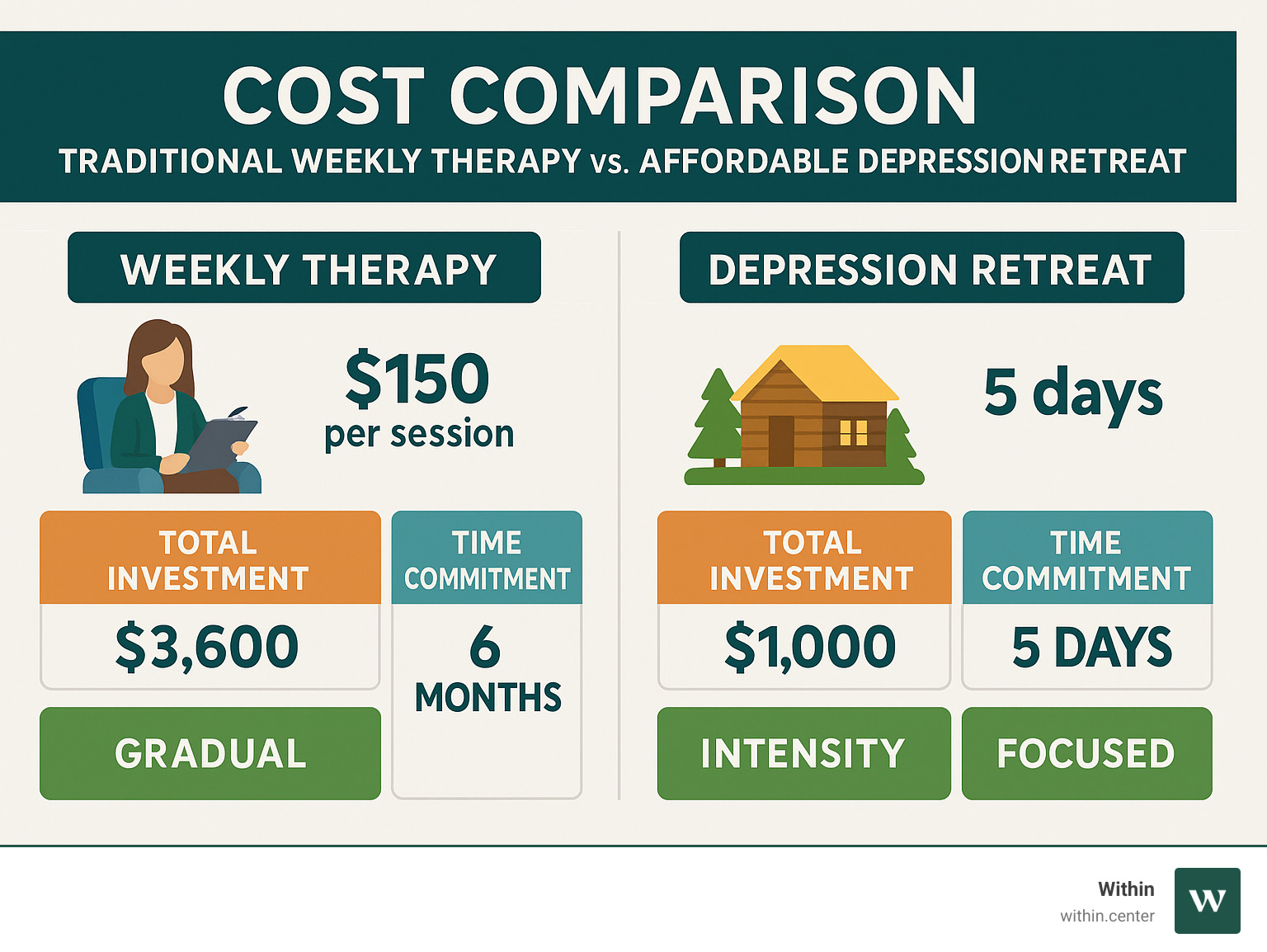
The reality is stark: traditional mental health care can cost hundreds per session, and luxury retreats often run $3,000-$5,000 per week. But here’s what most people don’t know – effective healing doesn’t require premium amenities.
Research shows that over 90% of participants experience lasting mental health benefits from retreat programs. The key isn’t marble bathrooms or gourmet meals. It’s having licensed professionals, evidence-based therapies, and a supportive environment away from daily stressors.
One retreat participant shared: “I feel like a new person. More calm, collected, and rational.” This change didn’t happen at a $10,000 resort – it came from a simple program focused on therapeutic quality over luxury features.
The challenge isn’t finding help that works. It’s finding help you can actually afford while dealing with depression’s impact on your career and finances.
What Defines an “Affordable” Depression Retreat?
When we talk about affordable retreats for depression, we’re not hunting for the cheapest option on the internet. Instead, we’re looking for something much more valuable: exceptional therapeutic quality that won’t leave you choosing between healing and paying rent.
Think of it this way – you wouldn’t buy a car based solely on price, right? You’d want something reliable that gets you where you need to go. The same logic applies here. An affordable depression retreat should deliver real, lasting change without the luxury price tag.
The secret is understanding what you actually need versus what feels nice to have. The most effective retreats focus their resources on what truly matters: licensed therapists, evidence-based treatments, and creating a safe space for healing. Everything else is just window dressing.
Here’s what typically defines an affordable approach:
Core therapeutic quality remains non-negotiable. This is where affordable retreats should never cut corners. You’ll still find qualified mental health professionals, structured programming, and proven treatment methods. The difference is in the packaging, not the medicine.
Fewer luxury amenities means your money goes toward therapy instead of marble countertops. You might not find daily massages or gourmet dining, but you’ll get what actually helps: quality counseling, supportive community, and holistic healing activities.
Nature becomes your spa. Many affordable options accept outdoor settings – forests, mountains, or lakeside locations. Research consistently shows that spending time in nature reduces stress, improves mood, and supports recovery from depression. Plus, a sunrise over the mountains costs the same as a sunrise over a resort pool (free), but often feels more meaningful.
Accommodations focus on comfort over luxury. Think clean, safe, and cozy rather than opulent. Many programs offer shared rooms, which actually improves the community experience. Some participants find that sharing space with others on similar journeys becomes one of the most valuable parts of their healing.
Shorter duration options make retreats accessible to more people. While longer stays can be beneficial, many effective programs run 3-7 days. This works better for both your schedule and your budget, while still providing intensive therapeutic support.
Group-focused programming reduces costs while increasing connection. Instead of all individual sessions, you’ll participate in group therapy, workshops, and community activities. Many people find that healing alongside others creates powerful bonds and shared understanding.
| Feature | Affordable Retreat | Luxury Retreat |
| Accommodation | Shared rooms, basic private rooms, cabins | Private suites, villas, high-end design |
| Staff-to-guest | Balanced, focus on group facilitation | High, often 1:1 personalized attention |
| Amenities | Essential comfort, nature access, shared spaces | Spa, gourmet dining, concierge, private facilities |
| Therapy Types | Evidence-based, holistic, group-oriented | Highly specialized, often 1:1, bespoke programs |
| Price Range | Typically $500 – $2,500 per week | Often $3,000 – $10,000+ per week |
The bottom line? Value beats luxury every time when it comes to mental health. The goal isn’t to impress your Instagram followers – it’s to return home with new tools, perspectives, and hope for your future.
How to Find High-Value, Affordable Retreats for Depression

Finding affordable retreats for depression that deliver real healing doesn’t have to feel like searching for a needle in a haystack. With the right approach, you can find programs that offer genuine therapeutic value without emptying your bank account.
The secret is knowing where to look and what questions to ask. Many people assume that quality mental health care always comes with a premium price tag, but that’s simply not true.
Non-profit organizations often provide some of the best value in retreat experiences. These centers focus on accessibility rather than profit margins, which means their pricing reflects their mission to help people heal. While their facilities might be simpler, they often employ deeply experienced facilitators who are passionate about their work.
Don’t hesitate to ask about sliding-scale fees when you’re researching options. Many retreat centers offer income-based pricing specifically to make their programs accessible to people from all financial backgrounds. It’s not charity – it’s smart business that recognizes healing shouldn’t be a luxury.
Off-season booking can lead to significant savings, just like planning any other type of travel. Mid-week programs and retreats during less popular months often cost substantially less. If you have flexibility in your schedule, this strategy alone can save you hundreds or even thousands of dollars.
Here’s something many people overlook: insurance verification could help cover portions of your retreat costs. The Affordable Care Act requires mental health coverage as an essential health benefit. While your insurance might not pay for the entire retreat, components like individual therapy sessions or psychiatric consultations could be reimbursable. Always call your provider directly to understand your specific benefits and ask about “Superbills” for out-of-network services.
Financial aid and scholarships exist at many retreat centers, though they’re not always advertised prominently. Mental health foundations and some retreat organizations set aside funds specifically to help people who demonstrate financial need. It takes some research, but these opportunities can make otherwise unaffordable programs accessible.
Nature-based programs offer incredible therapeutic value while keeping costs manageable. Research on nature’s mental health benefits consistently shows that connecting with the natural world reduces stress, improves mood, and supports overall well-being. Retreats that accept outdoor settings often have lower overhead costs than those requiring extensive indoor facilities, and nature itself becomes a powerful, free healing resource.
Mindfulness retreats can provide an excellent foundation for managing depression symptoms through practices that don’t require expensive equipment or elaborate facilities. These programs focus on developing self-awareness and inner peace – skills that continue serving you long after the retreat ends.
You’re looking for high value, not just the lowest price. A program that costs a bit more but offers licensed professionals, evidence-based care, and genuine therapeutic support will always be a better investment than a bargain option that lacks qualified staff or clear treatment protocols.
The goal is finding that sweet spot where affordability meets effectiveness – and with these strategies, that perfect program is definitely within reach.
Core Components of an Effective Program
Finding an affordable retreat for depression is just the first step. The real magic happens when you understand what makes a program truly effective. Let’s be honest – you’re not just looking for a budget-friendly vacation. You’re seeking genuine healing, and that requires specific therapeutic elements working together.

The foundation of any quality depression retreat starts with evidence-based treatment. This means therapies that have been scientifically proven to work – not just feel-good activities. Look for programs using Cognitive Behavioral Therapy (CBT), Dialectical Behavior Therapy (DBT), or Interpersonal Therapy (IPT). These aren’t just fancy names; they’re the heavy hitters in mental health treatment.
Licensed professionals should be leading your therapeutic sessions. This isn’t negotiable, even when you’re watching your budget. Whether it’s individual counseling or group work, the person guiding you through your healing should have proper credentials – licensed therapists, psychologists, or psychiatrists who specialize in depression treatment.
A well-designed retreat also provides clear program structure. While some flexibility is nice, you’ll want a purposeful daily schedule that gives you direction. This structure becomes your safety net, allowing you to dive deep into healing without feeling lost or overwhelmed.
The best programs blend different therapeutic modalities seamlessly. You might start your day with individual therapy, move into group sessions where you connect with others facing similar struggles, then participate in skill-building workshops. Some retreats incorporate innovative approaches too – ketamine-assisted therapy, for instance, has shown remarkable results for treatment-resistant depression when delivered in supportive, immersive settings.
Holistic activities round out effective programs because mental health isn’t just about the mind. Yoga helps calm your nervous system. Meditation builds self-awareness. Nature walks ground you in the present moment. These aren’t just nice extras – they’re proven therapeutic tools that help you develop lasting healthy habits.
Vetting the Quality of Affordable Retreats for Depression
Your mental health deserves the best care possible, regardless of your budget. Here’s how to ensure you’re choosing a quality program that happens to be affordable, not just a cheap option.
Start by digging deeper into staff credentials. Don’t just confirm they’re licensed – ask about their specific experience treating depression. Do they specialize in trauma-informed care? Have they worked with people facing similar challenges to yours? A transparent retreat will gladly share their team’s expertise.
Clinical oversight matters enormously. Someone with extensive clinical experience should be designing and overseeing the therapeutic program. This might be a medical director or lead therapist who ensures everything runs safely and effectively.
Testimonials and reviews tell the real story. Look for consistent themes in feedback, especially about program effectiveness and staff support. When people consistently mention feeling genuinely supported and experiencing lasting change, that’s a green flag.
Don’t forget about safety protocols. How does the retreat handle medical or mental health emergencies? Responsible programs have clear procedures in place and aren’t shy about sharing them.
Aftercare planning separates good retreats from great ones. Your healing journey doesn’t end when you pack your bags. Quality programs offer follow-up sessions, resources, or community networks to help you integrate your learnings into daily life. This ongoing support often makes the difference between temporary relief and lasting recovery.
What to Expect from an Affordable Retreat for Depression
So you’ve found a promising affordable retreat for depression – what happens next? While every program has its unique flavor, certain elements create that transformative healing environment you’re seeking.
Individual therapy remains a cornerstone, even in budget-conscious programs. You’ll get personalized attention from a licensed therapist who can address your specific challenges and provide custom guidance for your unique situation.
Group sessions often become the heart of affordable retreats. There’s something incredibly powerful about sharing your story in a safe, facilitated space. You’ll find you’re not alone, and other people’s insights might open up breakthroughs you never expected. Many retreat participants find these connections become lasting friendships that extend far beyond the program.
Skill-building workshops give you practical tools to take home. You might learn mindfulness techniques, stress reduction exercises, or communication strategies. These become your everyday toolkit for managing depression symptoms. The types of talking therapies often form the foundation of these workshops.
Yoga and meditation appear in almost every program for good reason. They’re gentle yet powerful ways to calm your nervous system and reconnect with yourself. Don’t worry if you’re a beginner – the focus is on healing, not perfect poses.
The community connection you’ll build might surprise you with its impact. Living and healing alongside others creates natural bonds and a support network that often continues long after the retreat ends. This sense of belonging becomes a crucial part of your ongoing recovery journey. Programs like those described in The Doorway In: Psychedelic Therapy and Community Care highlight how vital these connections are in the healing process.
Frequently Asked Questions about Affordable Retreats for Depression

We know that considering a mental health retreat brings up lots of questions – and rightfully so! You’re making an important decision about your well-being, and we want you to feel completely informed. Here are the questions we hear most often about affordable retreats for depression.
Are affordable retreats as effective as luxury ones?
Here’s the truth that might surprise you: yes, affordable retreats can be just as effective as their luxury counterparts – sometimes even more so.
The magic of healing doesn’t happen because of Egyptian cotton sheets or five-star dining. It happens because of therapeutic quality, qualified staff, and a program structure designed specifically for your recovery. Think of it this way – would you rather have a world-class therapist in a simple cabin, or a mediocre one in a marble palace?
What really matters is having licensed mental health professionals who know their stuff. Both budget-friendly and expensive retreats should employ qualified therapists – this is your non-negotiable baseline. The evidence-based treatments that actually work (like CBT or mindfulness approaches) cost the same to deliver whether you’re in a rustic lodge or a luxury resort.
Actually, many affordable retreats for depression have a secret advantage: they often create stronger community bonds. When you’re sharing meals and activities with fellow participants, you build deeper connections. This sense of belonging can be incredibly healing – something that gets diluted in highly individualized luxury settings.
The research backs this up too. More than 90% of participants experience lasting mental health benefits from retreat programs, regardless of price. Your long-term outcomes depend much more on how engaged you are with the process and whether you use your new skills back home.
Can my insurance help pay for a depression retreat?
The insurance maze can feel overwhelming, but there’s actually more hope than you might think! While your plan probably won’t cover an entire retreat as one package, many insurance plans will cover specific therapeutic services that happen during your stay.
Thanks to the Affordable Care Act, mental health coverage is now an essential health benefit. This means most plans must offer some form of mental health support. The trick is understanding how to use these benefits creatively.
Your insurance might cover individual therapy sessions, group therapy, or psychiatric consultations that are part of the retreat program. The key is asking the retreat center to break down their services for you. Many can provide what’s called a “Superbill” – basically a detailed receipt showing exactly which therapeutic services you received.
In-network versus out-of-network makes a big difference in your costs. If the retreat’s therapists are in your network, you’ll pay less out of pocket. Even if they’re out-of-network, you might still get partial reimbursement.
Here’s our best advice: call your insurance company directly. Ask specific questions like “Do you cover psychotherapy sessions if provided by a licensed therapist during a mental health retreat?” Have the retreat’s provider information ready if possible.
It takes some paperwork and patience, but exploring your benefits can significantly reduce the cost of an affordable retreat for depression. Every dollar saved makes healing more accessible.
What’s the difference between a wellness retreat and a depression retreat?
This is such an important question because mixing these up could mean the difference between getting the help you need and just having a nice vacation (though nice vacations have their place too!).
Wellness retreats are wonderful for general self-care and recharging. Think yoga, meditation, healthy meals, maybe some spa treatments. They’re perfect when you’re feeling burnt out or just need to hit the reset button. But they’re designed for people who are generally okay and want to feel better.
Depression retreats are a completely different animal. These are clinical programs specifically designed for people struggling with depression. They’re not vacations – they’re intensive therapeutic experiences with clear treatment goals.
The clinical focus is the biggest difference. A depression retreat has licensed mental health professionals – psychologists, psychiatrists, therapists – who specialize in treating mental health conditions. They use types of talking therapies and other evidence-based treatments to help you manage symptoms and develop coping skills.
Staff expertise varies dramatically too. A wellness retreat might have certified yoga instructors or nutritionists (which are valuable!), but a depression retreat will have clinical staff trained specifically in mental health treatment.
If you’re dealing with diagnosed depression, an affordable retreat for depression gives you targeted, structured support that addresses your specific condition. It’s the difference between a gentle tune-up and actual repair work – both have their place, but you need the right tool for the job.
At places like Within Center, we combine clinical expertise with innovative approaches like psychedelic therapy and community care, creating immersive healing experiences that go far beyond typical wellness offerings.
Conclusion
Your journey toward healing doesn’t have to wait for the perfect financial situation. Affordable retreats for depression represent hope made real – tangible pathways to profound change that won’t drain your life savings.
Throughout this guide, we’ve finded that the most powerful healing happens when retreats focus on what truly matters: licensed professionals who understand depression, evidence-based therapies that actually work, and supportive communities where you can heal alongside others who get it. The magic isn’t in marble countertops or five-star dining. It’s in that moment when you realize you’re not alone, when coping strategies finally click, and when you start to feel like yourself again.
Healing is accessible. Whether it’s finding a nature-based program that leverages the outdoors as your therapy room, finding sliding-scale fees that match your budget, or navigating insurance coverage for therapeutic components, there are real solutions out there. The key is knowing where to look and what questions to ask.
We’ve seen how taking this first step – whether it’s a weekend mindfulness retreat or a week-long intensive program – becomes a powerful declaration that your mental health matters. It’s choosing to invest in your future self, the one who feels more calm, collected, and genuinely hopeful about what’s ahead.
Focus on value, not just price. The most affordable retreat is one that creates lasting change in your life. When you prioritize qualified staff, structured programming, and solid aftercare support, you’re making a smart investment that pays dividends long after you return home.
For those ready to explore deeply immersive programs that combine cutting-edge therapies with holistic healing, our approach at Within Center offers comprehensive integration support and genuine community connection. We believe everyone deserves access to transformative care in a setting designed for authentic, lasting change.
Don’t let financial concerns keep you from the healing you deserve. Your path forward is waiting, and it’s more accessible than you might think.